Jewelry glossary
 Buying guides
14 karat or 18 karat gold: differences and which to choose
Differences between 14 and 18 karat gold: purity (58.5% and 75%), color, hardness, price and which suits rings, wedding bands and daily wear.
 Techniques
3D printing in jewelry
3D printing makes castable resin or wax models for casting jewelry, or direct metal pieces; precision, workflow and limits.
 Techniques
3D scanning and CNC milling in jewelry
3D scanning digitizes an existing piece and CNC milling carves wax or metal models with precision; tools of the digital jewelry workshop.
 Jewelry around the world
Aboriginal shell necklaces and engraved pearl shell
Tasmanian Aboriginal women string tiny iridescent shells; in northern Australia, pearl shell is engraved: jewels with living memory.
 Design
Adornment
A decorative element added to a piece of jewelry to beautify it or to emphasize its design.
 Jewelry around the world
Akan (Ashanti) gold and goldweights
Gold is a symbol of royalty and life for the Akan of Ghana: royal jewelry, lost-wax brass goldweights and Adinkra symbols.
 Materials
Aluminum
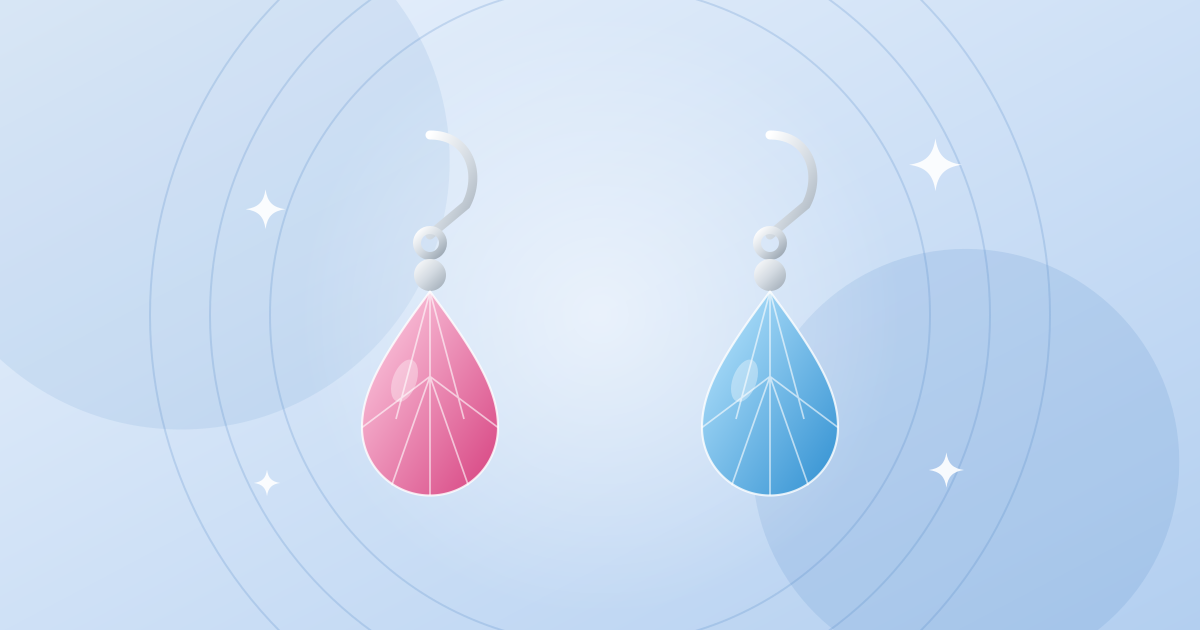
Aluminum is a very light, inexpensive metal that can be anodized in vivid colors; ideal for large earrings and designer jewelry.
 Materials
Amber
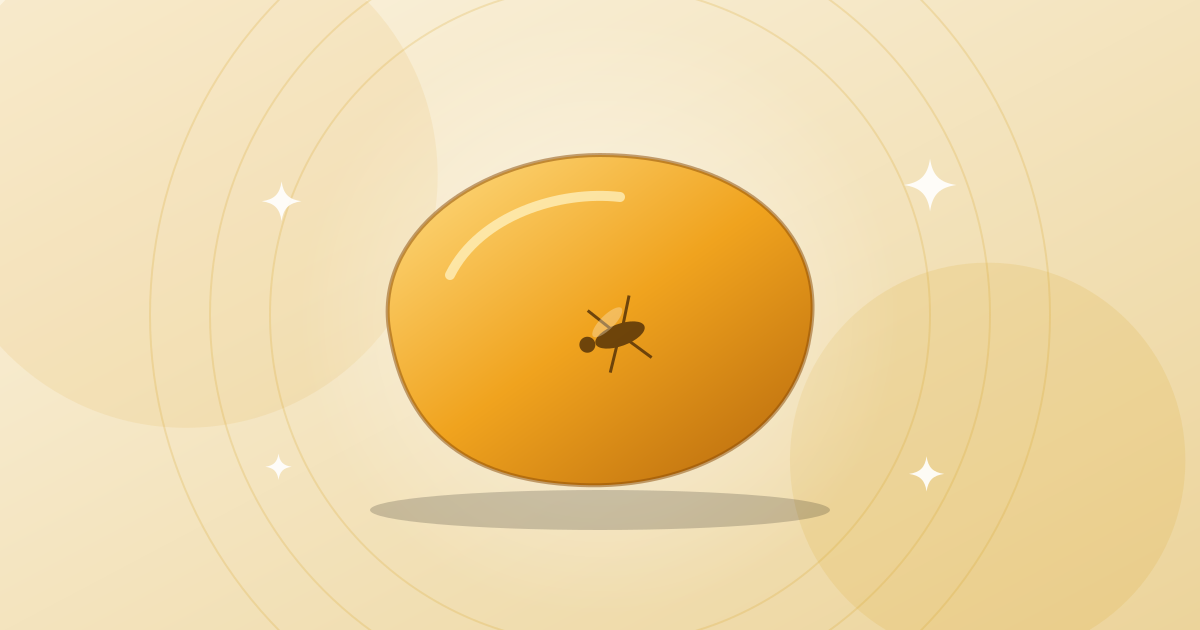
Amber is fossil tree resin millions of years old, light and warm, sometimes with trapped insects; it is worked into beads and cabochons.
 Materials
Amethyst
Amethyst is purple quartz, hardness 7, very popular for its color and affordable price; avoid intense sunlight so it does not lose its tone.
 Jewelry around the world
Andean jewelry: Moche, Nasca and Inca
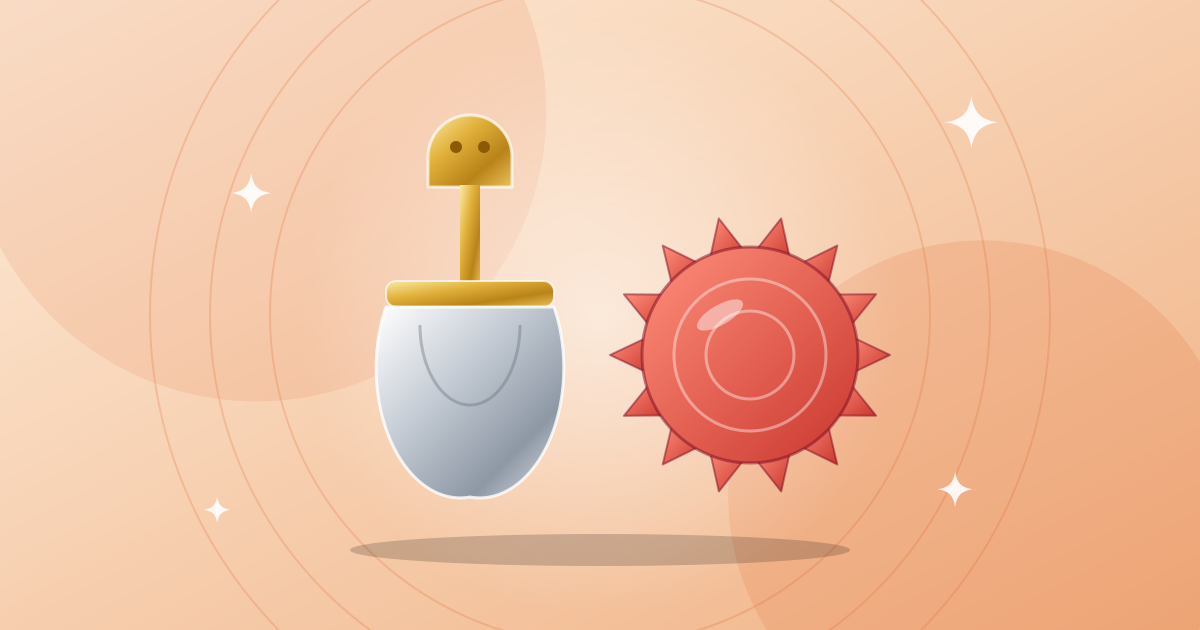
Moche, Nasca and Inca metalwork: gold, silver and spondylus shell, with ornaments that marked power and a bond with the sacred.
 Techniques
Annealing: how to soften metal
Annealing softens metal with controlled heat so it can keep being worked; how it is done, how to cool it and how to avoid firescale.
 Tools
Tools
Anvil, steel block and stakes
The anvil, steel block and stakes are the bases on which metal is struck; shapes, polished surfaces and care.
 Materials
Aquamarine
Aquamarine is blue-green beryl (7.5-8 on Mohs), from the same family as emerald; transparent and brilliant, it is the March birthstone.
 Tools
Tools
Basic tools used in casting
The most common tools used in jewelry casting. They can vary depending on the type of jewel and the technique used by the jeweler.
 Techniques
Bead crochet and knitting
Bead crochet and knitting make ropes, bracelets and tubular necklaces by stringing beads on the thread before working the stitches.
 Techniques
Bead embroidery
Bead embroidery sews beads, sequins and cabochons onto a base of fabric or felt; a textile jewelry technique for brooches and pendants.
 Techniques
Bead making and drilling
How stone beads are made: cutting, rounding, drilling with diamond bits and polishing; shapes, sizes and qualities.
 Techniques
Bead weaving: peyote, brick and loom
Bead weaving joins small glass beads with needle and thread: peyote, brick, square and right-angle weave, and loom; uses in necklaces and bracelets.
 Techniques
Bending, curving and twisting metal
Bending, curving and twisting metal with pliers and mandrels: rings, bangles, twisted cables and spiral square wire.
 Techniques
Bezel setting
The bezel setting surrounds the stone with a thin burnished metal rim; the most secure, ideal for cabochons and daily wear.
 Buying guides
Birthstones by month
List of birthstones by month: garnet, amethyst, aquamarine, diamond, emerald, pearl, ruby, peridot, sapphire, opal, topaz and turquoise, and how to choose a piece.
 Materials
Bone and ivory
Bone is carved into beads, pendants and amulets; elephant ivory is banned and is now replaced by bone, tagua or resin.
 Jewelry
Bracelet and bangle styles
A catalog of bracelets and bangles: rigid bangle, cuff, tennis bracelet, charm, link, bead, leather, ID bracelet, anklet and armor-link styles.
 Jewelry
Bracelets and Bangles
Bracelets and bangles are crafted with a chain, band, or flexible strap that fits around the wrist and is secured by a clasp or fastening system.
 Materials
Brass
Brass is a copper and zinc alloy with a golden-yellow shine, inexpensive and easy to work, very common in costume and handmade jewelry.
 Materials
Bronze
Bronze is a copper and tin alloy with a dark golden tone, prized for art casting and character-rich handmade jewelry.
 Jewelry
Brooch or pin
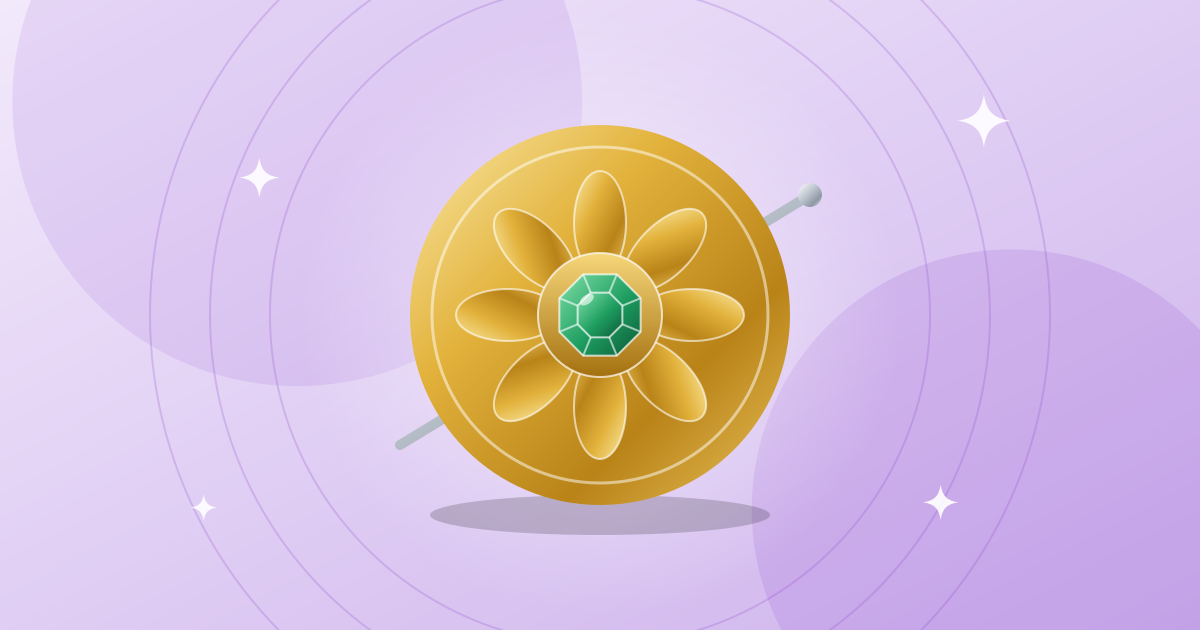
A brooch or pin is a piece of jewelry designed as a decorative and functional accessory that is fastened to clothing, usually with a pin or a catch
 Techniques
Burnishing: smoothing without removing metal
Burnishing smooths and shines metal by rubbing it with a polished steel tool, without removing material; used on bezels, prongs and as a final finish.
 Techniques
Cabochon cutting
A cabochon is a stone polished into a smooth dome with no facets; how it is cut with grinding wheels of decreasing grit and polished, and which stones are cut this way.
 Design
CAD software used in jewelry design
Computer-aided design (CAD) is a tool that lets designers create precise and detailed three-dimensional models.
 Jewelry care and maintenance
Can you wear jewelry in the shower, pool or sea?
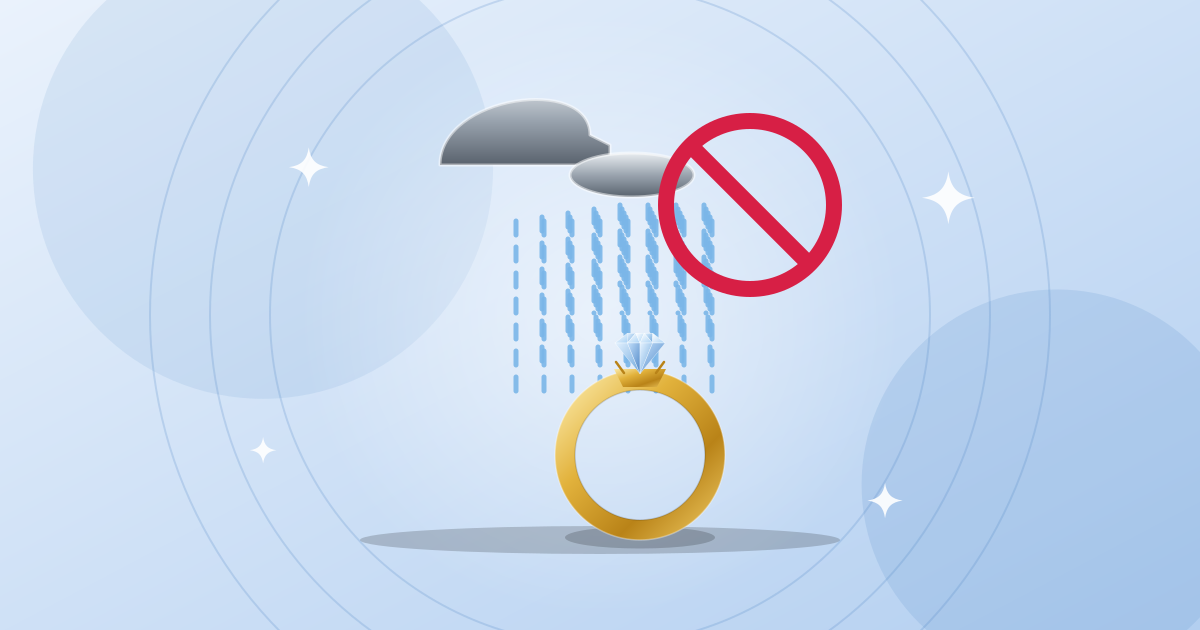
Which jewelry can get wet and which cannot: shower, chlorinated pool, sea, sports and sleep; day-to-day care tips for gold, silver, pearls and steel.
 Buying guides
Carat of gems and karats of gold: not the same thing
Carat measures the weight of gems, 0.2 grams; karats of gold measure its purity out of 24 parts. Explanation and chart.
 Techniques
Care and cleaning of brass jewelry
General tips for the care and cleaning of brass jewelry: storage, gentle cleaning, home remedies and professional polishing.
 Techniques
Care and cleaning of gold
How to clean gold jewelry? General tips for the care and cleaning of gold jewelry.
 Techniques
Care and cleaning of silver jewelry
General tips for the care and cleaning of silver jewelry: regular cleaning, home methods, storage and the effect of climate.
 Techniques
Carving bone, antler, shell and tagua
Carving organic materials (bone, antler, shell, tagua) produces pendants, beads and cameos; tools, scrimshaw and ethical questions.
 Techniques
Casting
Casting melts metal and pours it into a mold to make jewelry with fine detail. Types of casting, basic tools, materials and the history of the technique.
 Tools
Tools
Casting crucibles: types, uses and care
The crucible is the heat-resistant vessel where metal is melted; types (graphite, ceramic, silicon carbide), how to choose one and how to care for it.
 Tools
Tools
Casting molds: investment, rubber, silicone and sand
Casting molds shape metal: investment molds for lost-wax casting, rubber and silicone molds for wax and resin, and sand or graphite molds.
 Techniques
Casting organic materials (burnout)
In organic-material casting, a leaf, twig or flower is burned out inside the mold and replaced by metal, keeping its natural texture.
 Jewelry
Catalog of chain links
The most common chain links: cable, belcher, curb, Cuban, figaro, rope, box, snake, Byzantine, Milanese, Singapore, wheat, omega, herringbone, anchor and ball.
 Techniques
Centrifugal casting
Centrifugal casting throws molten metal into the mold with the force of a spinning arm; it is the usual way to cast lost-wax jewelry.
 Materials
Ceramics and porcelain
Ceramics and porcelain, hand-modeled and fired, make light, colorful beads, earrings and pendants with unique glazes.
 Techniques
Chainmaille (maille weaving)
Chainmaille interlocks metal rings in patterns such as European 4-in-1, Byzantine or Japanese; materials, tools and calculating the aspect ratio.
 Techniques
Channel setting
The channel setting places stones in a row between two metal walls, with no prongs between them; very common in wedding bands and diamond bands.
 Techniques
Chasing and repoussé
Repoussé pushes metal from behind to create relief and chasing defines it from the front, on a bed of pitch; an ancient goldsmithing technique.
 Techniques
Clay casting
A process that uses refractory clay to make molds for casting precious metals such as gold and silver and producing jewelry.
 Techniques
Cloisonné: enamel in cells
Cloisonné divides the design into cells with metal wires and fills them with enamel; a Byzantine, Chinese and Japanese technique for jewelry and vessels.
 Techniques
Cold connections: rivets, screws and staples
Cold connections join pieces without heat: tube and wire rivets, tabs, staples and screws; ideal for joining dissimilar materials.
 Design
Contemporary Jewelry
Contemporary jewelry renews the language of jewelry towards the free expression of the arts, breaking with traditional styles, materials and techniques.
 Materials
Copper
Copper is a reddish, soft and conductive metal widely used in handmade jewelry, in gold and silver alloys, and as a base for enamel.
 Materials
Coral
Coral is the skeleton of marine colonies; red and pink coral is carved into beads and cabochons, and its use calls for attention to origin.
 Jewelry
Cord necklaces: materials, knots and clasps
Cord necklaces (leather, cotton, silk, nylon) adjust with knots or clasps; how to choose the cord, thickness and clasp for a pendant.
 Jewelry
Crowns: history, types and materials
The crown is the jewel of power: from ancient laurel wreaths to the gold and gem crowns of monarchies; types, materials and symbolism.
 Tools
Tools
Crucible tongs: what they are for and how to use them
Crucible tongs grip the hot crucible to pour molten metal; types, how to choose them and safety rules.
 Materials
Cubic zirconia
Cubic zirconia is a synthetic zirconium oxide (8-8.5 on Mohs), colorless and very inexpensive, used as a diamond simulant.
 Techniques
Cuttlebone casting
Cuttlebone casting carves a two-part mold in this soft material to cast simple silver pieces, with a characteristic texture.
 Techniques
Damascening
Damascening inlays gold and silver wires into steel with fine grooves; a tradition of Toledo and the Islamic world for jewelry, weapons and objects.
 Materials
Diamond
The diamond is the symbol of luxury and romance: it is commonly used in the production of engagement rings, wedding rings, high-quality earrings, and necklaces.
 Design
Difference between metalwork, jewelry and ornamentation
Metalwork creates decorative and functional objects, jewelry creates personal adornments, and ornamentation adorns and decorates objects.
 Tools
Tools
Draw plate
The draw plate is a steel plate with decreasing holes through which wire is pulled to thin it or change its section; how it is used.
 Jewelry
Earring styles: stud, hoop, drop, chandelier and more
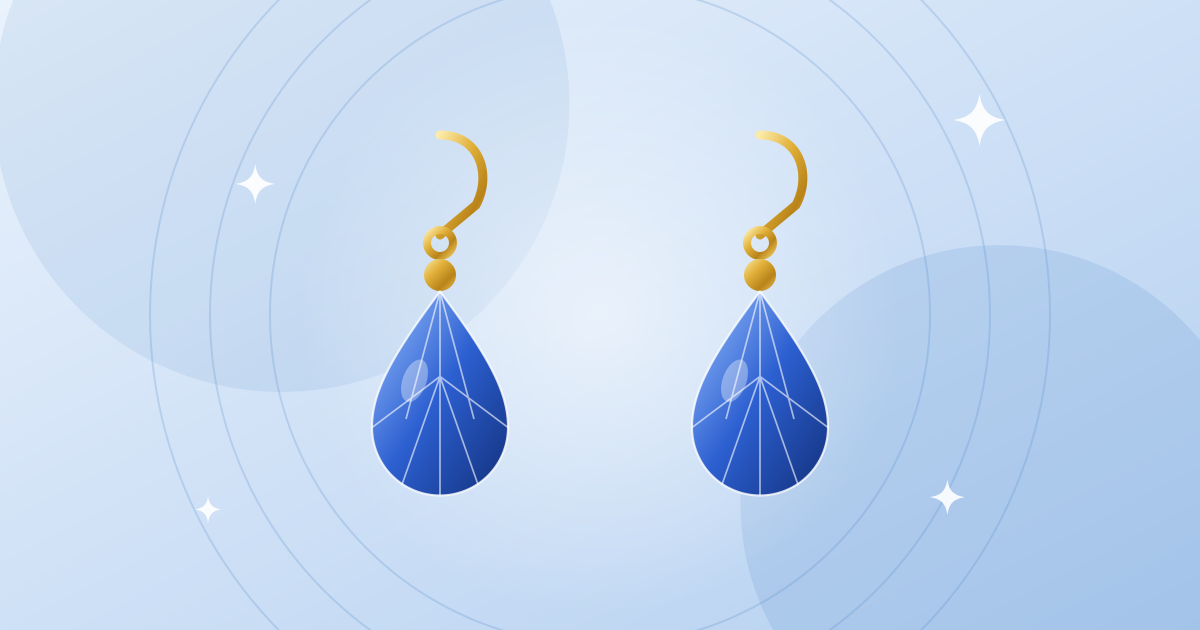
A catalog of earring styles: stud, hoop, creole, huggie, drop, dangle, chandelier, ear jacket, climber, ear cuff and threader, with wearing tips.
 Jewelry
Earrings or Ear Pendants
Earrings or ear pendants are a type of ornament worn in the earlobe or through piercings in the ear.
 Techniques
Electroforming: hollow forms by electrolysis
Electroforming deposits metal with electricity onto a conductive model to make hollow, lightweight, large forms, such as voluminous pendants and earrings.
 Techniques
Electroplating: gold, silver and rhodium baths
Electroplating coats a piece with a thin layer of another metal by electrolysis: gold, silver and rhodium baths; steps, thicknesses and care.
 Jewelry around the world
Emberá chaquira beadwork
Emberá women of Colombia and Panama create necklaces and ornaments with chaquira, tiny glass beads in geometric designs.
 Materials
Emerald
The emerald is recognized by its striking green hue, which can range from light tones to deep, rich ones.
 Materials
Enamel
Vitreous enamel is powdered glass fused onto metal at high temperature; it gives intense, lasting colors in techniques such as cloisonné.
 Techniques
Enameling: techniques and process
Enameling fuses powdered glass onto metal; techniques (cloisonné, champlevé, basse-taille, plique-à-jour, painted) and steps to enamel a piece.
 Techniques
Etching and photo-etching
Etching corrodes metal with acid or electricity in the unprotected areas to create designs and relief; photo-etching uses a photosensitive film.
 Techniques
Filigree: lace of metal wire
Filigree forms designs with extremely fine gold or silver wires, twisted and soldered; traditions from Europe, India (Karimnagar, Cuttack) and the Americas.
 Techniques
Filing and sanding: shaping and smoothing
Filing removes metal with files of different cut to shape and smooth; file types, technique and recovering filings.
 Buying guides
Fine jewelry or costume jewelry: differences and which to choose
Differences between fine jewelry (gold, silver, platinum and gemstones) and costume jewelry (base metals, glass, plastic): price, durability and when each suits.
 Techniques
Finishes: matte, satin, brushed and hammered
Jewelry finishes: high polish, satin, matte, brushed, bead-blasted, hammered and antiqued; how they are achieved and when each suits.
 Techniques
Flush (gypsy) setting
In a flush setting the stone sinks into a hole and sits level with the surface, with the metal burnished around it; very secure and clean-lined.
 Techniques
Forging and hammering metal
Forging shapes metal with hammer and anvil: stretching, bending and planishing sheet and wire, and hardening it by working it.
 Materials
Garnet
Garnet is a group of minerals with hardness 6.5-7.5, from deep red to green; it is the January birthstone and an affordable, sturdy gem.
 Techniques
Gemstone faceting
Faceting cuts a gem with polished flat surfaces (facets) arranged to reflect light; the faceting machine, angles, indexing and polishing.
 Materials
Gemstones
Stones for jewelry are a material of natural origin, used to accent and complement the design of the piece.
 Techniques
Gilding: fire, leaf and electrogilding
Ways to gild a metal: fire gilding with mercury (historic and toxic), gold leaf, electrogilding and depletion gilding.
 Materials
Glass and crystal
Glass and crystal are melted, blown and cut into beads, cabochons and faceted stones with great shine and color at an accessible price.
 Techniques
Glyptics: cameos and intaglios
Glyptics engraves stones and shells: the cameo is carved in relief and the intaglio in recess; history and technique of a miniature art.
 Materials
Gold
Gold is a precious metal widely used in jewelry due to its beauty, rarity, and durability.
 Materials
Gold as an investment
Investing in gold jewelry can be an interesting option for some people because of the stability and lasting value of gold as a precious metal.
 Materials
Gold as currency
The use of gold as money spread across different cultures and civilizations, such as the Romans, the Greeks and the Persians.
 Buying guides
Gold plated, gold filled, vermeil and solid gold: differences
Differences between solid gold, vermeil, gold filled and gold plated: gold layer, durability, price and which to choose for everyday wear.
 Techniques
Granulation: tiny spheres of gold
Granulation fixes tiny metal spheres onto a surface without visible solder; a technique of the Etruscans that demands precision and patience.
 Tools
Tools
Graphite ingot molds and rods in casting
Graphite is used in jewelry for ingot molds, stirring rods for molten metal and soldering blocks, because it resists heat and molten metal does not stick to it.
 Techniques
Guilloché: geometric engine turning
Guilloché is a mechanical engraving of interlaced geometric lines made with a rose engine; used in watches, boxes and Fabergé eggs, and as a base for enamel.
 Techniques
Halo, cluster and three-stone settings
The halo surrounds the center stone with a ring of small stones to give it size and sparkle; the cluster and three-stone are other multi-stone settings.
 Techniques
Hand and laser engraving in jewelry
Engraving cuts lines and letters into metal with gravers or a laser: styles (bright cut, monograms, Florentine), tools and uses.
 Techniques
Handmade chains
How a chain is made by hand: wound, cut and soldered links, assembly and the ancient loop-in-loop technique.
 Materials
History of gold
The history of gold goes back thousands of years and has been key to trade, the economy and the development of humanity. Discover its journey.
 Jewelry
History of jewelry
The history of jewelry goes back thousands of years and has played a significant role in many cultures around the world.
 Jewelry care and maintenance
Home remedies for cleaning jewelry: what works and what does not
Baking soda, vinegar, toothpaste, lemon and aluminum foil: which ones clean jewelry at home, on which metals, and which can damage it.
 Materials
Horn and antler
Horn and deer antler are carved and polished into pendants, buttons and earrings with a natural, sturdy look.
 Jewelry around the world
How to buy artisan and Indigenous jewelry ethically
A guide to buying artisan jewelry from Indigenous peoples with respect: ask about the artist, origin and materials, and avoid appropriation.
 Buying guides
How to buy jewelry online safely
A checklist for buying jewelry online: seller reputation, material and hallmark, certificates, returns, insured shipping and red flags.
 Buying guides
How to choose an engagement ring and how much to spend
How to choose an engagement ring: style, size, metal, stone and budget; the salary rule is a myth and what to look at so you do not overpay.
 Jewelry care and maintenance
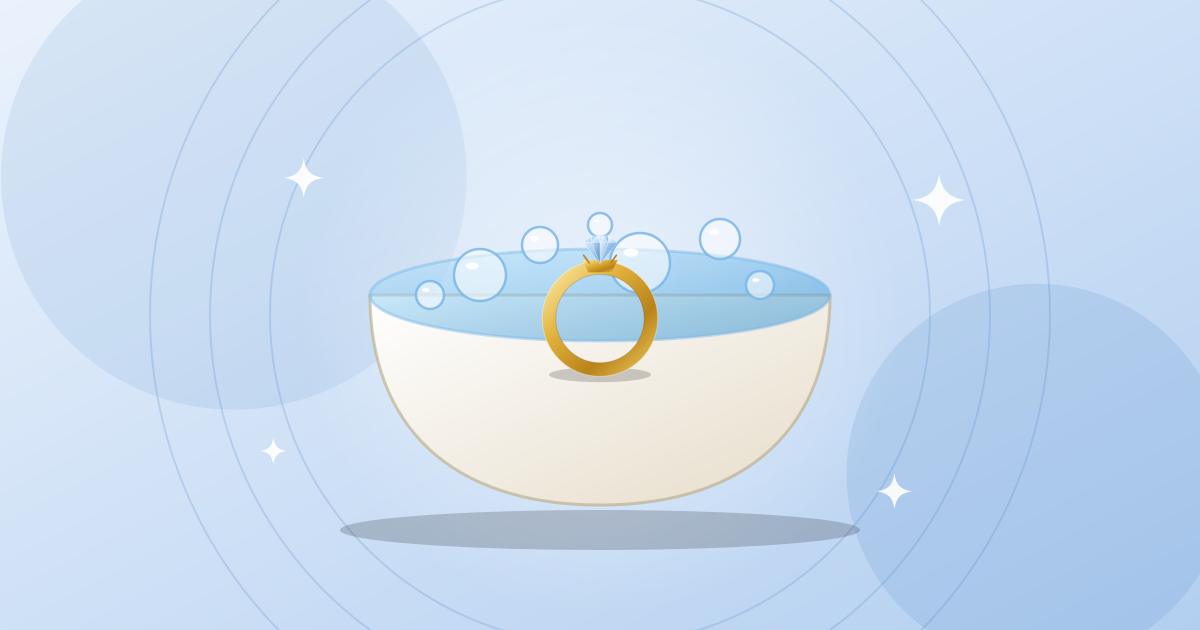
How to clean a diamond ring
How to clean a diamond ring at home with lukewarm water, mild soap and a brush, and how often to have a jeweler check it.
 Jewelry care and maintenance
How to clean costume and fashion jewelry
How to clean costume jewelry without damaging it: a damp cloth, no long soaking or harsh products, and what to do if it has turned green.
 Jewelry care and maintenance
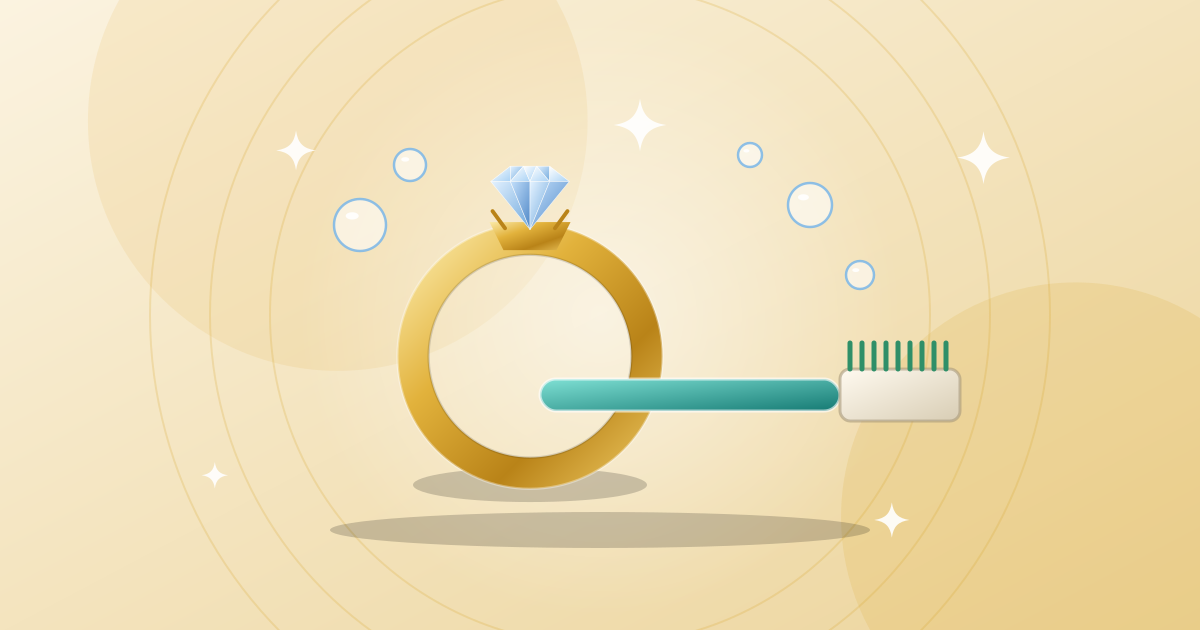
How to clean gold jewelry at home
Clean yellow, white and rose gold at home with lukewarm water and mild soap, and care differently for gold-plated, gold-filled and rhodium-plated white gold.
 Jewelry care and maintenance
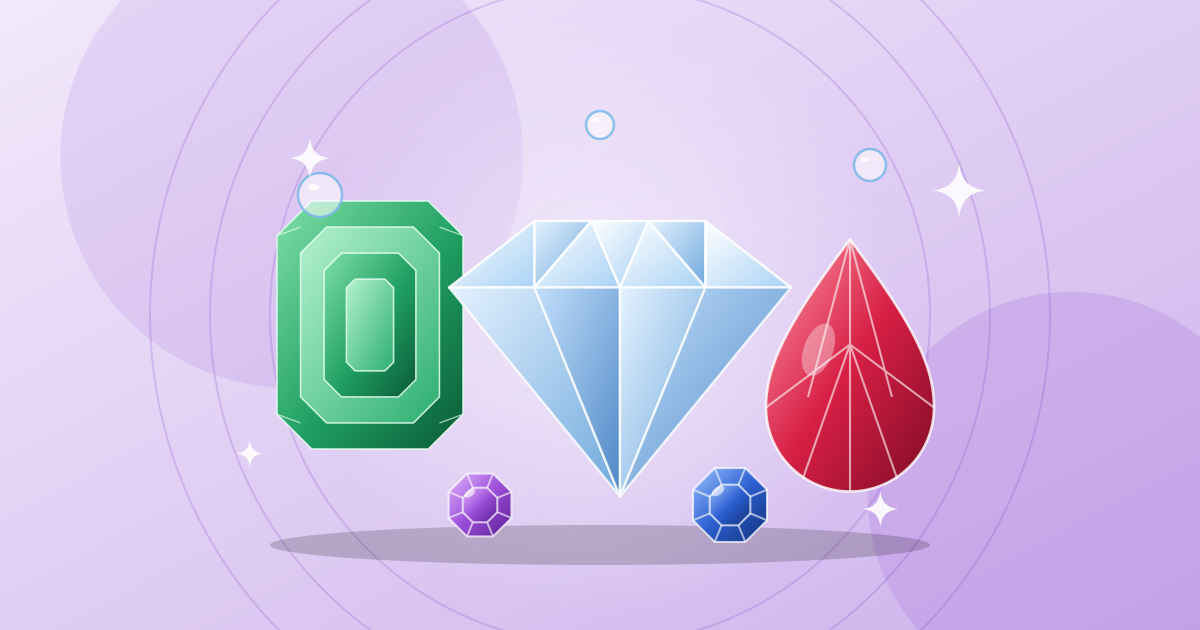
How to clean jewelry with gemstones
How to clean jewelry with stones: which stones handle water and a brush, which are delicate (pearls, opal, emerald, turquoise) and which avoid ultrasonic.
 Jewelry care and maintenance
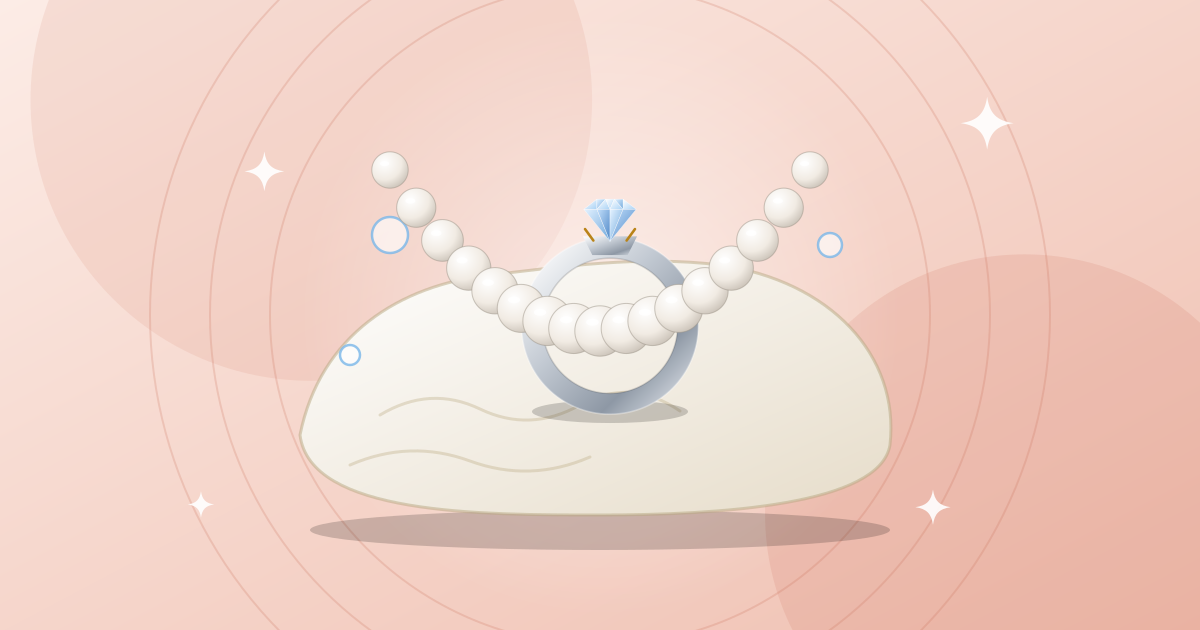
How to clean pearls
How to clean natural, cultured and imitation pearls: a soft damp cloth, no ultrasonic or chemicals, and how to store them.
 Jewelry care and maintenance
How to clean silver jewelry and remove tarnish
How to clean 925 silver at home: cloth, mild soap and baking soda with aluminum foil, and when not to (pearls, porous stones and intentional patina).
 Jewelry care and maintenance
How to clean silver, gold and steel chains
How to clean silver, gold and stainless steel chains without tangling or scratching them, and how to restore the shine of the links.
 Buying guides
How to find your ring size (with conversion chart)
How to measure your ring size at home with string or a ring that fits, and a chart of equivalences between circumference, diameter and EU and US sizes.
 Jewelry care and maintenance
How to fix a broken chain
How to fix a broken chain at home with two pliers and a jump ring, when you need a jeweler (soldering) and how to prevent it from breaking again.
 Buying guides
How to measure bracelet and bangle size
How to measure your wrist to choose a bracelet or bangle size, how many centimeters to add, and indicative sizes for women and men.
 Jewelry care and maintenance
How to store jewelry so it does not get damaged
How to store jewelry at home: pieces apart, a dry place, sealed bags with anti-tarnish for silver and pearls laid flat, away from humidity and direct light.
 Buying guides
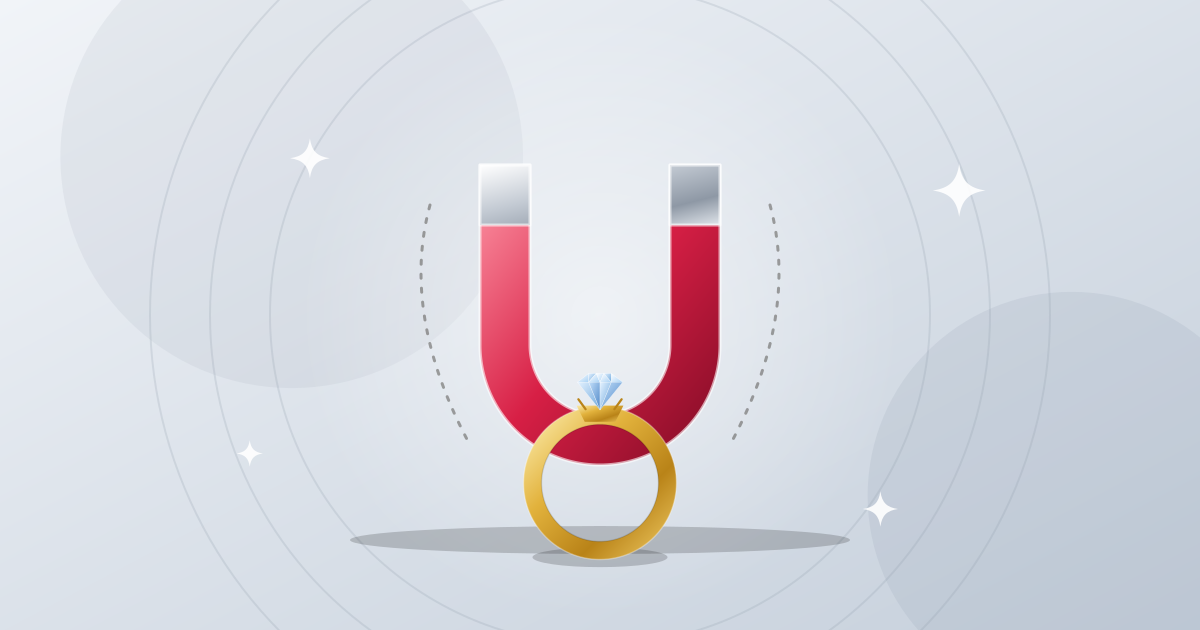
How to tell if gold is real
How to check whether a gold piece is genuine: stamp, magnet, color, wear and professional acid or XRF testing; which home tests are unreliable.
 Buying guides
How to tell if silver is real
How to check whether a silver piece is genuine: 925 mark, magnet, ice, white cloth and professional testing; which tests are reliable and which are not.
 Buying guides
Hypoallergenic jewelry and nickel allergy
How to choose hypoallergenic jewelry if you are allergic to nickel: titanium, platinum, 14K gold or higher, nickel-free silver and 316L steel; what to avoid.
 Techniques
Inlay in jewelry
Inlay fits stone, mother-of-pearl, wood, enamel or resin into a recess in the metal, flush with the surface; from marquetry to hardstone.
 Techniques
Invisible (mystery) setting
In the invisible setting, cut stones are placed together with no metal between them, held by grooves in their base; patented by Van Cleef & Arpels in 1933.
 Materials
Jade
Jade is the name for two minerals, jadeite and nephrite; very tough, it is the sacred gem of China, Mesoamerica and New Zealand (pounamu).
 Materials
Jet
Jet is a black variety of lignite, light and polishable, used in mourning jewelry and as an amulet, notably from Asturias and Whitby.
 Jewelry
Jewel
A piece of personal adornment used to beautify and enhance a person's appearance.
 Tools
Tools
Jeweler's bench and bench pin
The jeweler's bench is the work table with a V-notch and a drawer (or leather) to collect filings; height, lighting and organization.
 Tools
Tools
Jeweler's files: shapes and cuts
Jeweler's files (flat, half-round, round, needle) and their cut numbering; how to choose and clean them.
 Tools
Tools
Jeweler's hammers and mallets
Jeweler's hammers (ball, planishing, chasing, flat-faced) and rawhide or nylon mallets are used to forge, texture and shape without marking.
 Tools
Tools
Jeweler's loupe and microscope
The 10x loupe and the gemological microscope are used to examine stones, solder joints and marks; how to use a jeweler's loupe.
 Tools
Tools
Jeweler's saw and saw blades
The jeweler's saw is an adjustable frame with very fine blades for cutting metal; blade numbering, tension and how to cut without breaking them.
 Tools
Tools
Jeweler's scale and caliper
The precision scale weighs metals and gems (grams, carats, grains) and the caliper measures thicknesses and diameters; keys for buying and making.
 Tools
Tools
Jeweler's torches: gas, oxygen and mini torch
Jeweler's torches (propane, gas with oxygen, the butane mini torch) give the flame for soldering, annealing and melting; types, flame and safety.
 Techniques
Jewelry alloys: how they are made
How gold and silver alloys are made: weighing the metals, melting with flux, stirring with graphite and pouring into an ingot mold; 18K gold in yellow, white and rose.
 Jewelry around the world
Jewelry and amulets of ancient Egypt
Scarabs, the ankh and the Eye of Horus: ancient Egyptian jewelry was amulets of protection and life, made of gold, lapis lazuli, turquoise and carnelian.
 Tools
Tools
Jewelry drills and burs
Drills, the flex shaft and burs are used to pierce, cut and shape metal; bur shapes (ball, cylinder, cone), speeds and safety.
 Buying guides
Jewelry hallmarks and stamps: what 925, 750 or 585 mean
What the numbers stamped on jewelry mean (925, 750, 585, Pt950) and how to read gold, silver and platinum marks.
 Tools
Tools
Jewelry Oven
A jewelry oven heats and melts metal for lost-wax molds. Learn its uses in casting, soldering, annealing, enameling and tempering, and how to use it.
 Tools
Tools
Jewelry pliers and tweezers: types and uses
Jewelry pliers (flat-nose, round-nose, cutting, chain-nose) hold, bend and cut metal precisely; how to choose and care for them.
 Techniques
Jewelry repair and restoration
Restoration repairs, cleans and conserves antique or damaged jewelry: soldering, replaced stones, re-plating and criteria for not destroying its value.
 Tools
Tools
Jewelry spatulas and chisels
Jewelry spatulas and chisels are used to model wax and to shape and finish cast metal; types, uses and sharpening.
 Jewelry
Jewelry styles and periods: Georgian, Victorian, Art Nouveau, Art Deco
A tour of jewelry styles: Georgian, Victorian, Art Nouveau, Edwardian, Art Deco, Retro and modern, with their materials and traits.
 Buying guides
Jewelry terms from A to Z
A glossary of over one hundred jewelry terms explained in a few words: metals, gems, techniques, tools and parts of a jewel, with links to each topic.
 Jewelry care and maintenance
Jewelry that does not tarnish or stain: which materials to choose
Jewelry materials that do not tarnish or darken: solid gold, platinum, titanium and 316L stainless steel; what happens with plated, vermeil and silver pieces.
 Techniques
Keum-boo: gold foil on silver
Keum-boo, a Korean technique, joins 24-karat gold foil to fine silver with heat and pressure, without solder, for a gold-on-silver finish.
 Techniques
Kumihimo and cord braiding
Kumihimo is a Japanese braiding technique with threads on a disk or marudai; it makes silk cords and bracelets with geometric patterns.
 Buying guides
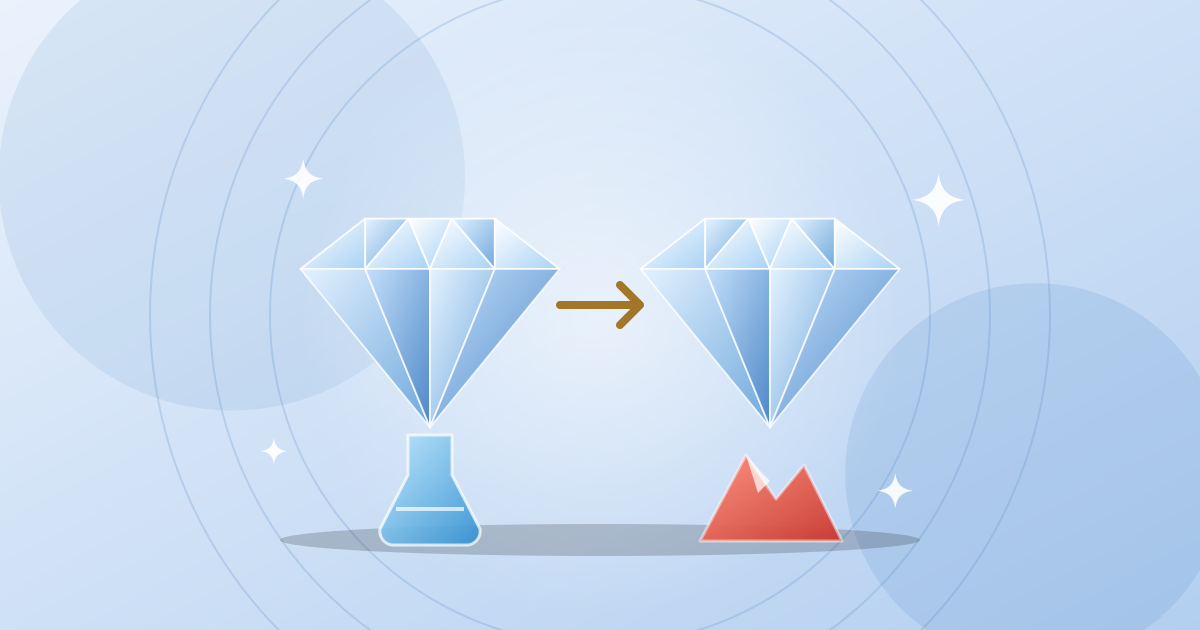
Lab-grown or natural diamond: differences, price and which to choose
Differences between a lab-grown and a natural diamond: same material, different origin and price; how to tell them apart, certificates and resale value.
 Techniques
Lacquering and surface protection
Lacquers and waxes protect metal from tarnish: clear lacquer, microcrystalline wax and coatings for copper, brass and silver.
 Techniques
Lampwork glass beads
Lampworking melts glass rods in a torch flame and winds them onto a mandrel to make unique beads; annealing prevents them from breaking.
 Materials
Lapis lazuli
Lapis lazuli is a deep blue rock with golden flecks of pyrite, used since ancient Egypt; it is soft (5-5.5) and breaks easily.
 Techniques
Laser and spot welding
Laser and spot welding join metal with very localized heat, without flux or torch; ideal for repairs next to stones and enamel.
 Techniques
Lasers in jewelry: cutting, engraving and cleaning
Lasers cut, engrave, mark and clean metal with great precision: hallmarking, ring engraving, cutting pieces and welding.
 Materials
Leather
Leather is used for bracelets, necklaces and straps for its flexibility and warm look; it can be braided, stitched, engraved and pairs well with metal.
 Techniques
Leather jewelry: braiding, stamping and riveting
Leather jewelry is cut, braided, stamped, dyed and riveted: bracelets, necklaces and straps, with edge finishing and clasps.
 Techniques
Lost-wax casting
Lost-wax casting is used in jewelry-making to create precise and detailed metal pieces using wax and heat.
 Jewelry around the world
Maasai beadwork and the meaning of colors
Maasai beadwork from Kenya and Tanzania uses color as language: red, blue, green, white, orange and black carry meanings.
 Techniques
Macramé and knotting in jewelry
Macramé creates bracelets, necklaces and pendants by knotting cord; basic knots (square, lark's head, sliding), materials and adjustable clasps.
 Tools
Tools
Mandrels and ring sizers
The ring mandrel is a graduated steel cone for curving and measuring rings; there are also bangle mandrels and finger sizers.
 Jewelry around the world
Māori pounamu: hei-tiki, hei matau and koru
Pounamu (New Zealand jade) is a taonga for Māori: hei-tiki, hei matau, koru and toki are jewels of ancestors, journey and life.
 Jewelry around the world
Mapuche silverwork
Mapuche silverwork (rütrafe) creates silver jewelry such as the trarilonko, tupu and chawai, symbols of identity, protection and status.
 Jewelry
Medallions and lockets
A medallion is a round plaque worn hanging; a locket opens to hold a photo or lock of hair. History, types and care.
 Jewelry around the world
Mesoamerican jewelry: jade, gold and feathers
Maya, Aztec and other Mesoamerican peoples valued jade more than gold, and combined it with feathers, obsidian and shell.
 Techniques
Metal clay (PMC)
Metal clay mixes silver or gold powder with a binder; it is hand-modeled and fired into solid metal. A modern, accessible technique.
 Tools
Tools
Metal ingots and casting grain
Ingots and casting grain are the starting metal in casting; how to calculate the amount of metal for a piece and which alloys are used.
 Materials
Moissanite
Moissanite is silicon carbide (9.25 on Mohs), almost always lab-grown, with more fire than diamond and much cheaper.
 Techniques
Mokume-gane: wood-grain metal
Mokume-gane fuses layers of different metals with heat and pressure and works them to draw wood-like grain; a Japanese technique of the 17th century.
 Materials
Mother-of-pearl and shells
Mother-of-pearl is the iridescent inner layer of many shells; it is carved into beads, cameos and shimmering inlays.
 Jewelry around the world
Navajo, Zuni and Hopi silverwork
Silver and turquoise jewelry of the US Southwest: squash blossom necklaces, Zuni inlay and Hopi silver overlay.
 Jewelry
Necklace
A necklace is a piece of jewelry worn around the neck, and it is one of the most popular ways to adorn and enhance personal appearance. Necklaces can vary in style
 Jewelry
Necklace styles: choker, lariat, bib and layering
A catalog of necklaces: choker, collar, pendant, lariat, Y-necklace, bib, rivière, sautoir, layering and torc, with indicative lengths.
 Materials
Nickel silver (German silver)
Nickel silver, or German silver, is a copper, nickel and zinc alloy with a silvery look that contains no silver; common in costume jewelry and cutlery.
 Techniques
Niello: the black that makes the engraving stand out
Niello fills an engraving with a black mix of metallic sulfides melted in; it gives strong contrast on silver and has been used since Roman times.
 Materials
Opal
Opal is hydrated silica with a unique play of color; it is soft (5.5-6.5) and sensitive to heat and dehydration, and needs special care.
 Design
Ornamentation
Decorative details added to a piece of jewelry to beautify it and give it aesthetic value.
 Materials
Palladium
Palladium is a white precious metal of the platinum group, light and hypoallergenic, used pure and in white-gold alloys.
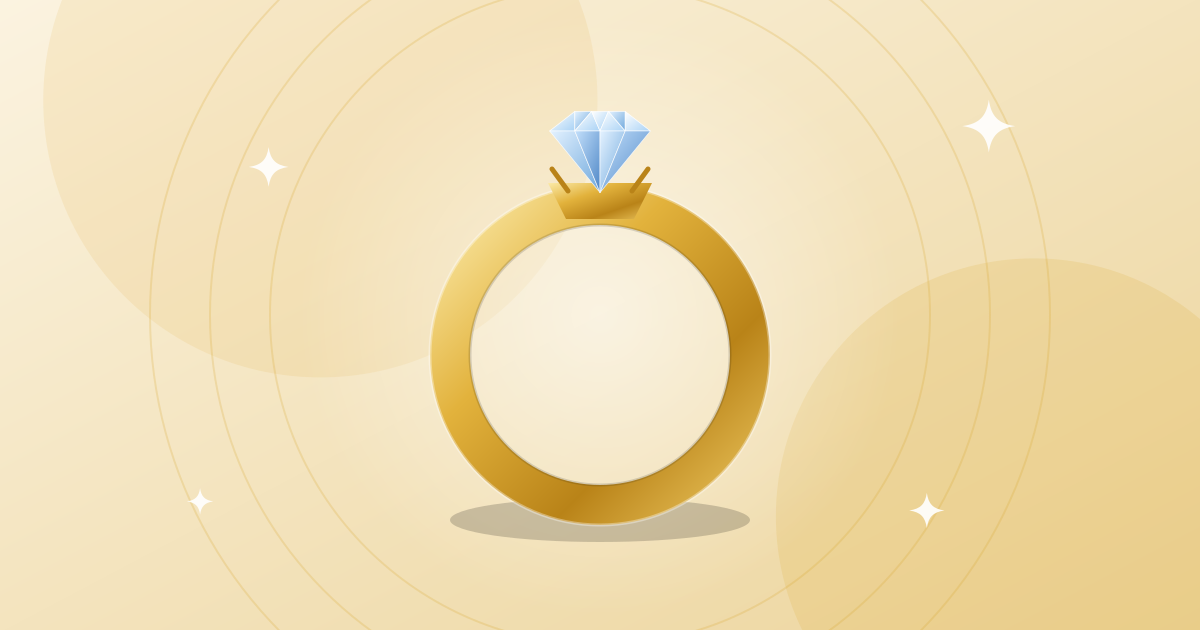 Jewelry
Parts of a piece of jewelry: ring, earring, necklace and bracelet
Vocabulary of the parts of a jewel: head, prongs, shoulders and shank of the ring; post and back of the earring; chain, clasp and bail of the necklace.
 Techniques
Pavé setting
Pavé covers a metal surface with many small stones held by tiny beads of metal, as if “paved”; it gives continuous sparkle.
 Techniques
Pearl stringing and knotting
Stringing fixes pearls on a silk thread with a knot between each to protect them; materials, knots, bead tips and when to restring.
 Materials
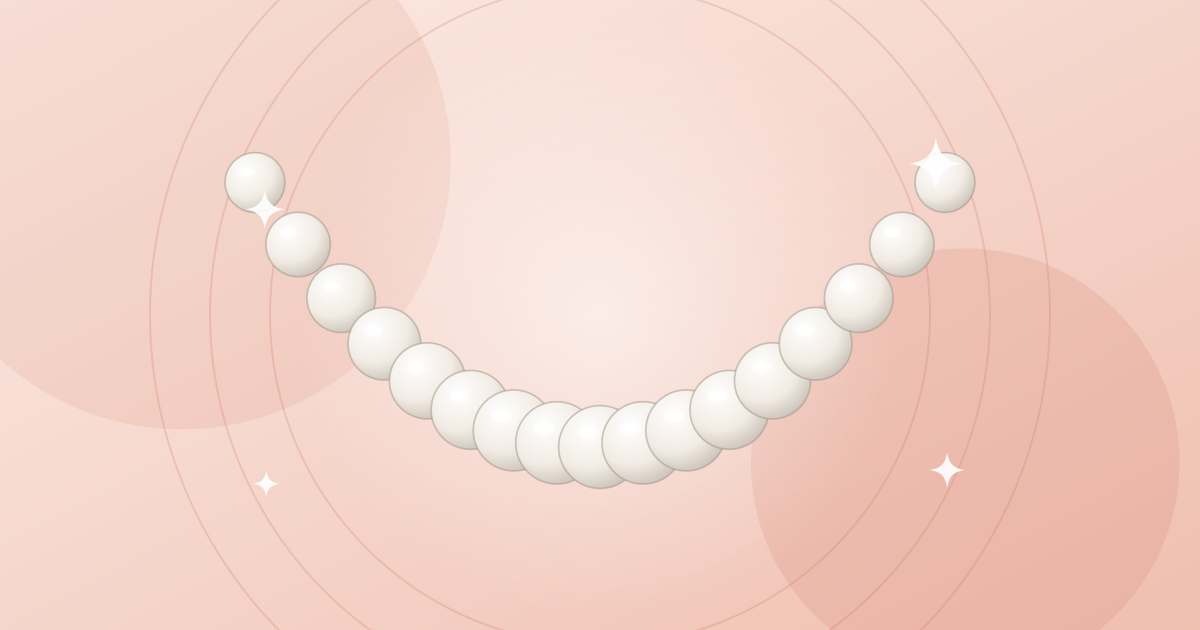
Pearls
Pearls form inside mollusks and are prized for their luster; they can be natural or cultured, saltwater or freshwater.
 Jewelry
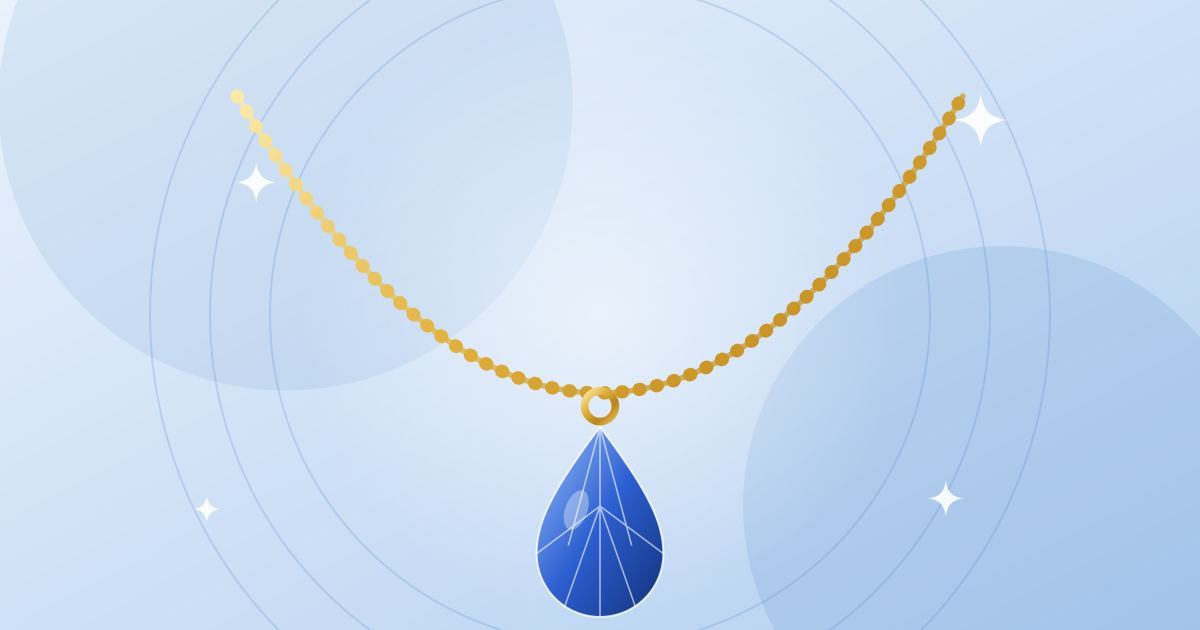
Pendants and charms: types, bails and how to choose
What a pendant and a charm are: types (initial, drop, cross, medal, solitaire), the bail, size relative to the chain and how to combine them.
 Techniques
Pickling: cleaning oxides after soldering or annealing
Pickling immerses the piece in a mild acid bath to remove oxides and flux residue; products, precautions and neutralizing.
 Design
Planning to design jewelry with original and unique designs
Planning to design jewelry involves an important creative and technical process, in order to obtain original and unique designs.
 Materials
Plastics, acetate and silicone
Plastics, cellulose acetate and silicone make light, colorful and affordable jewelry, from designer earrings to sports rings.
 Materials
Platinum
It is one of the rarest and most valuable metals in the world, found in very small quantities in nature.
 Techniques
Plique-à-jour: enamel without a backing
Plique-à-jour is translucent enamel in cells with no base, letting light pass like a miniature stained-glass window; typical of Art Nouveau jewelry.
 Techniques
Polishing and buffing metal
Polishing leaves metal with a mirror shine: from sanding to felt wheels and compounds (tripoli, rouge), with safety tips.
 Techniques
Polymer clay in jewelry
Polymer clay (Fimo-type) is hand-modeled and hardened in a home oven; millefiori canes, textures and sealing for earrings and pendants.
 Jewelry around the world
Pre-Columbian gold of Colombia
The Muisca, Quimbaya and Tairona worked gold in Colombia with lost-wax casting: tunjos, poporos and offerings of sacred value.
 Jewelry care and maintenance
Professional maintenance: what a jeweler checks and how often
How often to take your jewelry to a jeweler: checking prongs and settings, re-plating white gold, polishing, restringing pearls and replacing clasps.
 Techniques
Prong retipping
Retipping rebuilds the worn prongs of a setting: metal is added to the tips, reshaped and the stone is checked to be secure.
 Techniques
Prong setting
The prong setting holds the stone with 4 or 6 metal claws that let light through; the classic solitaire, like the Tiffany.
 Tools
Tools
Protective equipment for casting
Safety equipment for melting metal in jewelry: heat-resistant gloves, glasses or face shield, natural-fiber apron, closed shoes, ventilation and a fire extinguisher.
 Materials
Quartz and its varieties
Quartz is the most common mineral in jewelry (hardness 7): rock crystal, amethyst, citrine, rose quartz, smoky quartz, agate and chalcedony.
 Techniques
Refining and cupellation of precious metals
Refining purifies gold and silver; cupellation separates precious metals from base metals with lead and bone ash, an ancient assay technique.
 Materials
Resin
Epoxy or UV resin is poured into molds to create light, colorful jewelry, with dried flowers, glitter or pigments embedded.
 Techniques
Resin jewelry: step-by-step technique
How a resin jewel is made: silicone molds, mixing, bubbles, pigments, inclusions, curing, demolding and polishing, with safety.
 Techniques
Reticulation: wrinkled metal
Reticulation heats a silver alloy until the surface wrinkles into ridges and valleys, creating an unmistakable organic texture.
 Materials
Rhodium
Rhodium is a bright, very hard white metal of the platinum group, used as a plating on white gold and silver to add shine and protection.
 Jewelry
Ring
A piece of jewelry worn on the finger. Made of precious metals such as gold, silver, platinum, or a combination of them.
 Techniques
Ring resizing
How a ring is enlarged or reduced: cutting the band, adding or removing metal, soldering and rounding on the mandrel; which rings cannot be resized.
 Jewelry
Ring styles: from solitaire to cocktail ring
A catalog of ring styles: band, solitaire, three-stone, halo, eternity, cocktail, signet, stackable, thumb, claddagh, fede and gimmel, with their meanings.
 Techniques
Rolling and wire drawing: sheet and wire
Rolling reduces an ingot to sheet and wire drawing stretches it into wire through a draw plate; steps, gauges and lubrication.
 Tools
Tools
Rolling mills: how to flatten metal
The rolling mill flattens and stretches metal into sheet and grooved wire; manual and electric types, how to use it and how to care for it.
 Materials
Rope and cord
Rope and cord (cotton, hemp, nylon, silk or waxed) make light, colorful and versatile bracelets, necklaces and pendants.
 Techniques
Rubber molds and wax injection
A vulcanized rubber or silicone mold produces many wax copies of a master piece, the basis of serial production of cast jewelry.
 Materials
Ruby
Ruby is the red variety of corundum, a very hard gem (9 on Mohs) colored by chromium; it is valued for its color, clarity and origin.
 Jewelry around the world
Sámi jewelry (duodji)
The Sámi people of northern Europe create duodji: silver brooches with dangling rings (sølje), pewter-thread embroidery and reindeer antler jewelry.
 Techniques
Sand casting
A versatile and economical technique that allows jewelry pieces to be produced with fine and complex details.
 Materials
Sapphire
Sapphire is corundum in any color except red, famous for blue; very hard (9 on Mohs), it is ideal for engagement rings and everyday wear.
 Techniques
Sawing and piercing: cutting and hollowing metal
Piercing cuts shapes and openings in metal with a jeweler's saw and a bench pin; blades, technique and decorative openwork.
 Jewelry
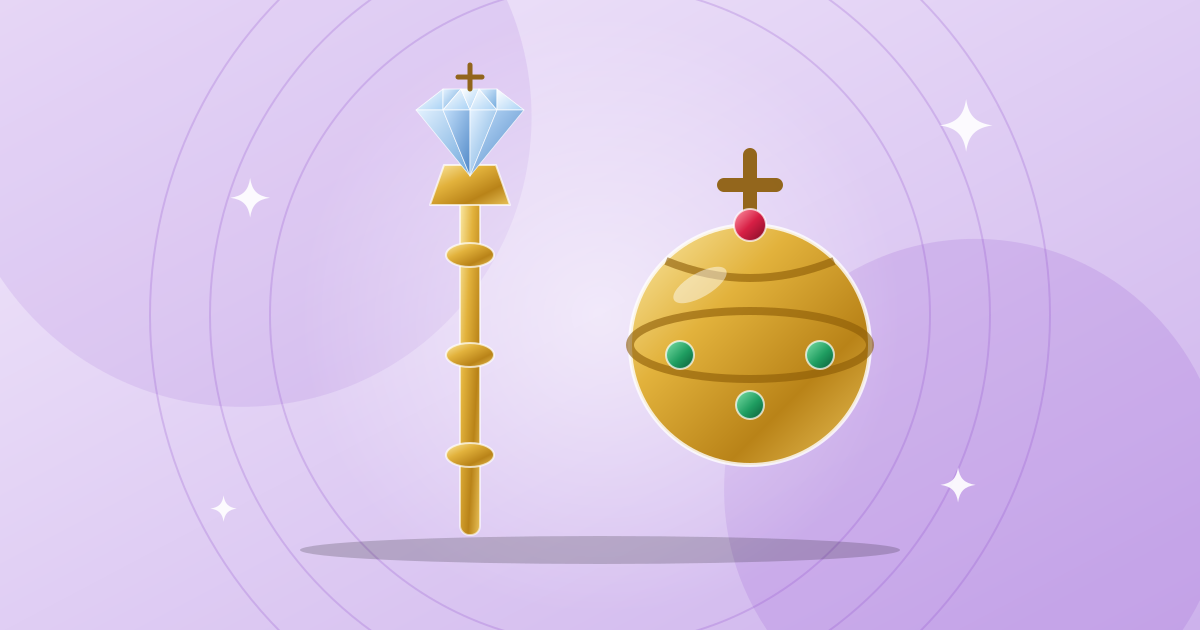
Scepters and orbs: the jewelry of power
The scepter and the orb are the insignia of royalty, made of gold, gems and enamel: a symbol of authority (scepter) and dominion (orb); history and famous examples.
 Jewelry
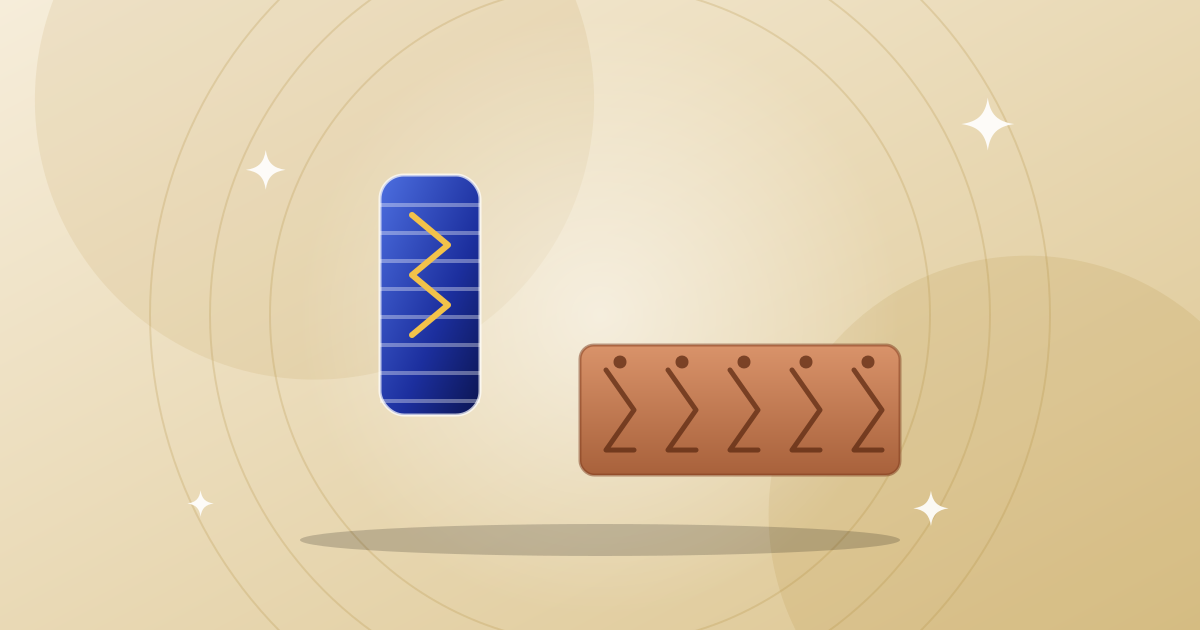
Seals in jewelry: Mesopotamian cylinders, scarabs and intaglios
Engraved stone seals are among the oldest jewels: Mesopotamian cylinders, Egyptian scarabs, Roman intaglios and Chinese seals; what they are and how they were used.
 Materials
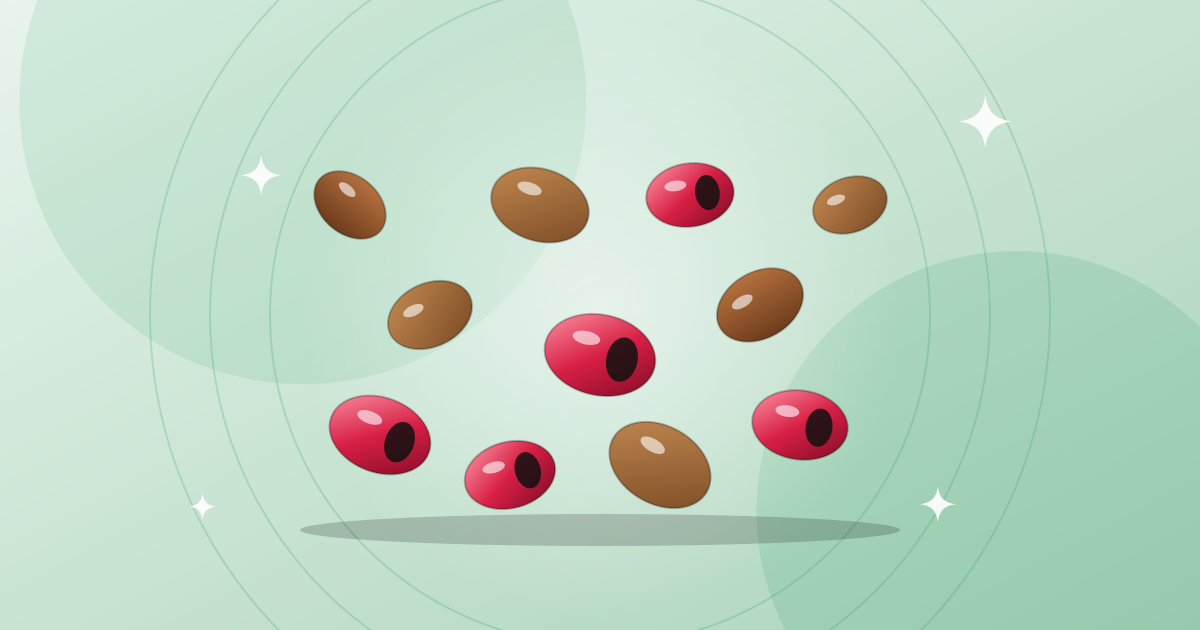
Seeds, tagua and nuts
Seeds, tagua (vegetable ivory) and nuts become eco-friendly, colorful and light beads for necklaces and bracelets.
 Jewelry
Signet rings: history, engraving and how to wear them
A signet ring carries an engraved crest, initials or emblem, and was used to seal documents in wax; history, types of engraving, materials and how to wear one.
 Materials
Silk and textile threads
Silk, cotton and other textile threads are woven, embroidered and knotted into soft, colorful, light jewelry, or used to string pearls.
 Materials
Silver
Silver is a soft, shiny, white, and lustrous transition metal. It is one of the seven metals known in antiquity.
 Techniques
Sinking, raising and dapping: hollow forms
Sinking and dapping give volume to a metal sheet: domes, bowls and hollow beads with dapping blocks, wooden blocks and stakes.
 Jewelry
Slave bracelets (hand chains) and ID bracelets
ID bracelets carry an engraved plate, a christening gift in Spain and Latin America; “slave bracelet” also names a hand chain, a bracelet linked to a ring.
 Techniques
Soldering for jewelry
Soldering aims to create permanent, solid joins between metal pieces without damaging their original properties and characteristics.
 Materials
Stainless steel
Stainless steel is a corrosion-resistant, hard and affordable alloy widely used for watches, bracelets, rings and everyday jewelry.
 Techniques
Stamping and die striking
Stamping imprints a relief on metal with punches and dies (by hammer or press); used for textures, hallmarks and serial pieces.
 Tools
Tools
Starter tool kit for jewelry making
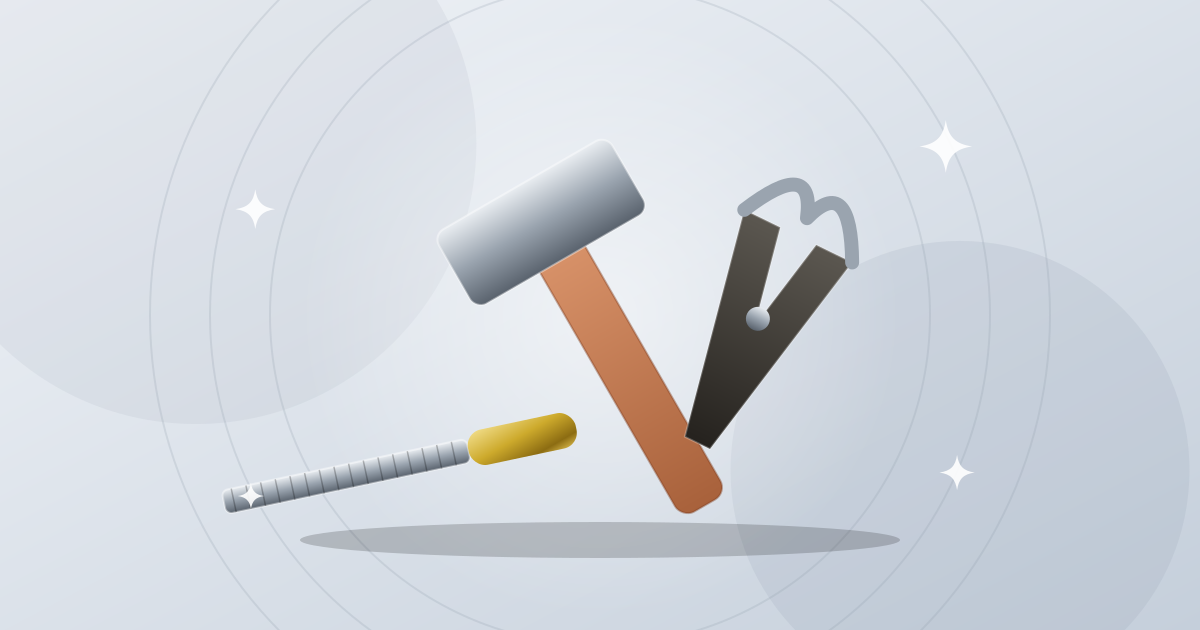
Which basic tools you need to start making jewelry: pliers, saw, files, hammer, mandrel, torch and materials, with an indicative budget.
 Techniques
Stone settings: types and how to choose
A setting holds the stone in the jewel: prong, bezel, channel, pavé, tension, invisible and flush; how each works and which to choose for the stone and use.
 Techniques
Stone tumbling
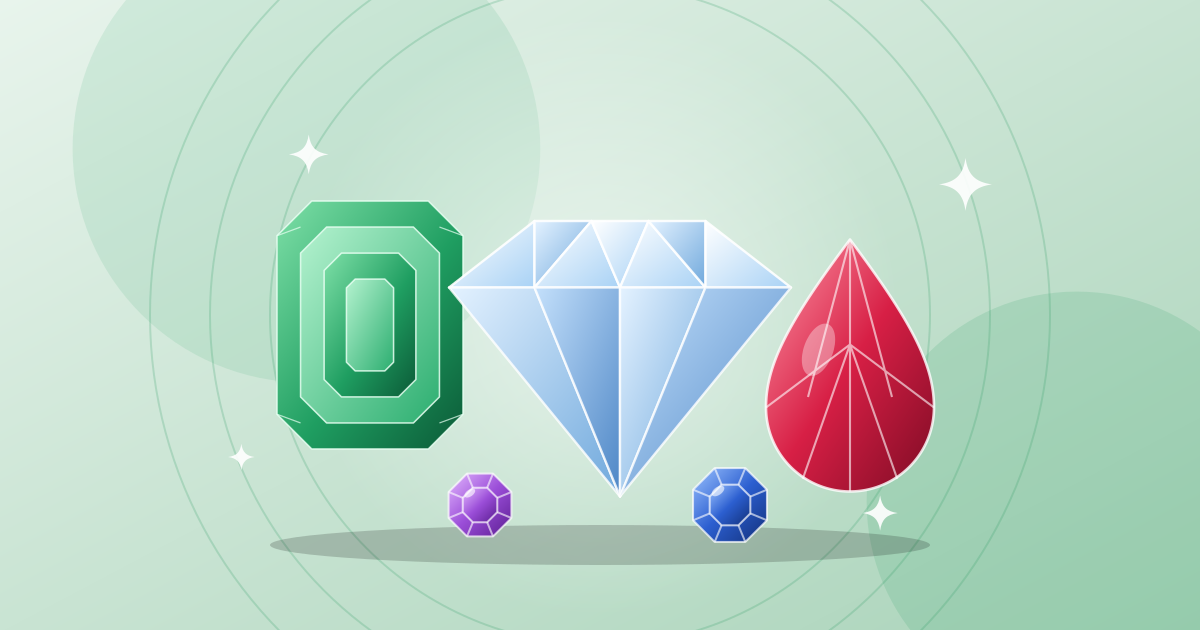
A rotary tumbler rounds and polishes stones in stages of ever finer abrasive over weeks; how it is done and which stones suit it.
 Jewelry around the world
Symbols in traditional jewelry and their meaning
A guide to symbols in world jewelry: ankh, scarab, khamsa, koru, hei matau, sankofa, turquoise and jade, with their origin and associated meaning.
 Design
Talking about design
Jewelry can inspire interior, architectural and graphic design in style, materials, details and color palettes, and design shapes jewelry in return.
 Techniques
Tension setting
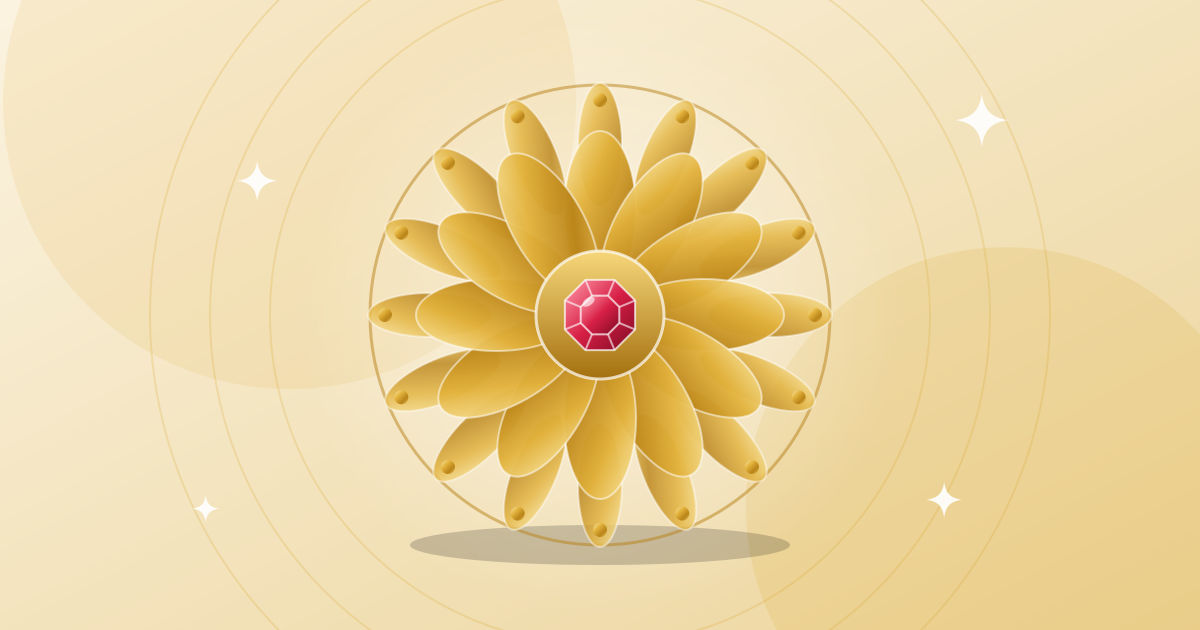
In a tension setting the stone is held only by the pressure of the band, with no prongs; it gives a floating-stone effect but demands hard metals and very hard stones.
 Techniques
Texturing metal surfaces in jewelry
Texturing gives relief to the metal surface: hammered finishes, rolling-mill textures, bark, burs, sandblasting and stamping.
 Buying guides
The 4Cs of diamonds: cut, color, clarity and carat
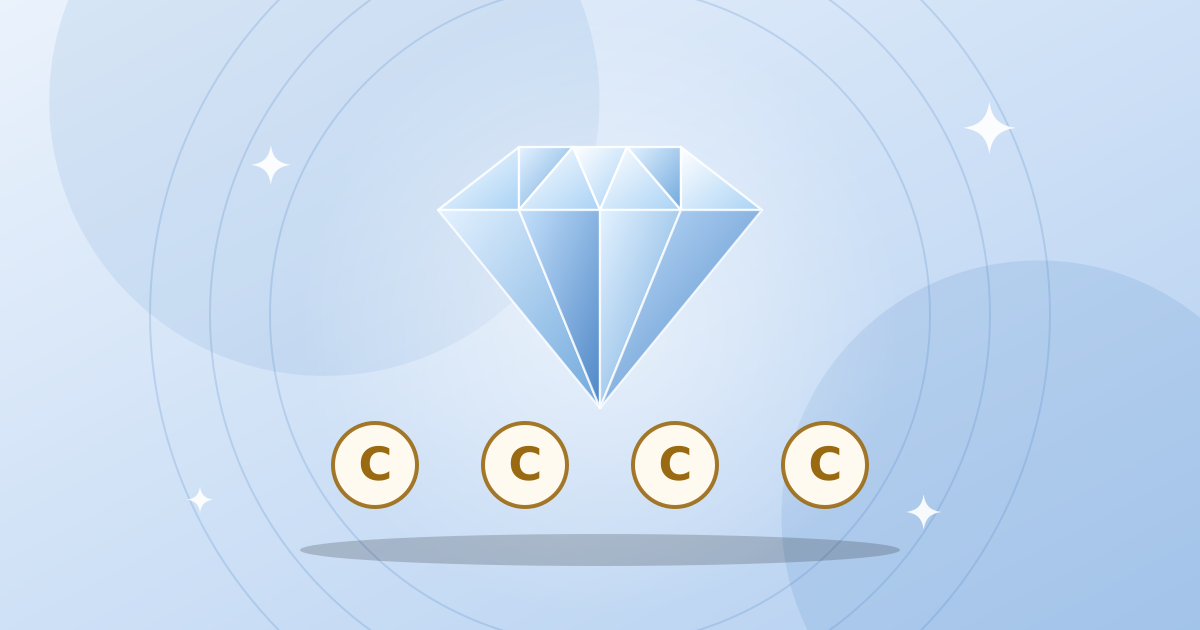
The 4Cs of diamonds explained: cut, color (D-Z), clarity (FL to I3) and carat weight, and how to balance them for your budget.
 Design
The color of metals
Colors of yellow, white and rose gold, silver, platinum, titanium, steel, copper and bronze, and how coatings change them.
 Design
The coloring of metals
How metal is given color in jewelry: anodizing, patinas, PVD, enameling, heat treatments and electroplating, with their processes.
 Jewelry
Tiaras: what they are, styles and how to choose one
A tiara is a semicircular headpiece worn at the front of the hair; history, styles (halo, kokoshnik, floral), materials and how to choose one for a wedding.
 Materials
Tin and pewter
Tin is a soft metal with a low melting point; pewter, its most common alloy, casts easily in molds for jewelry and costume pieces.
 Materials
Titanium
Titanium is a light, very strong and hypoallergenic metal that can be anodized into colors; ideal for wedding bands, watches and piercings.
 Materials
Topaz
Topaz is a hard aluminum silicate (8 on Mohs) with easy cleavage; blue topaz is usually treated. The November birthstone.
 Jewelry
Torcs and torques: the rigid collar of the Celts
The torc is a rigid open collar of twisted metal, a status symbol among the Celts; history, shape, hoards and modern designer torques.
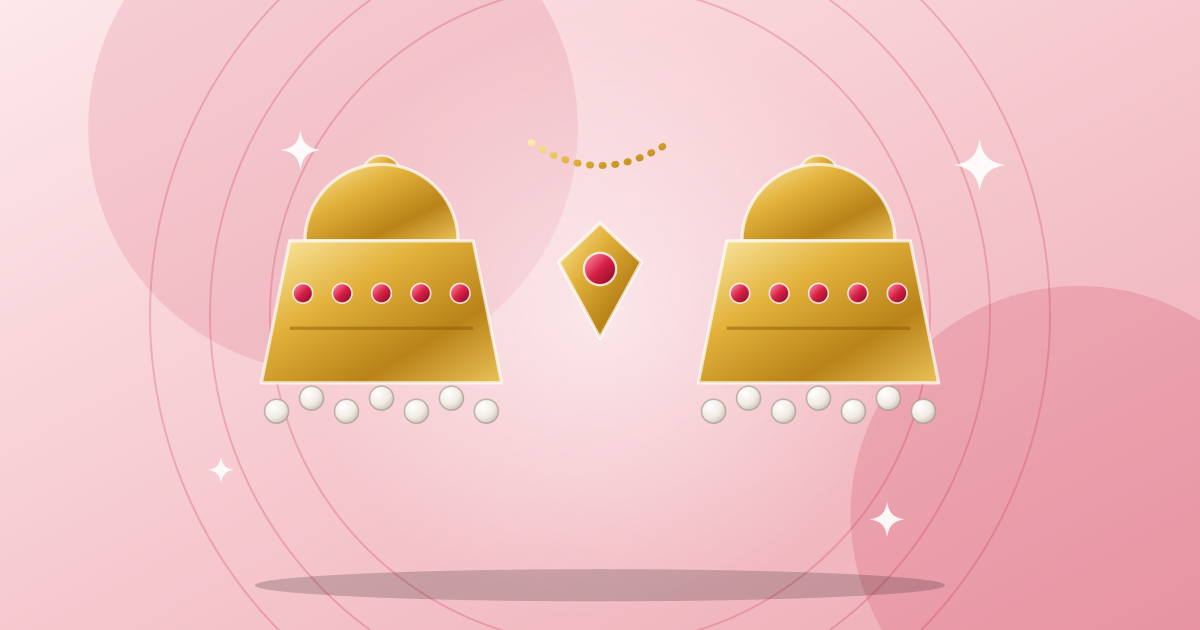 Jewelry around the world
Traditional Indian jewelry and tribal craft
Kundan, meenakari, mangalsutra and bangles: Indian jewelry is a language of weddings, protection and status; tribal crafts use lost-wax casting (dhokra).
 Jewelry around the world
Tuareg and Amazigh jewelry
Silver, amber, coral and enamel in Tuareg and Amazigh jewelry from the Sahara and the Maghreb: amulets, fibulae and protective crosses.
 Materials
Tungsten
Tungsten carbide is an extremely hard, dense and scratch-resistant material used for modern wedding bands and rings.
 Materials
Turquoise
Turquoise is a copper aluminum phosphate in blue to green, prized since antiquity; it is porous and soft (5-6) and is usually stabilized.
 Jewelry
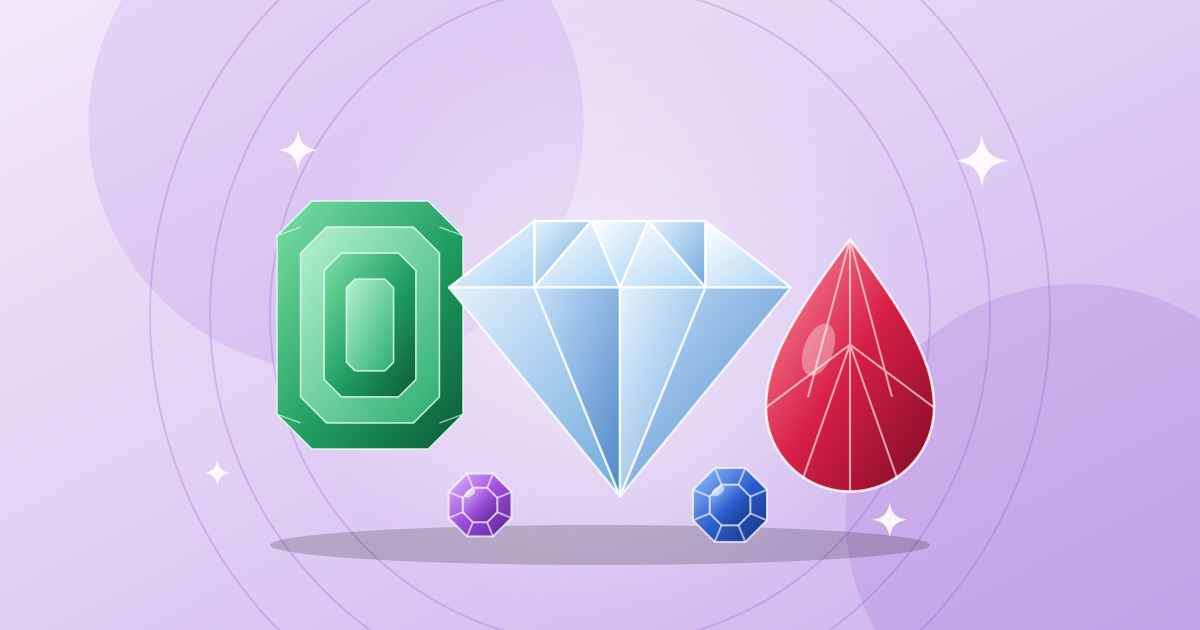
Types of gem and diamond cuts
A catalog of the most common gem and diamond cuts: brilliant, princess, emerald, Asscher, radiant, cushion, oval, pear, marquise, heart, baguette and cabochon.
 Jewelry
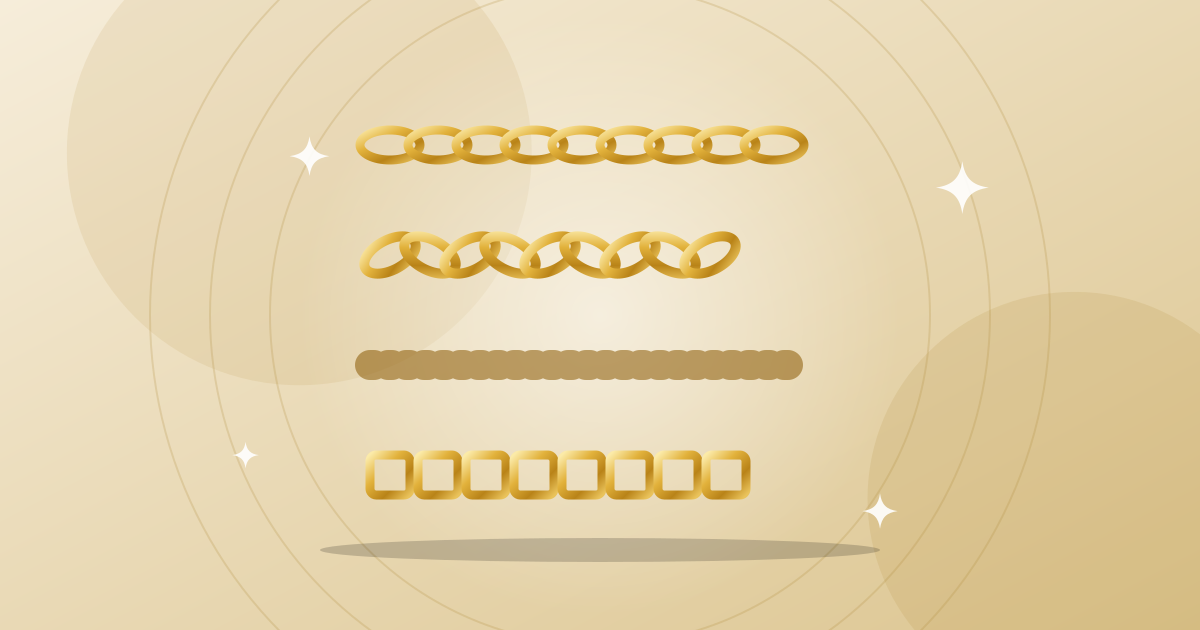
Types of jewelry chains: links, thicknesses and clasps
Types of jewelry chains (cable, curb, figaro, rope, box, snake, herringbone, wheat), how to choose the thickness, clasps and weight for pendants.
 Jewelry
Types of jewelry clasps (necklaces, bracelets and earrings)
Necklace and bracelet clasps (lobster, spring ring, toggle, box, barrel, magnetic) and earring backs (butterfly, screw, lever, clip).
 Jewelry care and maintenance
Ultrasonic jewelry cleaner: when to use it and when not to
What an ultrasonic cleaner does, which jewelry can go in it (gold, silver, diamonds) and which cannot (pearls, opals, emeralds, costume jewelry).
 Tools
Tools
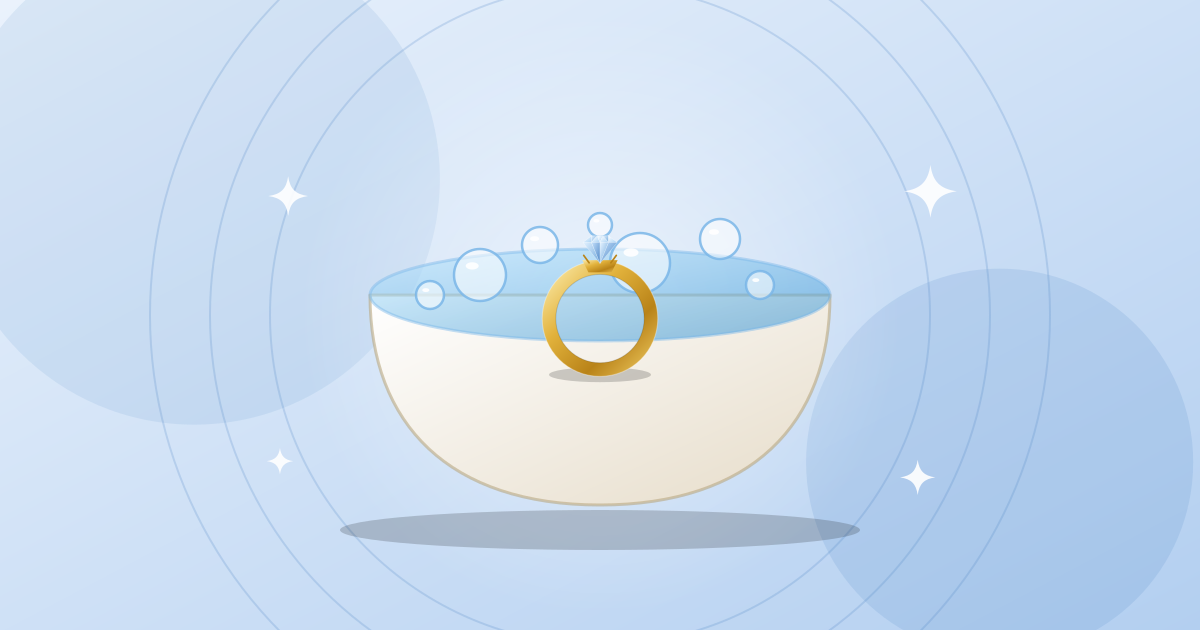
Ultrasonic machine for jewelry
The ultrasonic machine cleans jewelry with vibrations in a liquid; frequency, solutions, times and which pieces must not go in.
 Techniques
Vacuum casting
Vacuum casting draws molten metal into the mold with a pump; it reduces porosity and reproduces very fine detail.
 Techniques
Victorian hair jewelry (hairwork)
In Victorian times hair of loved ones was woven into brooches, bracelets and lockets as jewels of affection and mourning; technique and meaning.
 Jewelry around the world
Wampum and North American beadwork
Wampum, made from marine shell beads, and the beadwork of North American peoples carry history, agreements and belonging.
 Techniques
Wax carving and modeling
The wax model is the origin of most cast jewelry: hard and soft waxes, carving tools, adding wax and preparing the casting tree.
 Jewelry
Wedding rings: types, widths, metals and how to choose
How to choose wedding rings: profiles (flat, domed, comfort fit), widths, metals (gold, platinum, titanium), engraving, size and which hand and finger to wear them on.
 Buying guides
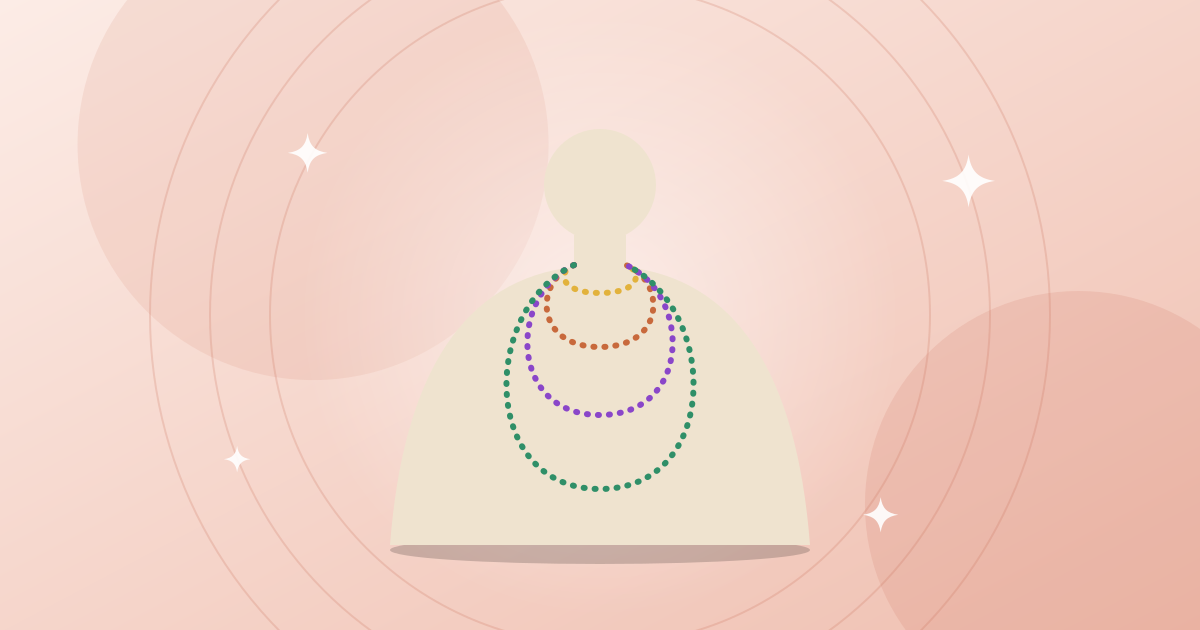
What chain length to choose for a necklace
Necklace length guide in centimeters: choker (35-41 cm), princess (43-48), matinee (50-61), opera (71-86) and rope (90 or more), with where each one falls.
 Buying guides
What is 925 silver (sterling silver)
925 or sterling silver is an alloy of 92.5% silver and 7.5% other metals, usually copper; its advantages, care and how it differs from pure silver.
 Buying guides
What jewelry to give: ideas by person and occasion
Ideas for giving jewelry by person (partner, mother, daughter, friend) and occasion, with advice on sizes, birthstones, personalization and budget.
 Jewelry care and maintenance
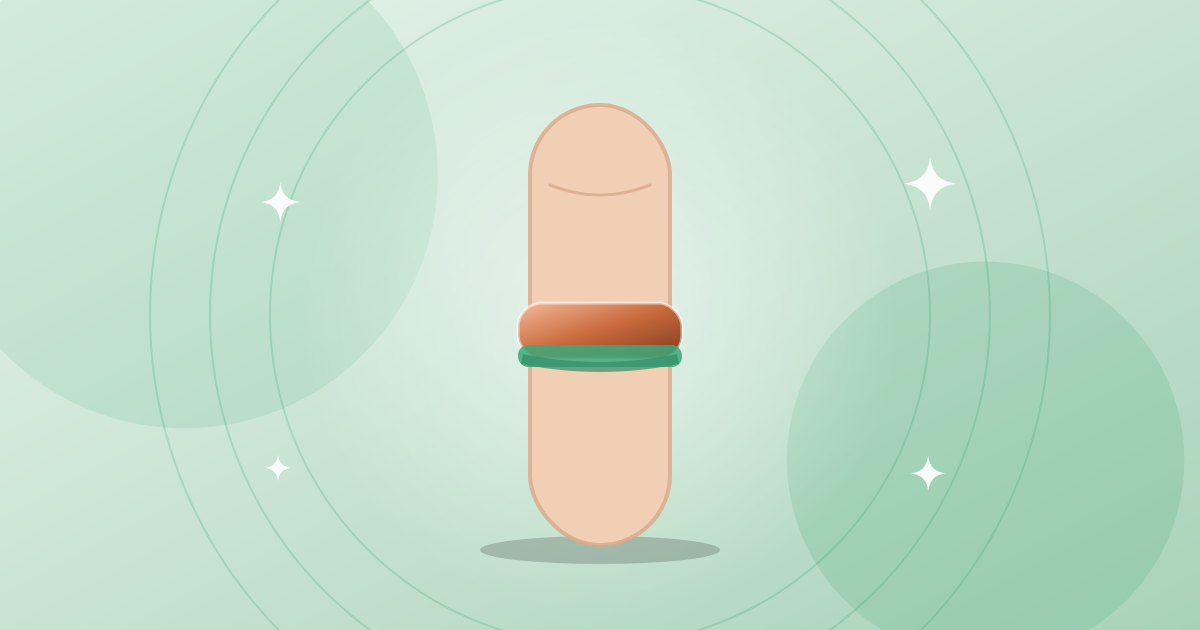
Why jewelry turns your skin green
Jewelry turns skin green because copper reacts with sweat and acids; it is harmless. Which metals avoid it and how to prevent it.
 Jewelry care and maintenance
Why silver turns black and how to prevent it
Silver turns black from sulfur in the air and on skin (silver sulfide). How to prevent it with good storage and regular wear, and how to clean it.
 Techniques
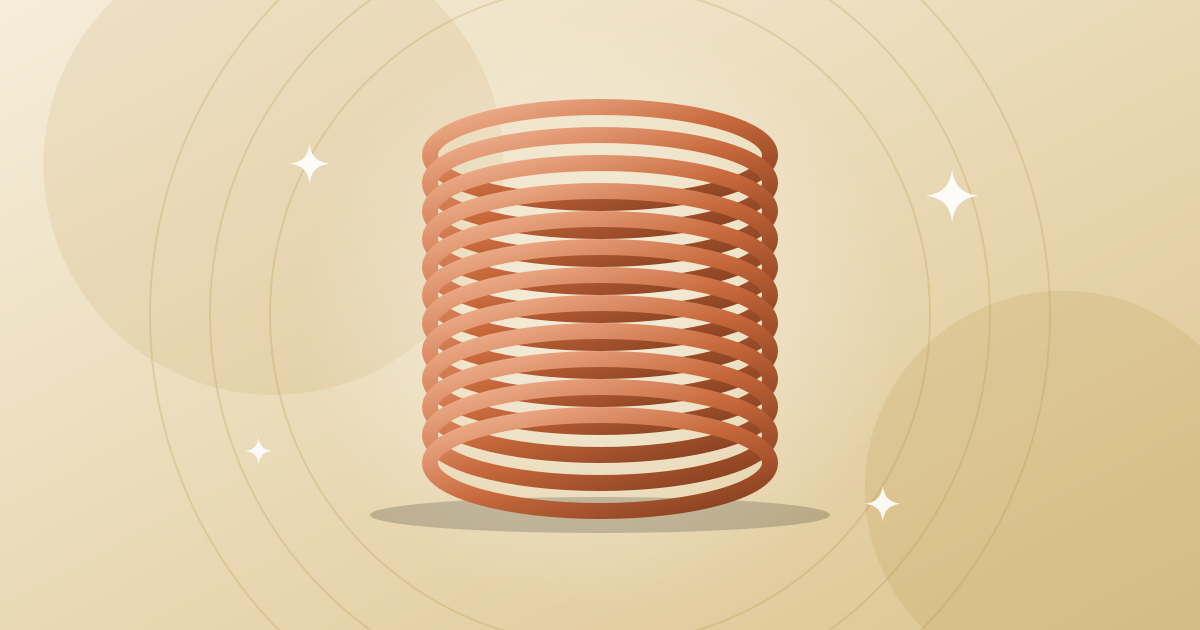
Wire wrapping
Wire wrapping holds stones and beads with bent and coiled wire, without soldering: loops, hooks, pendants and wire settings.
 Materials
Wood
Wood adds warmth and lightness to rings, earrings and beads; it is carved, turned and sealed, and pairs well with metal and resin.
 Techniques
Wood jewelry: turning and laminating
Wood jewelry is made by turning, carving, laminating (glued layers) and bentwood rings; finishes with oil and resin.
 Techniques
Workshop safety
Safety is of the utmost importance in a jeweler's workshop, to protect both the jeweler and the surroundings from possible risks and accidents.