Jewelry alloys: how they are made
Pure gold and silver are too soft for most jewelry. They are mixed with other metals to gain hardness, change color and lower the price. This mixture is called an alloy.
How it is done #
- The metals are weighed according to the recipe.
- They are melted in a crucible with flux.
- Stir with a graphite rod.
- Pour into an ingot mold, cool and roll.
Examples of 18 karat gold #
All contain 75% gold. White gold adds palladium (16%) and silver (9%); rose gold adds copper (21-25%) and some silver; yellow gold combines copper, silver or zinc. See 14 or 18 karat.
Silver #
Sterling silver (92.5%) contains copper. Argentium silver replaces part of the copper with germanium and resists tarnish and firescale better.
Precautions #
Proportions must be exact to honor the fineness that is stamped (see hallmarks).
Step by step #
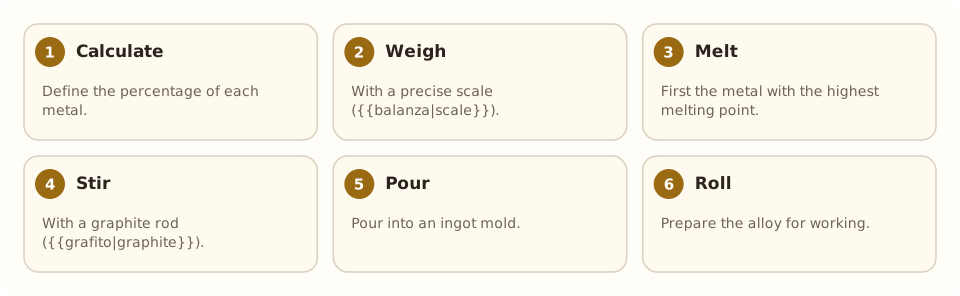
- Calculate. Define the percentage of each metal.
- Weigh. With a precise scale (scale).
- Melt. First the metal with the highest melting point.
- Stir. With a graphite rod (graphite).
- Pour. Pour into an ingot mold.
- Roll. Prepare the alloy for working.
Tools and materials #
- Crucible and furnace or torch
- Base metals (gold, silver, copper)
- Graphite ingot mold
- Flux
Common mistakes #
- Imprecise measurements: the karat changes.
- Overheating: zinc evaporates.
- Mixing without stirring.
- Contaminated metals.
See also #
This entry was drafted with the help of AI and is pending review by the author.
Related articles
 Techniques
Pavé setting
Pavé covers a metal surface with many small stones held by tiny beads of metal, as if “paved”; it gives continuous sparkle.
 Techniques
Burnishing: smoothing without removing metal
Burnishing smooths and shines metal by rubbing it with a polished steel tool, without removing material; used on bezels, prongs and as a final finish.
 Techniques
Metal clay (PMC)
Metal clay mixes silver or gold powder with a binder; it is hand-modeled and fired into solid metal. A modern, accessible technique.