Metal clay (PMC)
Metal clay (PMC, Art Clay…) is a paste of silver, gold or copper particles with an organic binder and water. It is modeled like clay and, when fired, turns into metal.
How it is done #
- The paste is modeled by hand or with molds and left to dry.
- It is filed and smoothed when dry.
- It is fired in a kiln or with a torch: the binder burns away and the particles sinter into metal.
- The piece is polished like any other.
Shrinkage #
The piece shrinks when fired (between 8 and 30% depending on the brand); design it a little larger.
Origin #
It was developed in Japan in the early 1990s and brought silver jewelry to people without a casting workshop.
Advantages #
No soldering or casting is needed; it takes textures, stamps and molds.
Step by step #
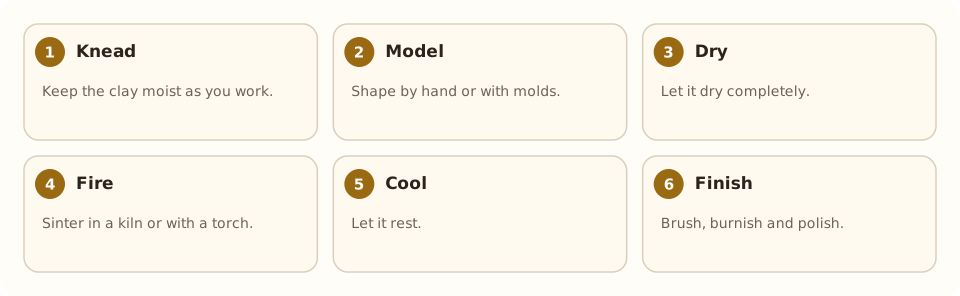
- Knead. Keep the clay moist as you work.
- Model. Shape by hand or with molds.
- Dry. Let it dry completely.
- Fire. Sinter in a kiln or with a torch.
- Cool. Let it rest.
- Finish. Brush, burnish and polish.
Tools and materials #
- Metal clay (silver or copper)
- Kiln or torch
- Modeling tools
- Brass brush and burnisher
Common mistakes #
- Poor drying: it cracks when fired.
- Not allowing for shrinkage (12-30%).
- Firing at the wrong temperature.
- Reusing clay that has already dried.
See also #
This entry was drafted with the help of AI and is pending review by the author.
Related articles
 Techniques
Pavé setting
Pavé covers a metal surface with many small stones held by tiny beads of metal, as if “paved”; it gives continuous sparkle.
 Techniques
Burnishing: smoothing without removing metal
Burnishing smooths and shines metal by rubbing it with a polished steel tool, without removing material; used on bezels, prongs and as a final finish.
 Techniques
Bead making and drilling
How stone beads are made: cutting, rounding, drilling with diamond bits and polishing; shapes, sizes and qualities.