Vacuum casting

In vacuum casting, metal is poured onto a flask with the mold on a vacuum table, where a pump draws the metal into the mold and frees it of air.
How it works #
The hot flask is placed on the vacuum table, the metal is poured and the pump draws the air out of the mold. The metal fills every cavity.
Advantages #
Less porosity and good reproduction of fine details and very thin walls.
Comparison #
Centrifugal casting is more common; vacuum is preferred for delicate pieces or those with stones already set in the wax.
Control #
Vacuum time and mold temperature are key: too long a vacuum can trap gas.
Step by step #
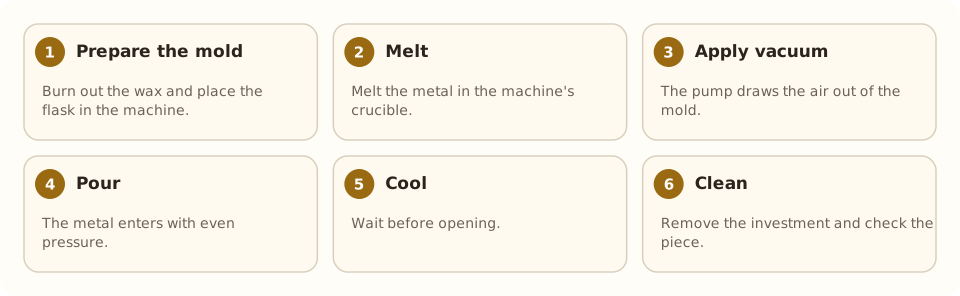
- Prepare the mold. Burn out the wax and place the flask in the machine.
- Melt. Melt the metal in the machine's crucible.
- Apply vacuum. The pump draws the air out of the mold.
- Pour. The metal enters with even pressure.
- Cool. Wait before opening.
- Clean. Remove the investment and check the piece.
Tools and materials #
- Vacuum casting machine
- Flasks and investment
- Casting grain (grain)
- Glasses and gloves
Common mistakes #
- Leaks in the seal: not enough vacuum.
- Casting with the mold too cold.
- Wrong temperature settings.
- Not cleaning the crucible between metals.
See also #
This entry was drafted with the help of AI and is pending review by the author.
Related articles
 Techniques
Pavé setting
Pavé covers a metal surface with many small stones held by tiny beads of metal, as if “paved”; it gives continuous sparkle.
 Techniques
Burnishing: smoothing without removing metal
Burnishing smooths and shines metal by rubbing it with a polished steel tool, without removing material; used on bezels, prongs and as a final finish.
 Techniques
Metal clay (PMC)
Metal clay mixes silver or gold powder with a binder; it is hand-modeled and fired into solid metal. A modern, accessible technique.