Centrifugal casting

In centrifugal casting, molten metal is driven into the mold by the centrifugal force of an arm spinning at high speed. It is used with the lost-wax process.
How it works #
- The flask with the heated mold is placed on the arm.
- The metal is melted in a crucible beside the mold.
- When the arm is released (spring-driven or electric), it spins and the force pushes the liquid metal into the mold.
- It is left to cool, the investment is broken away and the piece cleaned.
Advantages #
It is quick, reliable and reproduces detail very well; many pieces can be cast at once on a tree.
Control #
Metal and mold temperature, waiting time and spin speed determine the result. With too little metal or a cold mold, the piece can come out incomplete.
Safety #
The machine sits in a protected chamber, and glasses, gloves and protective equipment are used.
Step by step #
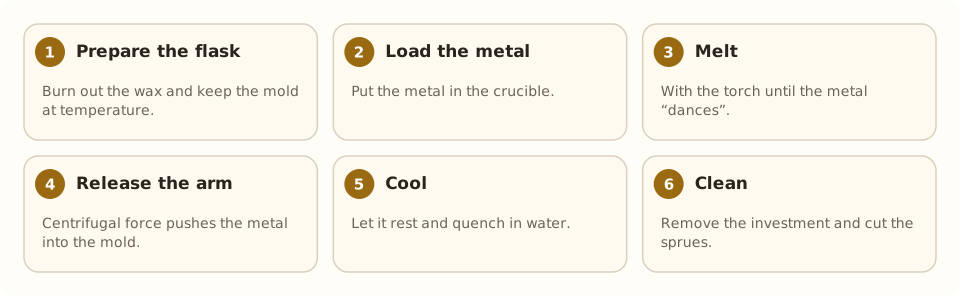
- Prepare the flask. Burn out the wax and keep the mold at temperature.
- Load the metal. Put the metal in the crucible.
- Melt. With the torch until the metal “dances”.
- Release the arm. Centrifugal force pushes the metal into the mold.
- Cool. Let it rest and quench in water.
- Clean. Remove the investment and cut the sprues.
Tools and materials #
- Centrifugal arm machine
- Flask and refractory investment (molds)
- Crucible and torch
- Protective equipment
Common mistakes #
- Metal not fully melted: the piece comes out incomplete.
- Badly dried mold: the metal splashes.
- Not winding the arm: it does not spin with force.
- Neglecting protection: there are splashes.
See also #
This entry was drafted with the help of AI and is pending review by the author.
Related articles
 Techniques
Pavé setting
Pavé covers a metal surface with many small stones held by tiny beads of metal, as if “paved”; it gives continuous sparkle.
 Techniques
Burnishing: smoothing without removing metal
Burnishing smooths and shines metal by rubbing it with a polished steel tool, without removing material; used on bezels, prongs and as a final finish.
 Techniques
Metal clay (PMC)
Metal clay mixes silver or gold powder with a binder; it is hand-modeled and fired into solid metal. A modern, accessible technique.