Jewelry around the world
Jewelry tells who we are. Explore the jewelry traditions of peoples around the world, including Indigenous crafts, with the materials, techniques and meaning of their pieces.
The Americas
 Jewelry around the world
Andean jewelry: Moche, Nasca and Inca
Moche, Nasca and Inca metalwork: gold, silver and spondylus shell, with ornaments that marked power and a bond with the sacred.
 Jewelry around the world
Emberá chaquira beadwork
Emberá women of Colombia and Panama create necklaces and ornaments with chaquira, tiny glass beads in geometric designs.
 Jewelry around the world
Mapuche silverwork
Mapuche silverwork (rütrafe) creates silver jewelry such as the trarilonko, tupu and chawai, symbols of identity, protection and status.
 Jewelry around the world
Mesoamerican jewelry: jade, gold and feathers
Maya, Aztec and other Mesoamerican peoples valued jade more than gold, and combined it with feathers, obsidian and shell.
 Jewelry around the world
Navajo, Zuni and Hopi silverwork
Silver and turquoise jewelry of the US Southwest: squash blossom necklaces, Zuni inlay and Hopi silver overlay.
 Jewelry around the world
Pre-Columbian gold of Colombia
The Muisca, Quimbaya and Tairona worked gold in Colombia with lost-wax casting: tunjos, poporos and offerings of sacred value.
 Jewelry around the world
Wampum and North American beadwork
Wampum, made from marine shell beads, and the beadwork of North American peoples carry history, agreements and belonging.
Africa
 Jewelry around the world
Akan (Ashanti) gold and goldweights
Gold is a symbol of royalty and life for the Akan of Ghana: royal jewelry, lost-wax brass goldweights and Adinkra symbols.
 Jewelry around the world
Jewelry and amulets of ancient Egypt
Scarabs, the ankh and the Eye of Horus: ancient Egyptian jewelry was amulets of protection and life, made of gold, lapis lazuli, turquoise and carnelian.
 Jewelry around the world
Maasai beadwork and the meaning of colors
Maasai beadwork from Kenya and Tanzania uses color as language: red, blue, green, white, orange and black carry meanings.
 Jewelry around the world
Tuareg and Amazigh jewelry
Silver, amber, coral and enamel in Tuareg and Amazigh jewelry from the Sahara and the Maghreb: amulets, fibulae and protective crosses.
Asia

Europe

Oceania
 Jewelry around the world
Aboriginal shell necklaces and engraved pearl shell
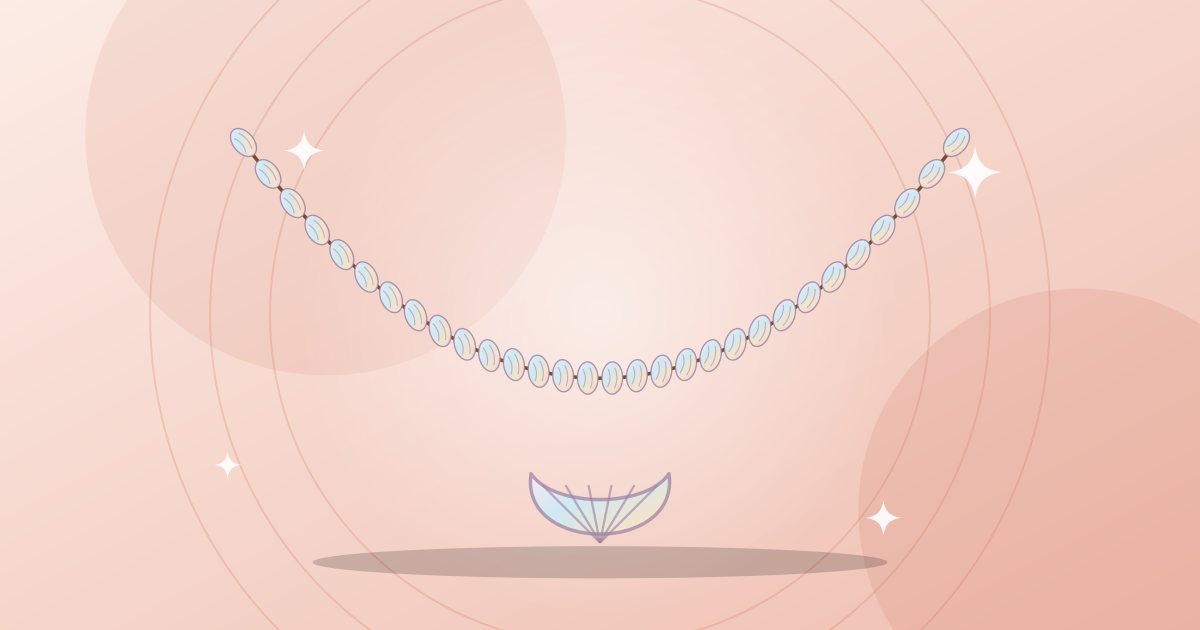
Tasmanian Aboriginal women string tiny iridescent shells; in northern Australia, pearl shell is engraved: jewels with living memory.
 Jewelry around the world
Māori pounamu: hei-tiki, hei matau and koru
Pounamu (New Zealand jade) is a taonga for Māori: hei-tiki, hei matau, koru and toki are jewels of ancestors, journey and life.
Guides
 Jewelry around the world
How to buy artisan and Indigenous jewelry ethically
A guide to buying artisan jewelry from Indigenous peoples with respect: ask about the artist, origin and materials, and avoid appropriation.
 Jewelry around the world
Symbols in traditional jewelry and their meaning
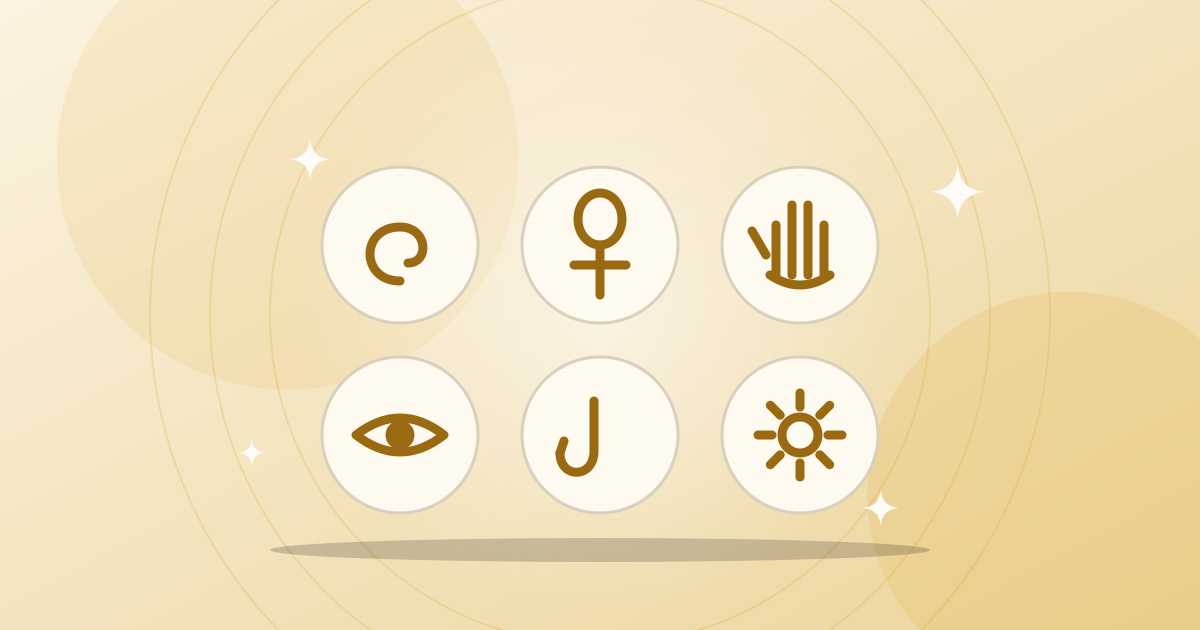
A guide to symbols in world jewelry: ankh, scarab, khamsa, koru, hei matau, sankofa, turquoise and jade, with their origin and associated meaning.