Wampum and North American beadwork
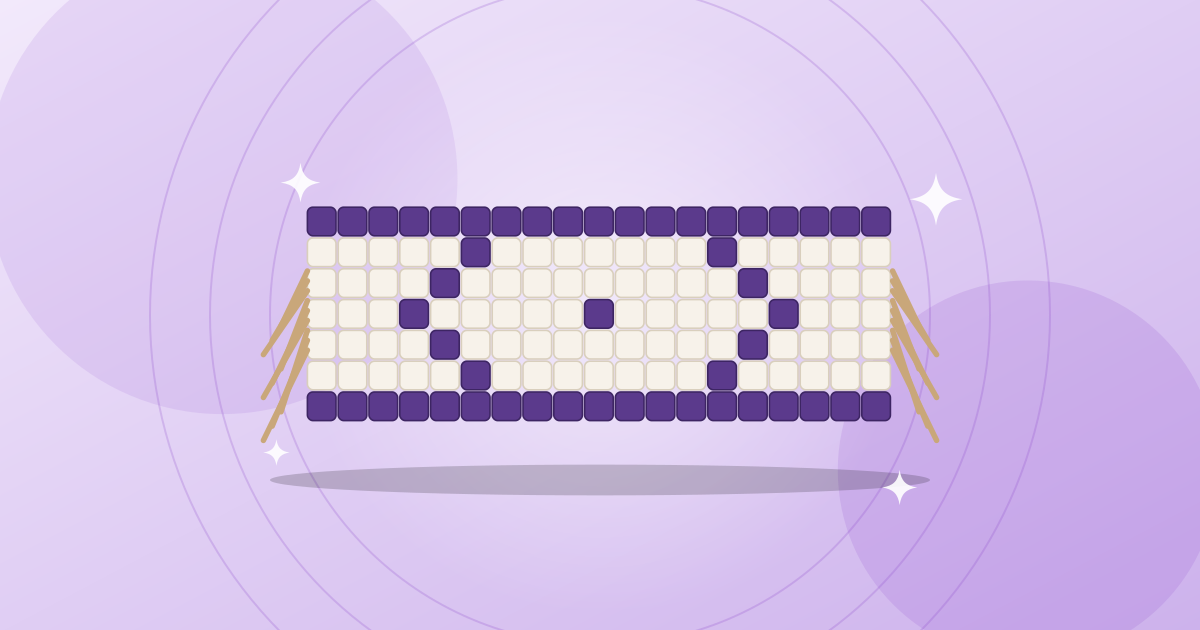
The Native peoples of North America have worked beads for centuries: first of shell, bone and porcupine quills, and later of glass. A wampum belt is not just an ornament; it is also memory, agreement and message.
Who and where #
Wampum belongs to the peoples of the Northeast, such as the Haudenosaunee (Iroquois Confederacy) and several Algonquian peoples. Glass beadwork is characteristic of the Plains peoples and the Métis, among others.
Materials and techniques #
- Wampum: cylindrical beads of clam shell (purple) and whelk shell (white), drilled and strung.
- Trade glass beads (seed beads), which from the 18th and 19th centuries largely replaced porcupine quills.
- Leather, cloth and sinew or thread to sew and weave them.
Traditional pieces and their meaning #
- Wampum belts: woven with white and purple beads; used to record agreements, seal treaties and carry messages. The Hiawatha Belt of the Haudenosaunee is associated with the confederacy of nations.
- Beaded necklaces and pectorals: jewelry of ceremony and identity, with geometric designs that identify a people or family.
- Floral beadwork: the Métis are known as the “flower beadwork people” for their floral beaded motifs.
The tradition today #
Native peoples keep the tradition of beads alive in workshops, communities and fairs. Wampum is not “Indian money”: colonists used it as currency, but for the peoples who made it its main role was ceremonial, diplomatic and as memory.
See also #
This entry was drafted with the help of AI and is pending review by the author.
Related articles
 Jewelry around the world
Pre-Columbian gold of Colombia
The Muisca, Quimbaya and Tairona worked gold in Colombia with lost-wax casting: tunjos, poporos and offerings of sacred value.
 Jewelry around the world
Emberá chaquira beadwork
Emberá women of Colombia and Panama create necklaces and ornaments with chaquira, tiny glass beads in geometric designs.
 Jewelry around the world
Tuareg and Amazigh jewelry
Silver, amber, coral and enamel in Tuareg and Amazigh jewelry from the Sahara and the Maghreb: amulets, fibulae and protective crosses.