Leather
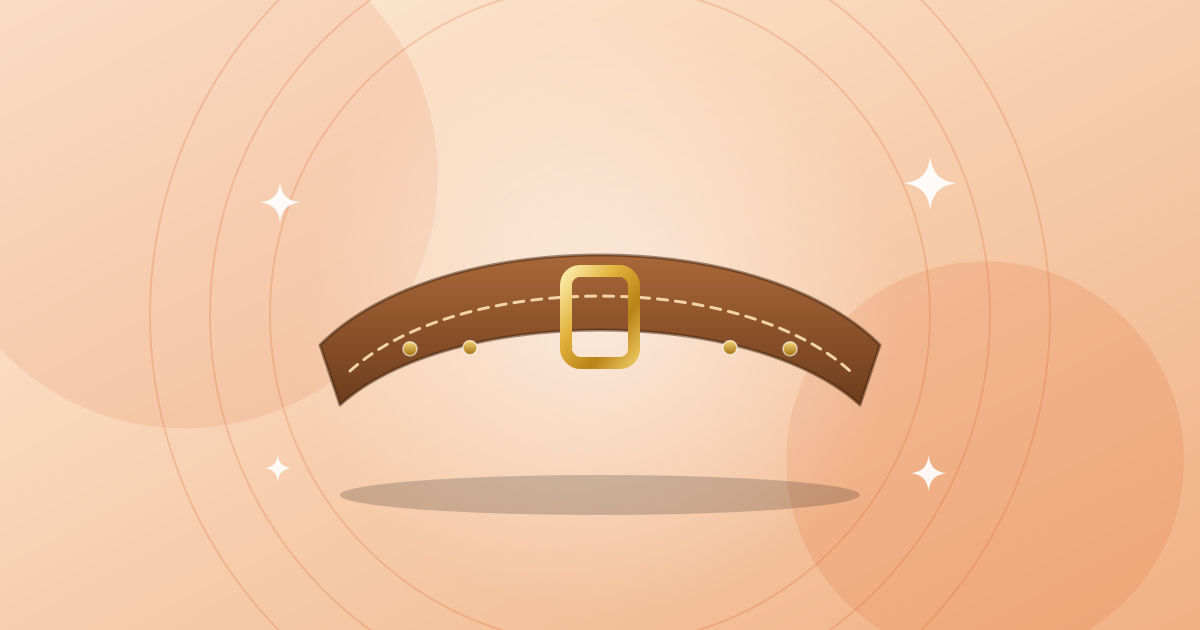
Leather is tanned animal hide, tough and flexible, used for centuries in straps, bracelets and necklaces. Its warm, natural look contrasts beautifully with metal and stones, and it can be braided, stitched, engraved, dyed or tooled.
Properties #
- Origin: cattle, sheep, goat and others; exotic hides of controlled origin are also used.
- Tanning: vegetable (tannins, natural look that darkens) or chrome (softer and more uniform in color)
- Thickness: 1 to 3 mm in jewelry; leather cord is round and sold by the meter.
- Finishes: natural, dyed, waxed, embossed, engraved or stamped.
- Durability: high if cared for, but sensitive to water, sun and heat.
Uses in jewelry #
- Braided, multi-wrap or metal-clasped leather bracelets.
- Leather cord necklaces with pendants.
- Watch straps and wide cuffs.
- Combinations with beads, stones and silver or brass elements.
Pros and cons #
Advantages #
- Tough, flexible and comfortable.
- It improves with use and develops its own patina.
- It combines with almost every material.
Limitations #
- Water, sweat and heat damage it.
- Chrome tanning can cause dermatitis in very sensitive skin.
- It is an animal-derived material: vegan alternatives use other materials.
Care and cleaning #
- Avoid getting it wet; if it does, dry it at room temperature away from heat sources.
- Apply a leather conditioner now and then.
- Clean it with a slightly damp cloth.
- Store it flat and dry, without folding.
See also #
This entry was drafted with the help of AI and is pending review by the author.
Related articles
 Materials
Enamel
Vitreous enamel is powdered glass fused onto metal at high temperature; it gives intense, lasting colors in techniques such as cloisonné.
 Materials
Jade
Jade is the name for two minerals, jadeite and nephrite; very tough, it is the sacred gem of China, Mesoamerica and New Zealand (pounamu).
 Materials
Aquamarine
Aquamarine is blue-green beryl (7.5-8 on Mohs), from the same family as emerald; transparent and brilliant, it is the March birthstone.