Amber
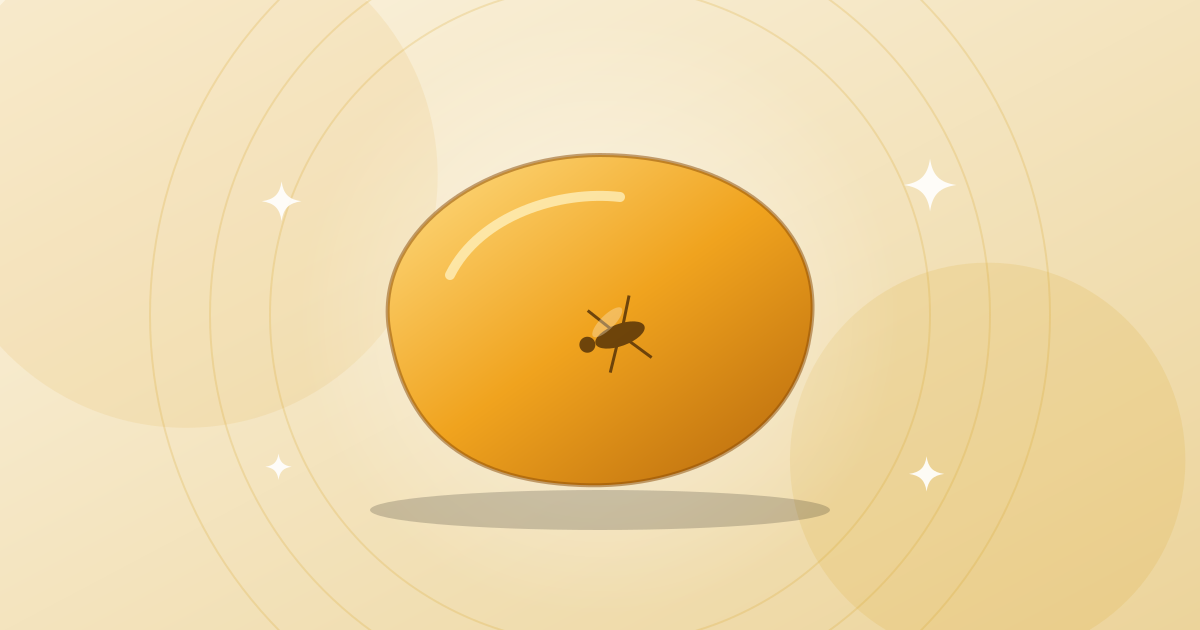
Amber is not a stone but tree resin that fossilized over millions of years. It is light, warm to the touch and comes in colors from honey yellow to cognac, and sometimes it preserves insects or plants trapped inside. Baltic amber is the best known.
Properties #
- Origin: fossil resin from conifers; Baltic amber is roughly 40-50 million years old.
- Hardness: between 2 and 2.5 on the Mohs scale: very soft.
- Density: 1.05-1.10 g/cm³: it floats in very salty water.
- Colors: honey yellow, orange, cognac, and more rarely green and blue (Dominican amber)
- Inclusions: insects, plants, bubbles and “sun spangles” (disc-shaped fractures)
Uses in jewelry #
- Necklaces of beads and raw chunks.
- Cabochons in rings, pendants and earrings.
- Designer brooches and bangles.
- Combinations with silver.
Pros and cons #
Advantages #
- Very light and warm to the touch.
- Every piece is unique.
- It picks up static electricity when rubbed.
Limitations #
- It is soft and scratches.
- Heat, alcohol and solvents damage it.
- Plastic and copal imitations are common.
Care and cleaning #
- Avoid perfume, hairspray, alcohol and solvents.
- Wipe with a soft cloth dampened in lukewarm water.
- Keep it away from heat and strong light; over the years it can darken.
See also #
This entry was drafted with the help of AI and is pending review by the author.
Related articles
 Materials
Enamel
Vitreous enamel is powdered glass fused onto metal at high temperature; it gives intense, lasting colors in techniques such as cloisonné.
 Materials
Jade
Jade is the name for two minerals, jadeite and nephrite; very tough, it is the sacred gem of China, Mesoamerica and New Zealand (pounamu).
 Materials
Aquamarine
Aquamarine is blue-green beryl (7.5-8 on Mohs), from the same family as emerald; transparent and brilliant, it is the March birthstone.