Pearls
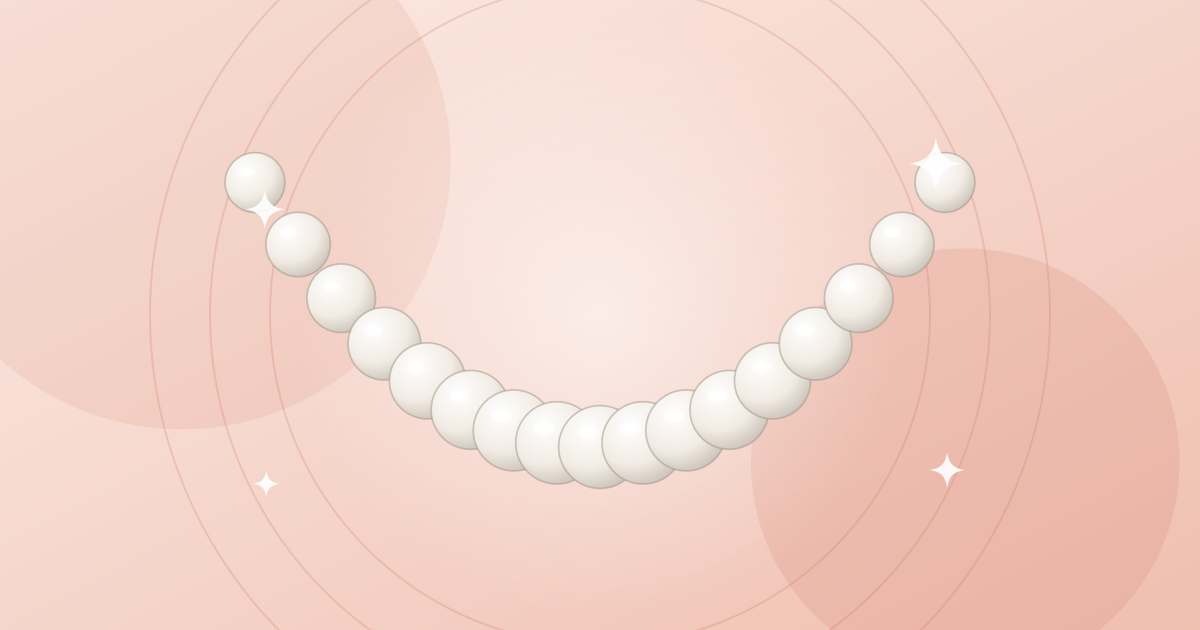
Pearls are the only gems that form inside a living creature. A mollusk, such as an oyster or mussel, coats an irritant with layers of nacre and, over time, a pearl is born. Today almost all pearls sold are cultured: a person introduces the nucleus, but the mollusk does the actual forming.
Properties #
- Composition: calcium carbonate (aragonite) and an organic substance, conchiolin, in concentric layers of nacre.
- Hardness: between 2.5 and 4.5 on the Mohs scale: they scratch easily.
- Origin: saltwater (Akoya, Tahitian, South Sea) or freshwater (most cultured pearls)
- Grading: luster, shape (round, oval, baroque), surface, color and size.
- Colors: white, cream, pink, golden, gray and black, with overtones.
Uses in jewelry #
- Classic strands of knotted pearls.
- Stud or drop earrings.
- Rings, brooches and pendants with a single pearl.
- Baroque pearls in contemporary designer jewelry.
Pros and cons #
Advantages #
- Soft, elegant, timeless glow.
- A wide range of colors and shapes.
- They combine with metals and stones.
Limitations #
- They are soft and sensitive to acids, perfume and sweat.
- The nacre wears over time.
- Glass and plastic imitations exist.
Care and cleaning #
- Put them on last, after makeup and perfume, and take them off first.
- Wipe them after each wear with a soft damp cloth.
- Store them apart in a cloth pouch so they do not scratch.
- Restring on silk thread every few years if worn often.
See also #
This entry was drafted with the help of AI and is pending review by the author.
Related articles
 Materials
Enamel
Vitreous enamel is powdered glass fused onto metal at high temperature; it gives intense, lasting colors in techniques such as cloisonné.
 Materials
Jade
Jade is the name for two minerals, jadeite and nephrite; very tough, it is the sacred gem of China, Mesoamerica and New Zealand (pounamu).
 Materials
Aquamarine
Aquamarine is blue-green beryl (7.5-8 on Mohs), from the same family as emerald; transparent and brilliant, it is the March birthstone.