Maasai beadwork and the meaning of colors
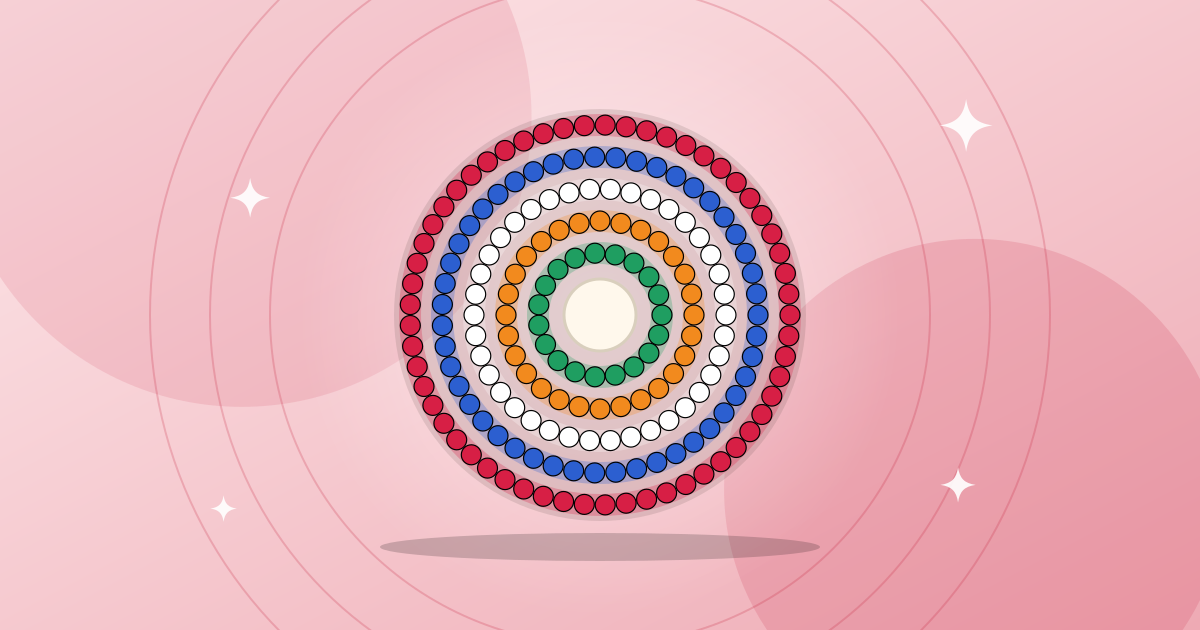
For the Maasai of Kenya and northern Tanzania, beadwork is a women's art that accompanies them all their lives. Their wide collars, bracelets and earrings are ornament, identity and language at once: each color and combination can carry a message.
Who and where #
The Maasai are a pastoral people of East Africa. Ornaments vary with age, marital status and occasion. Glass beads arrived with European trade in the 19th century; before that, seeds, bone, clay and shells were used.
Materials and techniques #
- Colored glass beads, strung or sewn onto leather.
- Wire and cord as the framework of the wide collars.
- Ornaments are made by hand, generally by women.
Traditional pieces and their meaning #
- Wide disc collars: cover the chest with concentric rings of color.
- Bracelets and anklets: bands of beads worn daily or at ceremonies.
- Earrings: large beaded ornaments, which go with the stretching of the earlobe.
- Wedding jewelry: especially elaborate pieces for ceremonies.
The tradition today #
In the most widespread interpretation, red is associated with bravery and strength; blue with the sky and water; green with the land and health; white with peace; orange and yellow with hospitality; and black with the people and their struggle. Meanings vary between communities and contexts. Today many women's cooperatives sell their work directly.
See also #
This entry was drafted with the help of AI and is pending review by the author.
Related articles
 Jewelry around the world
Pre-Columbian gold of Colombia
The Muisca, Quimbaya and Tairona worked gold in Colombia with lost-wax casting: tunjos, poporos and offerings of sacred value.
 Jewelry around the world
Emberá chaquira beadwork
Emberá women of Colombia and Panama create necklaces and ornaments with chaquira, tiny glass beads in geometric designs.
 Jewelry around the world
Tuareg and Amazigh jewelry
Silver, amber, coral and enamel in Tuareg and Amazigh jewelry from the Sahara and the Maghreb: amulets, fibulae and protective crosses.