Refining and cupellation of precious metals

To refine is to separate a precious metal from impurities and other metals. Cupellation is the oldest technique for doing it and is also used to assay purity.
Cupellation #
The alloy is melted with lead in a porous vessel (the cupel, made of bone ash). The base metals oxidize and are absorbed by the cupel, leaving gold and silver in a bead.
Parting #
To separate silver from gold, nitric acid is used, which dissolves the silver and leaves the gold. Current procedures use aqua regia or electrolysis.
What it is for #
To assay the fineness of an alloy, recycle workshop scrap and obtain high-purity metal.
Safety #
It involves acids, lead and high temperatures: it is laboratory or refinery work, with training and permits.
Step by step #
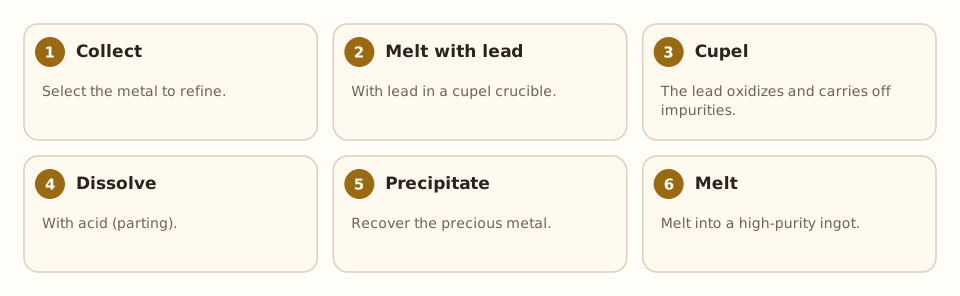
- Collect. Select the metal to refine.
- Melt with lead. With lead in a cupel crucible.
- Cupel. The lead oxidizes and carries off impurities.
- Dissolve. With acid (parting).
- Precipitate. Recover the precious metal.
- Melt. Melt into a high-purity ingot.
Tools and materials #
- Furnace and cupels
- Acids (only with training)
- Full protective equipment
- Ventilated laboratory
Common mistakes #
- Working without training or ventilation.
- Mixing incompatible substances.
- Losses through splashes.
- Disposing of residues illegally.
See also #
This entry was drafted with the help of AI and is pending review by the author.
Related articles
 Techniques
Pavé setting
Pavé covers a metal surface with many small stones held by tiny beads of metal, as if “paved”; it gives continuous sparkle.
 Techniques
Burnishing: smoothing without removing metal
Burnishing smooths and shines metal by rubbing it with a polished steel tool, without removing material; used on bezels, prongs and as a final finish.
 Techniques
Metal clay (PMC)
Metal clay mixes silver or gold powder with a binder; it is hand-modeled and fired into solid metal. A modern, accessible technique.