Casting organic materials (burnout)
Some natural materials (leaves, twigs, seeds, dried flowers) burn away completely inside a hot mold. They leave a cavity of their exact shape, which is filled with metal.
How it is done #
- Choose a dry material that burns without much residue.
- Attach a sprue with wax and mount it in the flask with investment.
- The burnout kiln burns away the organic material and the wax, leaving the cavity.
- The metal is cast as in lost wax.
Result #
A metal piece that reproduces even the veins of a leaf. Each piece is unique, because the model is destroyed.
Difficulties #
Ashes and gases can leave residue or pores; the model must be dry and clean.
Ethics #
Use responsibly collected materials and avoid protected species.
Step by step #
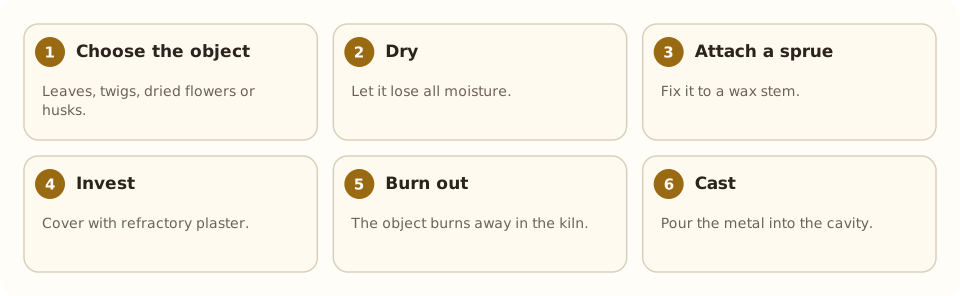
- Choose the object. Leaves, twigs, dried flowers or husks.
- Dry. Let it lose all moisture.
- Attach a sprue. Fix it to a wax stem.
- Invest. Cover with refractory plaster.
- Burn out. The object burns away in the kiln.
- Cast. Pour the metal into the cavity.
Tools and materials #
- Dried organic objects
- Refractory investment
- Burnout kiln
- Metal (crucible)
Common mistakes #
- Damp object: bubbles in the piece.
- Object too fine: it does not fill.
- Burning out insufficiently.
- Using protected species.
See also #
This entry was drafted with the help of AI and is pending review by the author.
Related articles
 Techniques
Pavé setting
Pavé covers a metal surface with many small stones held by tiny beads of metal, as if “paved”; it gives continuous sparkle.
 Techniques
Burnishing: smoothing without removing metal
Burnishing smooths and shines metal by rubbing it with a polished steel tool, without removing material; used on bezels, prongs and as a final finish.
 Techniques
Metal clay (PMC)
Metal clay mixes silver or gold powder with a binder; it is hand-modeled and fired into solid metal. A modern, accessible technique.