Jeweler's torches: gas, oxygen and mini torch

The torch is the jeweler's heat source. Depending on the job, torches of different power and fuel are chosen.
Types #
- Butane mini torch: for annealing and soldering small pieces.
- Gas and air (propane): for soldering medium pieces.
- Gas and oxygen: hotter, more precise flame; for melting and soldering platinum.
The flame #
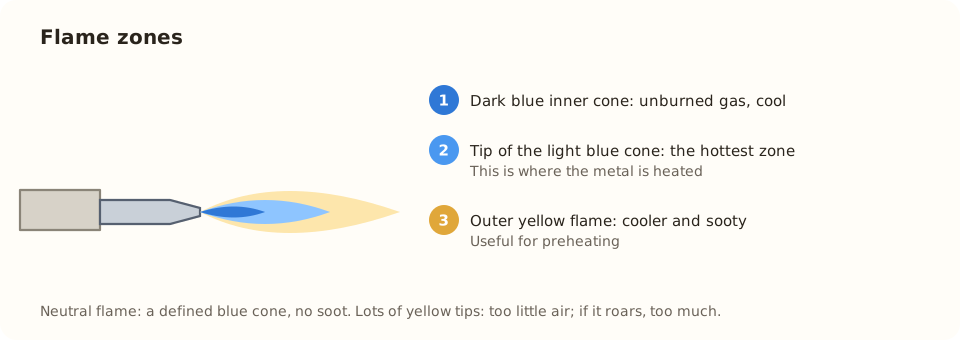
It is adjusted to be “reducing” or neutral: a defined blue cone, without soot. The hottest zone is the tip of the blue cone.
Safety #
Fixed cylinders, flashback arrestors, an extinguisher nearby, glasses and protective equipment. See soldering.
Maintenance #
Check hoses and fittings, and clean the tips.
How to light and put out #
- Check the hoses and fittings.
- Open the gas, light with a striker (not a match) and adjust the flame.
- When finished, close the gas at the cylinder first and let the flame burn out; then close the torch valve.
Which torch to choose #
- Butane mini torch: annealing and soldering small pieces; fits on the desk.
- Propane and air: medium pieces; economical.
- Gas and oxygen: hot, precise flame; melting, soldering platinum and large pieces. Needs flashback arrestors.
The flame and the metal #
To solder silver and gold a somewhat “soft” flame with excess gas (reducing) is used, which protects the metal from oxygen. Heat the whole piece evenly, not just the solder, and remove the flame when the solder flows.
Safety #
Work with ventilation, no flammable objects nearby, hair tied back, an accessible extinguisher and cylinders well secured and upright. See workshop safety.
See also #
This entry was drafted with the help of AI and is pending review by the author.
Related articles
 Tools
Tools
Starter tool kit for jewelry making
Which basic tools you need to start making jewelry: pliers, saw, files, hammer, mandrel, torch and materials, with an indicative budget.
 Tools
Tools
Rolling mills: how to flatten metal
The rolling mill flattens and stretches metal into sheet and grooved wire; manual and electric types, how to use it and how to care for it.
 Tools
Tools
Draw plate
The draw plate is a steel plate with decreasing holes through which wire is pulled to thin it or change its section; how it is used.