Neutral, oxidizing and reducing torch flames
How to tell a neutral, oxidizing and reducing flame on a jeweler's torch, what each one does and which to use for soldering.
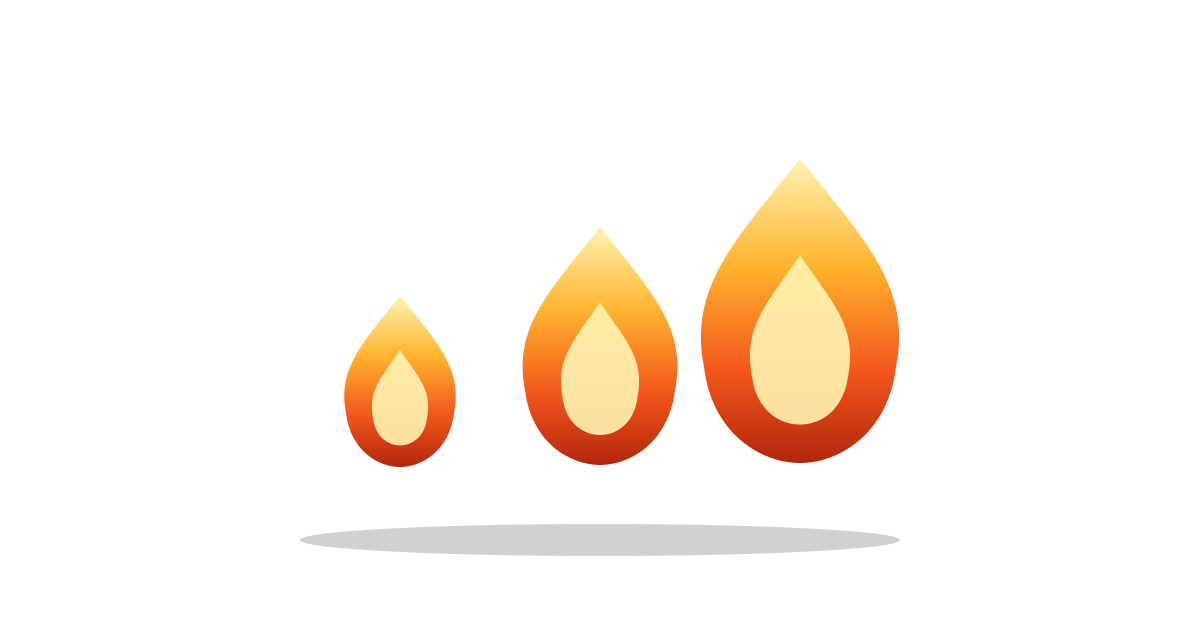
A torch flame changes with the proportion of fuel to air (or oxygen). Learning to read it is one of the first skills of a jeweler.
The three flames #
- Neutral flame: balanced combustion. It has a sharp blue inner cone and a soft outer plume. It is the everyday working flame.
- Reducing flame (carburizing): there is excess fuel. It is longer, yellowish and may leave soot. It uses up the oxygen around the piece and protects the metal from oxidation, which is why it is often used to heat silver and to anneal.
- Oxidizing flame: there is excess air or oxygen. It is short, bright blue and hisses. It is hotter but oxidizes the metal surface.
Which one to use for soldering #
For silver you usually work with a neutral or slightly reducing flame, with flux covering the joint. The hottest point is just ahead of the inner blue cone; heat the piece with that point, moving the flame to spread the heat.
Tips #
- Adjust the flame before bringing it near the piece.
- Use a tip of the right size: large pieces need more heat.
- An oxidizing flame produces more firescale.
- Work with ventilation and protection.
See also: Torches, Soldering glossary, Annealing.
This entry was drafted with the help of AI and is pending review by the author.
Related articles
 Jeweler's dictionary
Solder pallion: what it is and how to use it
A pallion is a small chip of solder placed on the joint before heating. What it is, how to cut it, how much to use and the most common mistakes.
 Jeweler's dictionary
Measuring and calculating in jewelry: gauge, sizes and metal weight
Gauge, thickness, diameter, ring size, density and how to calculate the weight of a piece or the length of metal for a ring, with formulas and examples.
 Jeweler's dictionary
Jewelry design glossary: sketch, prototype, mock-up, tolerance
The words of creating a piece: sketch, technical drawing, scale, template, prototype, mock-up, model, ergonomics and tolerance.
 Jeweler's dictionary
Stone setting glossary: bezel, prongs, pavé, gallery and more
Stone-setting vocabulary: bezel, chaton, prongs, grain, pavé, channel, tension, gallery and the parts of a cut stone, with the Spanish term.