Jewelry workshop chemistry: pickle, flux, patinas and what not to mix
The chemicals of a jewelry workshop (pickle, flux, liver of sulfur, degreasers, plating baths) and which products must never be mixed.
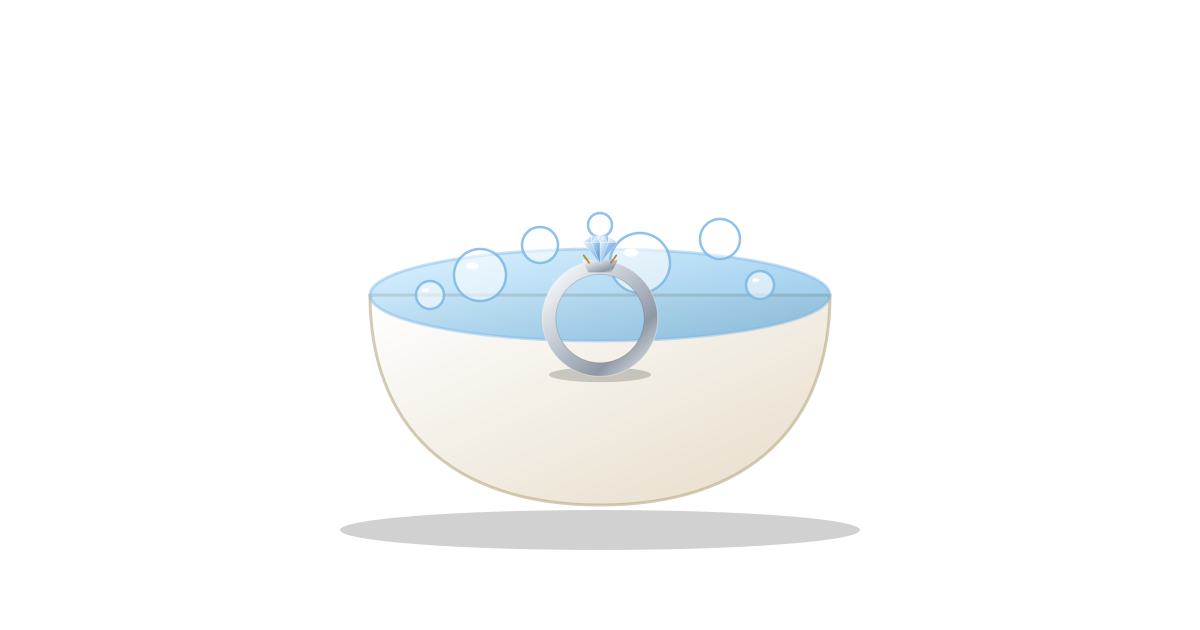
A jewelry workshop uses products that clean, protect or color metal. It is worth knowing what each one does and how to handle it. Workshop safety (equipment, ventilation, ergonomics) is covered on its own page; this one is about the chemistry.
Vocabulary #
- Flux (fundente): protects the metal from oxygen during soldering. See flux.
- Borax (bórax): traditional flux.
- Pickle (decapante): a mild acid bath, often sodium bisulfate or citric acid, that dissolves oxide after heating. See pickling.
- Acid (ácido): a substance that attacks metal; in the workshop, those used for pickling, etching or refining. See etching.
- Neutralization (neutralización): reducing the acidity of a used bath, for example with baking soda, before disposing of it according to local rules.
- Patina (patina): a layer of color on the metal. See coloring.
- Sulfide (sulfuro): a sulfur compound; liver of sulfur (potassium sulfide) darkens silver and copper.
- Firescale: a gray or purplish stain on sterling silver caused by copper oxide below the surface after unprotected heating. It is prevented with flux or an anti-firescale coating, short heating and a neutral or reducing flame; it is removed by sanding or by cycles of annealing and pickling.
- Electroplating bath (baño electrolítico, electrodeposición): depositing a layer of metal with electric current. See electroplating.
- Degreaser (desengrasante): removes grease and dirt before soldering, patinating or plating.
What NOT to mix #
- Bleach (chlorine) with acids or with ammonia: releases toxic gases. Do not mix them or use them in the same container or closed area.
- Liver of sulfur with acids or with pickle: can release hydrogen sulfide, a toxic gas. Store and use them separately.
- Acids with cyanides: form hydrogen cyanide. Some old gold-plating baths contain cyanide; they are not for a home workshop. Cyanide-free alternatives exist.
- Pickle and pieces with iron or steel: steel tweezers in pickle plate copper onto the piece. Use copper, brass or plastic tongs.
- Water into a concentrated acid: always add the acid to the water, never the reverse.
How to handle them #
- Read the safety data sheet (SDS) of every product.
- Keep them labeled, closed and out of the reach of children and pets.
- Work with ventilation, glasses and gloves.
- Heat pickle in an electric pot kept just for it, never the one used for cooking, and not sealed airtight.
- Do not pour used products down the drain without knowing what your area allows.
This entry is a general guide; when in doubt, ask a professional.
This entry was drafted with the help of AI and is pending review by the author.
Related articles
 Jeweler's dictionary
Jewelry finishes glossary: polish, satin, patina…
Surface finishes explained: roughing, sanding, polishing, buffing, satin, matte, brushed, textured, patina and mirror polish.
 Jeweler's dictionary
Solder pallion: what it is and how to use it
A pallion is a small chip of solder placed on the joint before heating. What it is, how to cut it, how much to use and the most common mistakes.
 Jeweler's dictionary
Jewelry soldering glossary: bench terms explained
Jewelry soldering terms explained: hard, medium and easy solder, pallion, flux, pickle, capillary action, flame types and firescale.
 Jeweler's dictionary
Stone setting glossary: bezel, prongs, pavé, gallery and more
Stone-setting vocabulary: bezel, chaton, prongs, grain, pavé, channel, tension, gallery and the parts of a cut stone, with the Spanish term.