Electroplating: gold, silver and rhodium baths
In electroplating, the piece is immersed in a bath containing ions of another metal and current is passed through: the metal is deposited in an even layer, from tenths of a micron to several microns.
Steps #
- Deep cleaning: degreasing and, often, electro-cleaning.
- Activation, so the metal accepts the plating.
- Electrolytic bath (gold, silver, rhodium, nickel…) with the right current and time.
- Rinsing, drying and final polishing.
Common baths #
- Rhodium: bright white over white gold and silver.
- Gold: in several shades.
- Silver: on costume jewelry and cutlery.
- Black (rhodium or ruthenium): dark finishes.
Thicknesses #
A very thin layer wears off soon; a thicker one lasts longer. Hence the different levels of plating.
Safety #
The baths contain toxic products (cyanides in some gold baths): this is work for specialized workshops.
Step by step #
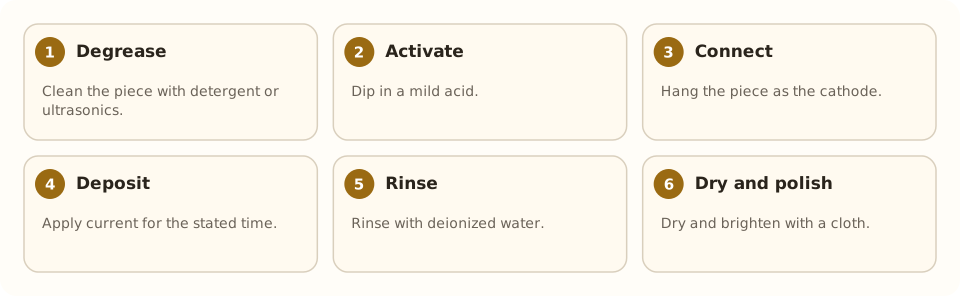
- Degrease. Clean the piece with detergent or ultrasonics.
- Activate. Dip in a mild acid.
- Connect. Hang the piece as the cathode.
- Deposit. Apply current for the stated time.
- Rinse. Rinse with deionized water.
- Dry and polish. Dry and brighten with a cloth.
Tools and materials #
- Tank, rectifier and anodes
- Gold, silver or rhodium baths (rhodium)
- Thermometer and agitator
- Protective equipment
Common mistakes #
- Greasy piece: the bath does not take.
- Excessive time or current: burnt deposit.
- Contaminating the bath with other metals.
- Not disposing of residues safely.
See also #
This entry was drafted with the help of AI and is pending review by the author.
Related articles
 Techniques
Pavé setting
Pavé covers a metal surface with many small stones held by tiny beads of metal, as if “paved”; it gives continuous sparkle.
 Techniques
Burnishing: smoothing without removing metal
Burnishing smooths and shines metal by rubbing it with a polished steel tool, without removing material; used on bezels, prongs and as a final finish.
 Techniques
Metal clay (PMC)
Metal clay mixes silver or gold powder with a binder; it is hand-modeled and fired into solid metal. A modern, accessible technique.