Damascening

Damascening consists of hammering very fine gold or silver wires into grooves cut in a steel base. The contrast between the dark steel and the bright metal gives an effect of great richness.
How it is done #
- Grooves or a cross-hatching are cut in the steel with a graver.
- Gold or silver wires are hammered into the grooves.
- The surface is polished smooth; the steel is darkened (blued) to heighten the contrast.
Traditions #
Toledo (Spain) is the capital of damascening, with a tradition dating back to Islamic times. It is also known in Syria (Damascus) and the Middle East.
Uses #
Jewelry (pendants, brooches, cufflinks), knives, swords and decorative objects.
Care #
Steel rusts if it gets wet: dry it and clean it with a cloth.
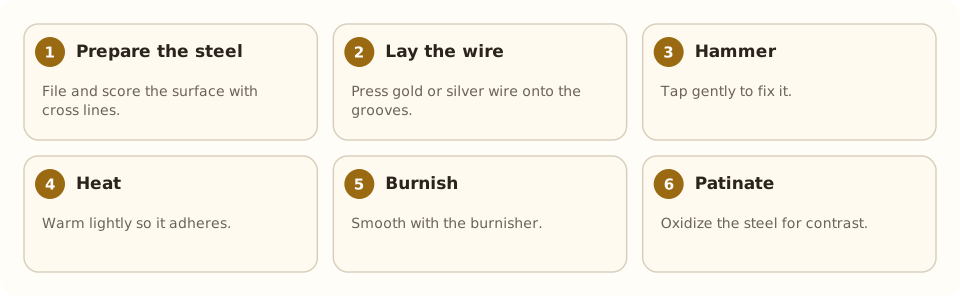
Step by step #
- Prepare the steel. File and score the surface with cross lines.
- Lay the wire. Press gold or silver wire onto the grooves.
- Hammer. Tap gently to fix it.
- Heat. Warm lightly so it adheres.
- Burnish. Smooth with the burnisher.
- Patinate. Oxidize the steel for contrast.
Tools and materials #
- Steel or iron
- Fine gold or silver wire
- Burnisher (burnishing)
- Small hammer and chisel
Common mistakes #
- Shallow grooves: the wire comes loose.
- Striking hard: it marks the steel.
- Overheating the steel: it loses hardness.
- Not protecting the steel from rust.
See also #
This entry was drafted with the help of AI and is pending review by the author.
Related articles
 Techniques
Pavé setting
Pavé covers a metal surface with many small stones held by tiny beads of metal, as if “paved”; it gives continuous sparkle.
 Techniques
Burnishing: smoothing without removing metal
Burnishing smooths and shines metal by rubbing it with a polished steel tool, without removing material; used on bezels, prongs and as a final finish.
 Techniques
Metal clay (PMC)
Metal clay mixes silver or gold powder with a binder; it is hand-modeled and fired into solid metal. A modern, accessible technique.