Enameling: techniques and process
Vitreous enameling fuses a colored glass powder onto a metal base at around 750-850 °C. Depending on how the base is prepared, techniques with their own names arise.
Basic steps #
- A clean metal base (copper, silver or gold) is prepared.
- The enamel is ground and washed, and applied wet or dry.
- It is dried and fired in a kiln until the glass melts and smooths out.
- It is repeated in layers, cooled and the excess is polished off.
Techniques #
- Cloisonné: cells made with soldered wire.
- Champlevé: hollows carved or cast in the metal and filled.
- Basse-taille: translucent enamel over an engraved relief.
- Plique-à-jour: enamel without a backing, like stained glass.
- Painted enamel (Limoges): painting with enamel on a ground.
Counter-enamel #
The back is also enameled to balance the tension and avoid cracks.
Materials #
See enamel as a material. Kiln, sieves, meshes and brushes are the basic tools.
Step by step #
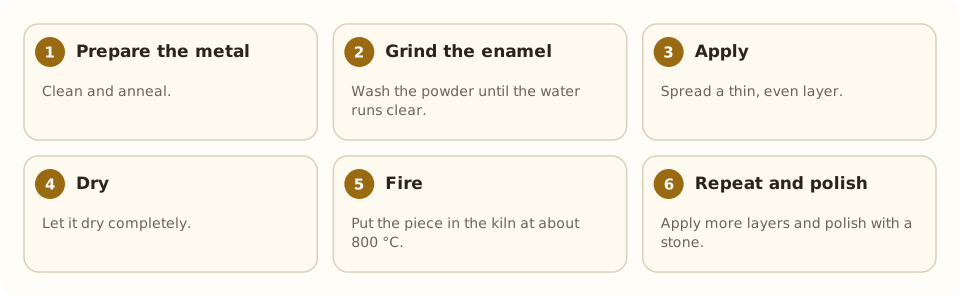
- Prepare the metal. Clean and anneal.
- Grind the enamel. Wash the powder until the water runs clear.
- Apply. Spread a thin, even layer.
- Dry. Let it dry completely.
- Fire. Put the piece in the kiln at about 800 °C.
- Repeat and polish. Apply more layers and polish with a stone.
Tools and materials #
- Powdered or lump enamel
- Enameling kiln
- Brushes and spatulas
- Counter-enamel
Common mistakes #
- A thick layer: it chips when fired.
- Wet enamel in the kiln: it bursts.
- No counter-enamel: the sheet warps.
- Uncleaned metal: the enamel does not adhere.
See also #
This entry was drafted with the help of AI and is pending review by the author.
Related articles
 Techniques
Pavé setting
Pavé covers a metal surface with many small stones held by tiny beads of metal, as if “paved”; it gives continuous sparkle.
 Techniques
Burnishing: smoothing without removing metal
Burnishing smooths and shines metal by rubbing it with a polished steel tool, without removing material; used on bezels, prongs and as a final finish.
 Techniques
Metal clay (PMC)
Metal clay mixes silver or gold powder with a binder; it is hand-modeled and fired into solid metal. A modern, accessible technique.