Stone settings: types and how to choose
A setting is the way a stone is held in a piece of jewelry. It determines how much light the stone gets, how secure it is and the look of the piece.
The main settings #
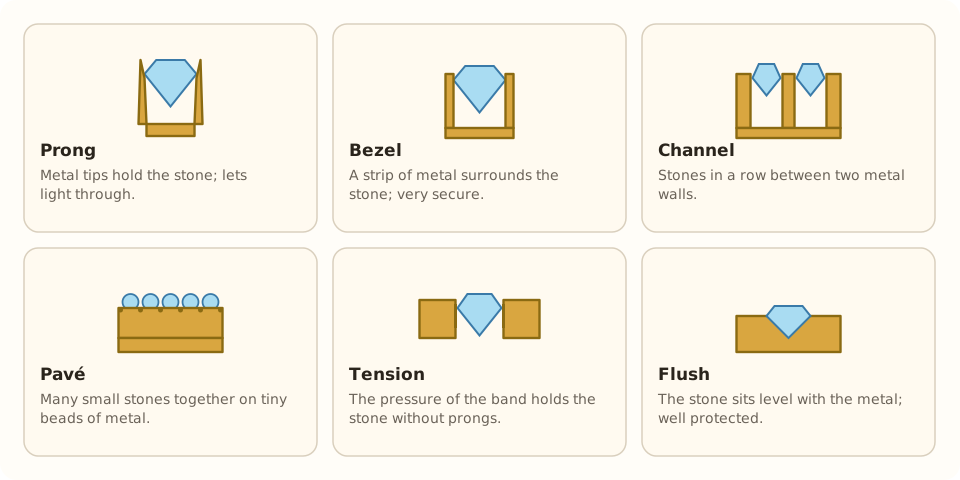
- Prong: small metal claws hold the stone; lets light through.
- Bezel: a metal rim surrounds the stone; the most secure.
- Channel: stones line up between two walls of metal.
- Pavé: many small stones, set very close.
- Tension: the stone is held by the pressure of the band itself.
- Invisible: stones join with no visible metal between them.
- Flush: the stone sits level with the surface.
Cluster settings #
They combine settings and stones: the halo surrounds the center stone with a ring of small stones; the cluster groups stones to give the impression of one larger stone; the three-stone represents past, present and future.
How to choose #
For daily wear, a bezel or flush setting protects best; to show off the stone, prongs; for a band of brilliants, channel or pavé. The hardness of the stone also counts: a soft stone needs protection.
How it is done #
The seat is opened with burs and the stone put in; then the prongs, bezel or walls are closed with pushers, punches and burnishers. It is work of great precision.
How to choose between settings #
- Maximum light: prongs.
- Maximum protection: bezel or flush.
- Many small stones: pavé or channel.
- Minimalist look: tension or invisible.
Checking a setting #
With the loupe (loupe), check that the prongs touch the stone, that there is no play or worn metal, and gently move the jewel near your ear: if you hear a rattle, the stone is moving.
See also #
This entry was drafted with the help of AI and is pending review by the author.
Related articles
 Techniques
Pavé setting
Pavé covers a metal surface with many small stones held by tiny beads of metal, as if “paved”; it gives continuous sparkle.
 Techniques
Burnishing: smoothing without removing metal
Burnishing smooths and shines metal by rubbing it with a polished steel tool, without removing material; used on bezels, prongs and as a final finish.
 Techniques
Metal clay (PMC)
Metal clay mixes silver or gold powder with a binder; it is hand-modeled and fired into solid metal. A modern, accessible technique.