Pavé setting

Pavé (French for “paved”) is the setting in which many small stones are placed very close together so they look like a continuous surface of sparkle.
How it is done #
- Seats are drilled for each stone.
- The stones are set.
- With a graver, tiny beads of metal (“grains”) are raised to hold each stone.
- They are refined and polished.
Variants #
Traditional pavé, micro-pavé (with tiny stones seen under a loupe) and pavé with an open-work base.
Use #
Rings, bands, pendants, earrings and watches.
Care #
It is delicate: a small stone can come loose from a knock. Have it checked regularly.
Step by step #
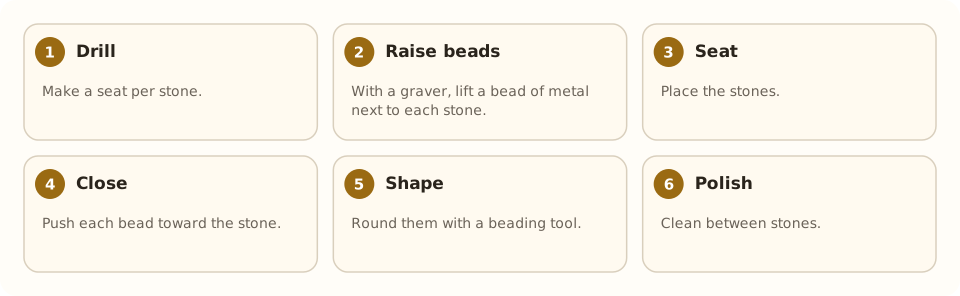
- Drill. Make a seat per stone.
- Raise beads. With a graver, lift a bead of metal next to each stone.
- Seat. Place the stones.
- Close. Push each bead toward the stone.
- Shape. Round them with a beading tool.
- Polish. Clean between stones.
Tools and materials #
- Gravers and beading tools
- Calibrated stones
- Microscope or loupe (loupe)
- Setter's wax
Common mistakes #
- Unequal stones.
- Beads too small to hold.
- Pushing without control: edges chip.
- Not checking after polishing.
See also #
This entry was drafted with the help of AI and is pending review by the author.
Related articles
 Techniques
Burnishing: smoothing without removing metal
Burnishing smooths and shines metal by rubbing it with a polished steel tool, without removing material; used on bezels, prongs and as a final finish.
 Techniques
Metal clay (PMC)
Metal clay mixes silver or gold powder with a binder; it is hand-modeled and fired into solid metal. A modern, accessible technique.
 Techniques
Bead making and drilling
How stone beads are made: cutting, rounding, drilling with diamond bits and polishing; shapes, sizes and qualities.