Reticulation: wrinkled metal

Reticulation takes advantage of how silver alloys behave when heated: the core melts before the surface, and the surface folds into reliefs reminiscent of reptile skin or a topographic map.
How it is achieved #
Sterling silver is heated repeatedly to form a surface layer of nearly pure silver. It is then heated again until the core, with more copper, melts and the outer layer wrinkles.
Results #
The texture varies with the heat, the thickness and the alloy. It is unpredictable, which is why each piece is unique.
Precautions #
The temperature is very close to melting, so the piece can deform or melt. It is done on a refractory block.
Uses #
It is used in rings, pendants and brooches with an organic look.
Step by step #
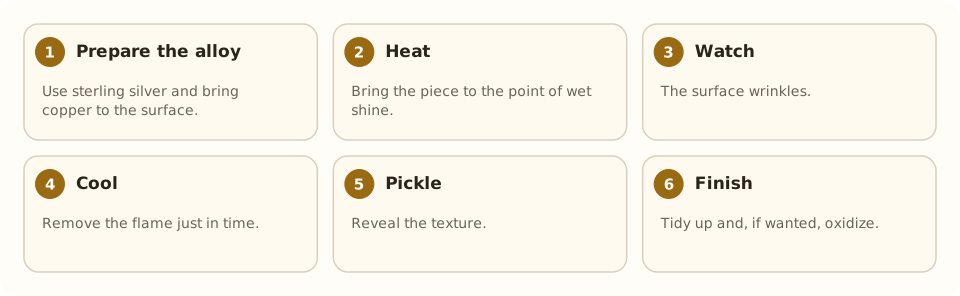
- Prepare the alloy. Use sterling silver and bring copper to the surface.
- Heat. Bring the piece to the point of wet shine.
- Watch. The surface wrinkles.
- Cool. Remove the flame just in time.
- Pickle. Reveal the texture.
- Finish. Tidy up and, if wanted, oxidize.
Tools and materials #
Common mistakes #
- Melting the piece by overheating.
- Using fine silver: it does not reticulate.
- Too little copper at the surface: the texture stays flat.
- Heating unevenly.
See also #
This entry was drafted with the help of AI and is pending review by the author.
Related articles
 Techniques
Pavé setting
Pavé covers a metal surface with many small stones held by tiny beads of metal, as if “paved”; it gives continuous sparkle.
 Techniques
Burnishing: smoothing without removing metal
Burnishing smooths and shines metal by rubbing it with a polished steel tool, without removing material; used on bezels, prongs and as a final finish.
 Techniques
Metal clay (PMC)
Metal clay mixes silver or gold powder with a binder; it is hand-modeled and fired into solid metal. A modern, accessible technique.