Jeweler's files: shapes and cuts
Files shape metal. They are distinguished by their profile and by the tooth size (the cut).
Profiles #
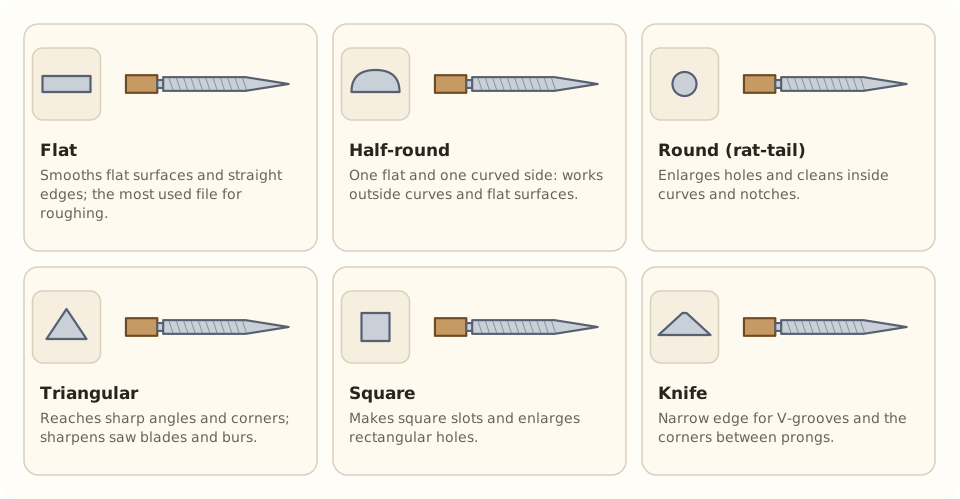
Flat, half-round, round, triangular, square and knife. Needle files are small and delicate, for details.
Cut #
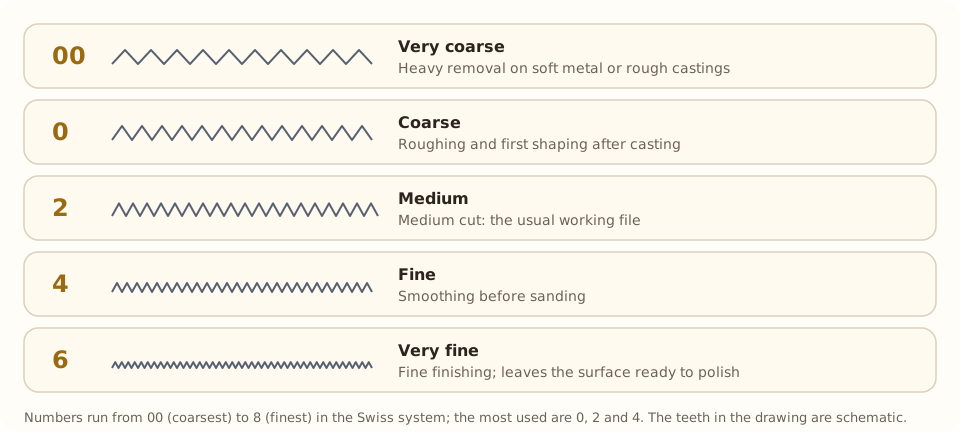
Indicated by a number: lower ones are coarser (for roughing) and higher ones fine (for finishing).
Care #
Clean with a wire brush, do not hit them and store them apart.
Use #
See filing and sanding.
How to choose the file for each job #
- Start with a cut 0 or 2 to remove excess metal and give the general shape.
- Move to a cut 4 to erase the marks of the previous file.
- Finish with a cut 6 (or with sandpaper) before polishing.
For a flat face, use the flat file; for the inside of a band, the half-round; for cleaning a hole, the round. A fine file never fixes a job started with a badly directed coarse one: always change from coarse to fine.
Hand files and needle files #
Hand files are 15 to 20 cm long and are used on larger pieces. Needle files are shorter and finer (14 to 18 cm), with or without a handle, and are used for details, settings, piercing and corners. Both follow the same cut numbering.
How it is used #
Hold the piece resting on the bench pin and file forward, with pressure only on the push stroke. On the return, lift the file so as not to dull it. Keep the file flat on the surface to avoid rounding the edges.
Cleaning and maintenance #
Soft metal (silver, gold, copper) clogs between the teeth and scratches the piece. Clean the file with a wire brush, brushing in the direction of the teeth, or rub it with chalk before use. Store files apart so they do not knock together and avoid humidity.
Common mistakes #
- Filing back and forth with the file tilted: it rounds the edges.
- Using a coarse file to finish: it leaves deep scratches.
- Hitting the file or using it as a lever: it breaks.
- Filing near a stone without protecting it.
See also #
This entry was drafted with the help of AI and is pending review by the author.
Related articles
 Tools
Tools
Starter tool kit for jewelry making
Which basic tools you need to start making jewelry: pliers, saw, files, hammer, mandrel, torch and materials, with an indicative budget.
 Tools
Tools
Rolling mills: how to flatten metal
The rolling mill flattens and stretches metal into sheet and grooved wire; manual and electric types, how to use it and how to care for it.
 Tools
Tools
Draw plate
The draw plate is a steel plate with decreasing holes through which wire is pulled to thin it or change its section; how it is used.