Seals in jewelry: Mesopotamian cylinders, scarabs and intaglios
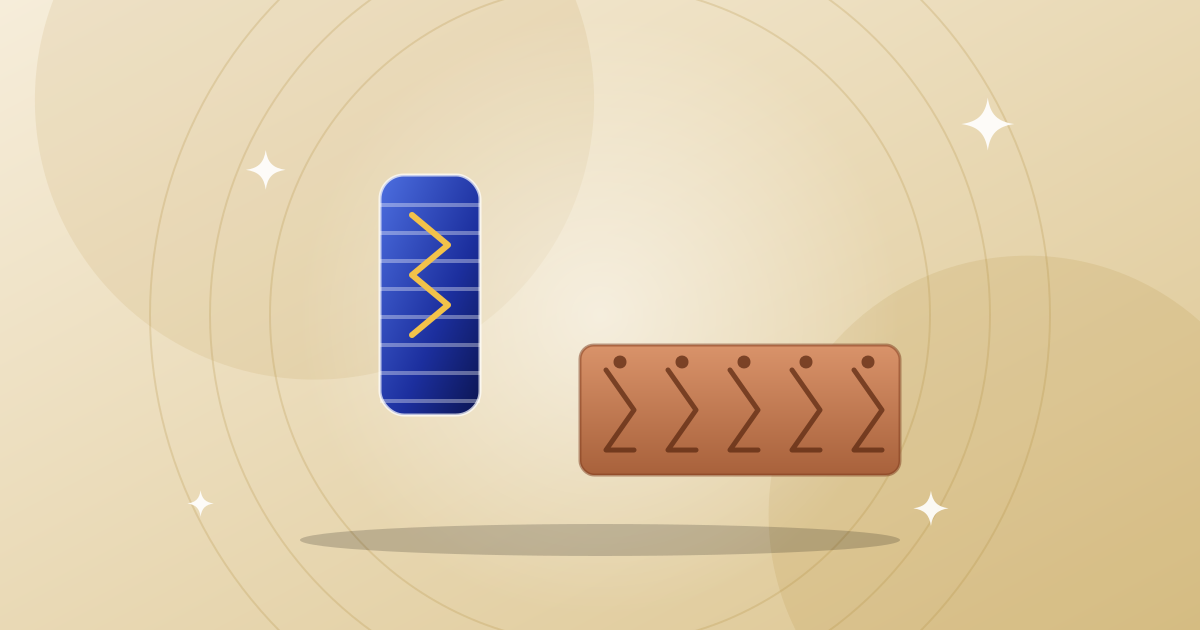
Before the signature there was the seal: an object with a design cut in intaglio that was pressed into clay or wax. Many seals were also jewelry, because they were worn on a cord around the neck or on a ring.
Cylinder seals of Mesopotamia #
For over five thousand years, stone cylinders were carved in Mesopotamia and rolled over soft clay to leave a relief scene. They were worn hung from a cord or a pin.
Egyptian scarabs #
Seals in the form of the scarab were used as amulets and as seals. They were carved in stones such as carnelian, amethyst or lapis lazuli.
Greek and Roman intaglios #
These were gems engraved in intaglio, mounted in rings, with portraits, gods and animals. They were used to seal letters and as jewelry.
Seals in East Asia #
In China, Japan and Korea, the personal seal (the Chinese “chop” or the Japanese hanko) replaces the signature. It is carved in stone, jade, wood or ivory, and used in calligraphy and painting.
Today #
Seals live on as rings (signet rings), pendants and collectibles.
See also #
This entry was drafted with the help of AI and is pending review by the author.
Related articles
 Jewelry
Parts of a piece of jewelry: ring, earring, necklace and bracelet
Vocabulary of the parts of a jewel: head, prongs, shoulders and shank of the ring; post and back of the earring; chain, clasp and bail of the necklace.
 Jewelry
Tiaras: what they are, styles and how to choose one
A tiara is a semicircular headpiece worn at the front of the hair; history, styles (halo, kokoshnik, floral), materials and how to choose one for a wedding.
 Jewelry
Torcs and torques: the rigid collar of the Celts
The torc is a rigid open collar of twisted metal, a status symbol among the Celts; history, shape, hoards and modern designer torques.