Guilloché: geometric engine turning

Guilloché (engine turning) engraves regular geometric patterns of interlaced lines by machine, producing reflections in the light. It is common as a base for translucent enamel.
How it is done #
A machine (rose engine or guilloché machine) moves the piece according to a cam while a graver cuts fine lines. By changing the cams, patterns such as waves, ripples or sunbursts are produced.
Guilloché enamel #
Translucent enamel is fired over a guilloché ground, letting the pattern show beneath the color.
Uses #
Watch cases, boxes, jewelry, Fabergé eggs and luxury pieces.
Today #
Hand-made guilloché is still done on antique machines, but patterns are also reproduced by laser or CNC.
Step by step #
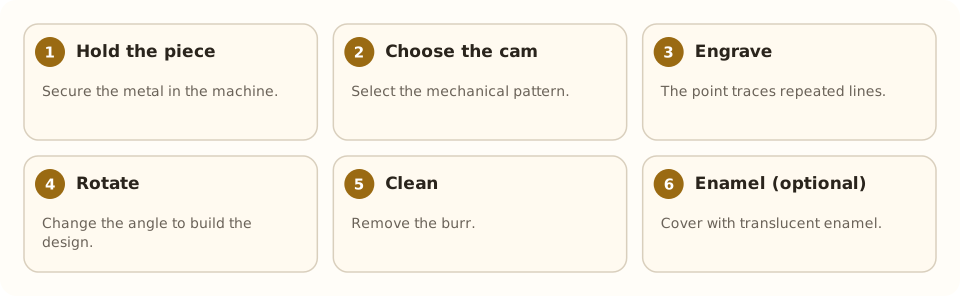
- Hold the piece. Secure the metal in the machine.
- Choose the cam. Select the mechanical pattern.
- Engrave. The point traces repeated lines.
- Rotate. Change the angle to build the design.
- Clean. Remove the burr.
- Enamel (optional). Cover with translucent enamel.
Tools and materials #
Common mistakes #
- Poorly polished metal: it ruins the pattern.
- Uneven pressure: lines of different thickness.
- Dull point.
- Enamel too thick.
See also #
This entry was drafted with the help of AI and is pending review by the author.
Related articles
 Techniques
Pavé setting
Pavé covers a metal surface with many small stones held by tiny beads of metal, as if “paved”; it gives continuous sparkle.
 Techniques
Burnishing: smoothing without removing metal
Burnishing smooths and shines metal by rubbing it with a polished steel tool, without removing material; used on bezels, prongs and as a final finish.
 Techniques
Metal clay (PMC)
Metal clay mixes silver or gold powder with a binder; it is hand-modeled and fired into solid metal. A modern, accessible technique.