Glyptics: cameos and intaglios

Glyptics is the art of engraving hardstones and shells. Its two classic products are the cameo (in relief) and the intaglio (in recess).
Cameo #
A scene carved in relief on a stone or shell with two layers of different color (onyx, sardonyx, shell), so the design stands out from the background.
Intaglio #
The design is carved in recess. It works as a seal: pressed into wax or clay, it comes out in relief (see seals).
Technique #
It is carved with diamond or steel points and abrasive powders, with small lathes. Today burs and lasers are also used.
History #
Greek and Roman cameos and intaglios are among the most admired, and they were reborn with force in the 19th century.
Step by step #
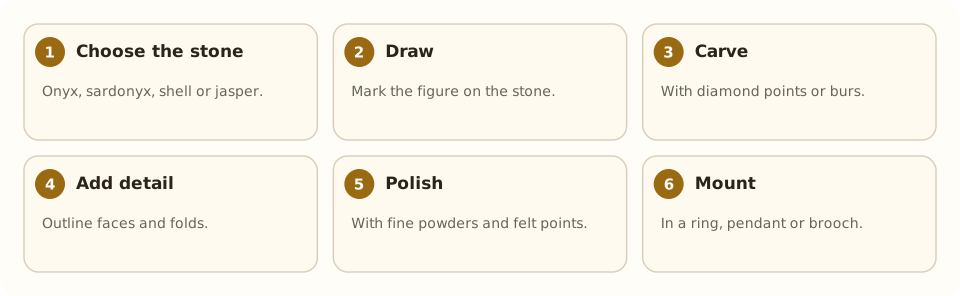
- Choose the stone. Onyx, sardonyx, shell or jasper.
- Draw. Mark the figure on the stone.
- Carve. With diamond points or burs.
- Add detail. Outline faces and folds.
- Polish. With fine powders and felt points.
- Mount. In a ring, pendant or brooch.
Tools and materials #
- Small lathe or flex shaft
- Diamond points
- Abrasive powders
- Loupe or microscope
Common mistakes #
- Color layer too thin: the background is lost.
- Rushing the carving: details break.
- Not cooling the stone.
- Stones with hidden fissures.
See also #
This entry was drafted with the help of AI and is pending review by the author.
Related articles
 Techniques
Pavé setting
Pavé covers a metal surface with many small stones held by tiny beads of metal, as if “paved”; it gives continuous sparkle.
 Techniques
Burnishing: smoothing without removing metal
Burnishing smooths and shines metal by rubbing it with a polished steel tool, without removing material; used on bezels, prongs and as a final finish.
 Techniques
Metal clay (PMC)
Metal clay mixes silver or gold powder with a binder; it is hand-modeled and fired into solid metal. A modern, accessible technique.