Bronze
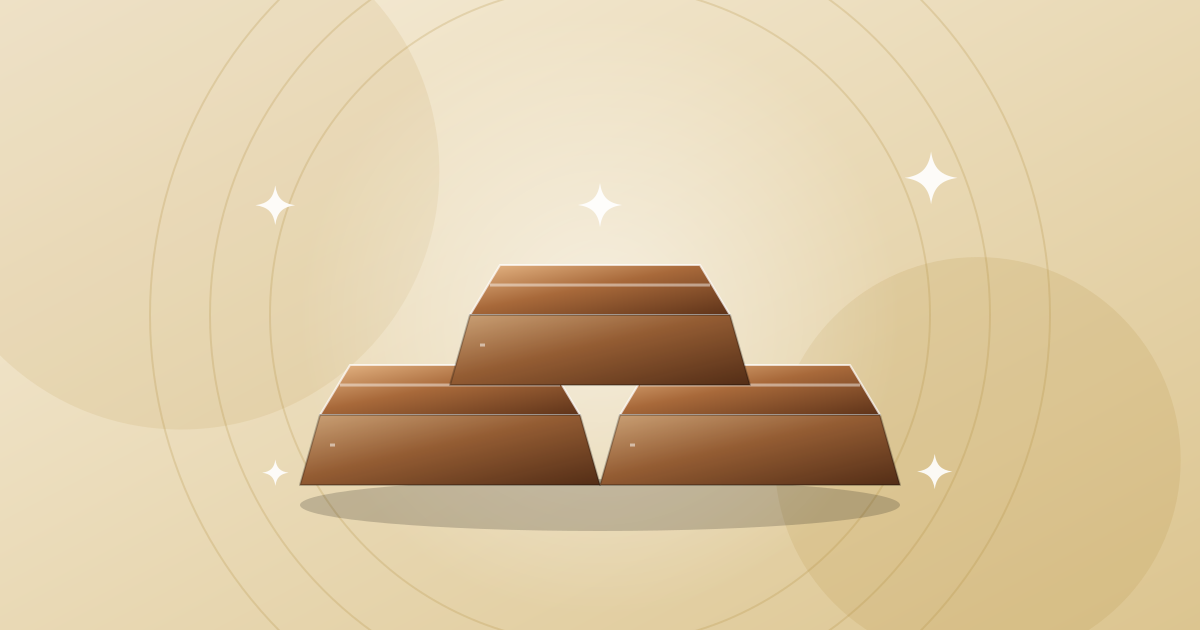
Bronze, an alloy of copper and tin, gave its name to an entire age of history and remains a favorite for handmade and sculptural jewelry. Its tone between gold and reddish brown, and the detail it takes when cast, make it a warm alternative to precious metals.
Properties #
- Composition: copper with roughly 10-12% tin in classic bronzes; variants use aluminum, silicon or phosphorus.
- Color: dark gold or reddish brown; patina deepens it toward browns and greens.
- Melting point: roughly 900 to 1000 °C, depending on the alloy.
- Hardness: harder and tougher than pure copper.
- Density: about 8.8 g/cm³.
Uses in jewelry #
- Lost-wax casting: it reproduces carved wax models faithfully (see casting and lost-wax casting).
- Rings, bangles, pendants and brooches with an archaeological or tribal look.
- Sculptural pieces and reproductions of antique jewelry.
- An affordable alternative to gold for those who want a warm tone.
Pros and cons #
Advantages #
- Harder than copper and wear-resistant.
- Casts with a lot of detail.
- Its natural patina is attractive and can be controlled.
Limitations #
- It darkens and develops patina unless protected.
- It is heavier than most costume-jewelry metals.
- It can irritate sensitive skin, especially if it contains nickel.
Care and cleaning #
- Avoid salt water, chlorine and cleaning products.
- Wipe it with a soft cloth and, to restore shine, use a metal polish.
- If you prefer the aged look, only remove dirt and keep the patina.
- A little wax or clear lacquer fixes the finish.
See also #
This entry was drafted with the help of AI and is pending review by the author.
Related articles
 Materials
Enamel
Vitreous enamel is powdered glass fused onto metal at high temperature; it gives intense, lasting colors in techniques such as cloisonné.
 Materials
Jade
Jade is the name for two minerals, jadeite and nephrite; very tough, it is the sacred gem of China, Mesoamerica and New Zealand (pounamu).
 Materials
Aquamarine
Aquamarine is blue-green beryl (7.5-8 on Mohs), from the same family as emerald; transparent and brilliant, it is the March birthstone.