Parts of a piece of jewelry: ring, earring, necklace and bracelet
Knowing the parts of a jewel helps to describe it, buy it and repair it.
Ring #
- Head: the part that holds the stone.
- Prongs or bezel: what fixes the stone (settings).
- Gallery: the space under the stone.
- Shoulders: the sides joining head and band.
- Shank: the band around the finger.
- Table: the flat top face (in a signet ring).
Earring #
- Post or hook: what passes through the ear.
- Back: what holds it (clasps).
- Front: the visible part.
Necklace and bracelet #
- Chain or cord.
- Clasp and extender.
- Bail: where the chain passes through a pendant.
- Links and connectors.
Gem #
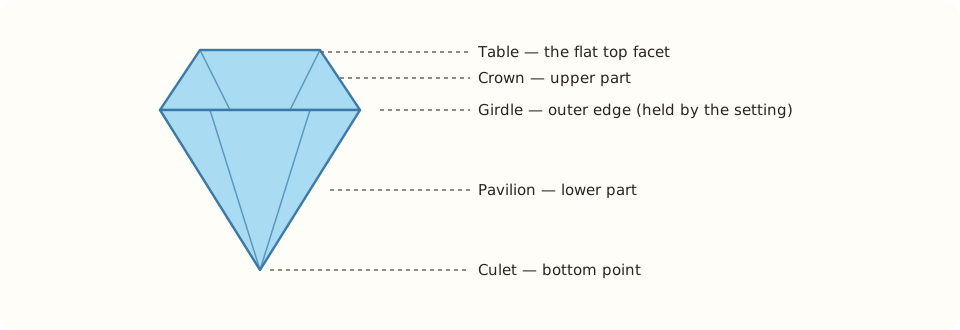
Table, crown, girdle, pavilion and culet. See types of cut.
Why it matters to know the parts #
Knowing how to name the parts lets you ask for a repair precisely (“a prong needs rebuilding”, “an earring screw is missing”) and understand a sales description. Workshops and shops use this vocabulary.
Parts of a ring head #
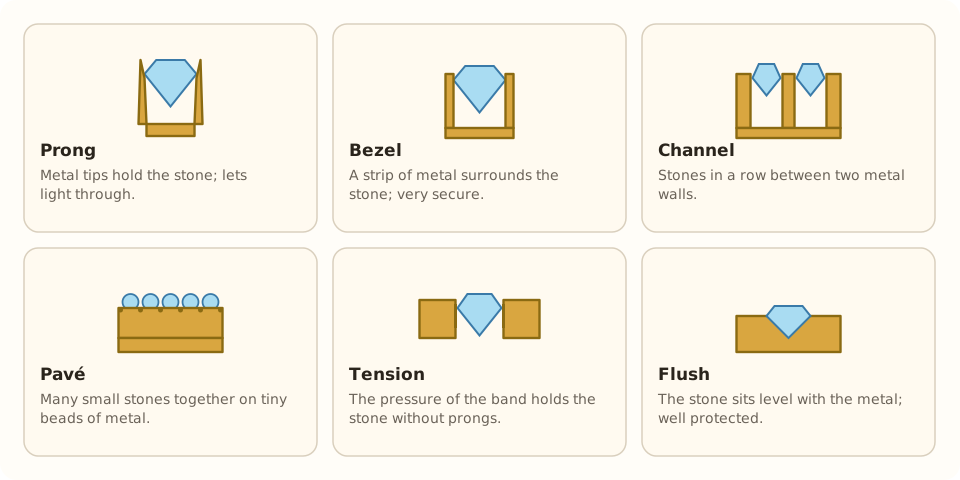
The head may be prong, bezel, channel or another type (see types of setting). Under the stone there is often a gallery, a small openwork support that decorates and lets light in.
See also #
This entry was drafted with the help of AI and is pending review by the author.
Related articles
 Jewelry
Seals in jewelry: Mesopotamian cylinders, scarabs and intaglios
Engraved stone seals are among the oldest jewels: Mesopotamian cylinders, Egyptian scarabs, Roman intaglios and Chinese seals; what they are and how they were used.
 Jewelry
Tiaras: what they are, styles and how to choose one
A tiara is a semicircular headpiece worn at the front of the hair; history, styles (halo, kokoshnik, floral), materials and how to choose one for a wedding.
 Jewelry
Torcs and torques: the rigid collar of the Celts
The torc is a rigid open collar of twisted metal, a status symbol among the Celts; history, shape, hoards and modern designer torques.