Types of jewelry clasps (necklaces, bracelets and earrings)
A clasp joins the ends of a jewel or fastens an earring. It is one of the parts most used and most worn; it is worth choosing well.
Necklace and bracelet clasps #
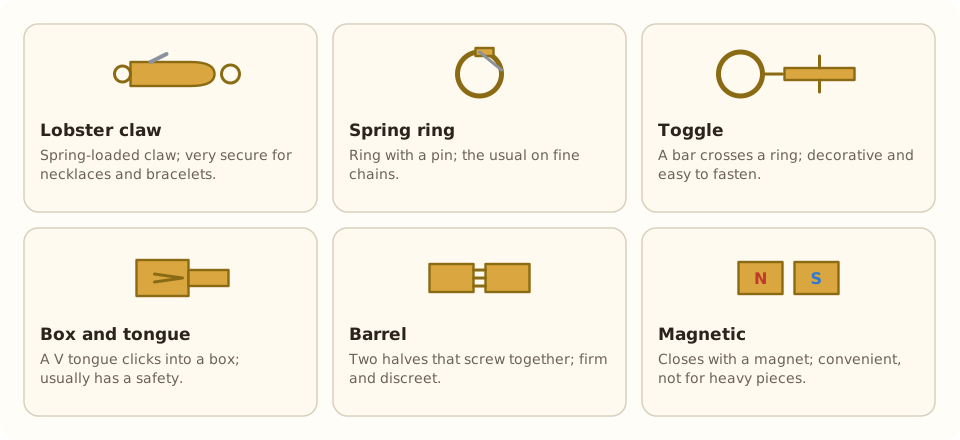
- Lobster claw: a claw with a spring; very secure.
- Spring ring: a ring with a pin; common on fine chains.
- Toggle: a bar that crosses a ring; decorative.
- Box and tongue: a V tongue enters a box; usually has a safety.
- Barrel: two halves that screw together.
- Magnetic: closes with a magnet; convenient, not for heavy pieces.
- Fold-over (deployant): for watch bands and bangles.
Earring backs #
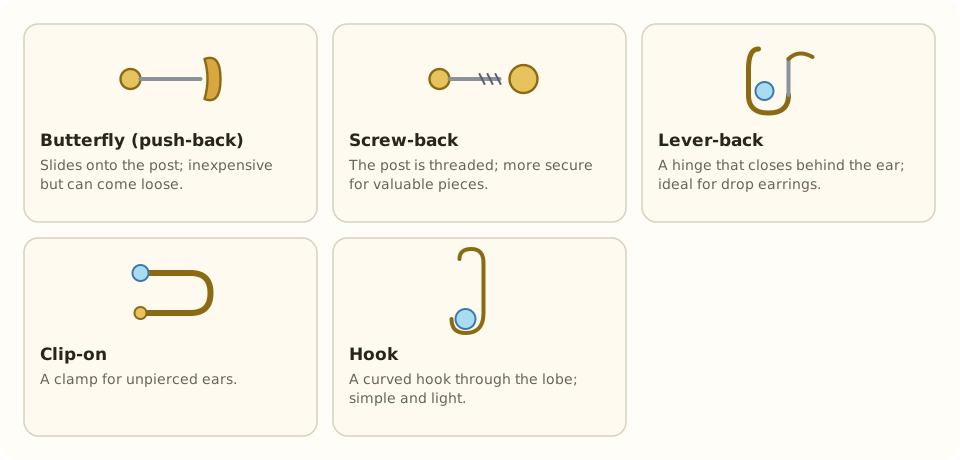
- Butterfly (push-back): a piece that slides onto the post.
- Screw-back: the post is threaded; more secure.
- Lever-back: a hinge that closes behind the ear.
- Clip-on: a clamp for unpierced ears.
- Latch and French clip: clasps built into the earring.
How to choose #
For heavy necklaces, a lobster claw or box with a safety; for heavy earrings, screw or lever back. Check them regularly.
How to choose a clasp #
- Heavy or valuable necklaces: lobster claw or box with a safety.
- Fine chains: spring ring.
- Bracelets you put on alone: toggle or magnetic.
- Pearls: box clasp, which holds the thread better.
- Drop or heavy earrings: screw or lever back.
What fails most often #
The lobster-claw spring loosens, the tongue of the box loses tension, and an earring butterfly stretches. Replace them before they fail: it is a cheap repair. See repairing a chain and professional maintenance.
Extra security #
Many box clasps have a figure-eight safety: a small piece that stops the tongue from slipping out. Highly recommended on valuable bracelets.
See also #
This entry was drafted with the help of AI and is pending review by the author.
Related articles
 Jewelry
Seals in jewelry: Mesopotamian cylinders, scarabs and intaglios
Engraved stone seals are among the oldest jewels: Mesopotamian cylinders, Egyptian scarabs, Roman intaglios and Chinese seals; what they are and how they were used.
 Jewelry
Parts of a piece of jewelry: ring, earring, necklace and bracelet
Vocabulary of the parts of a jewel: head, prongs, shoulders and shank of the ring; post and back of the earring; chain, clasp and bail of the necklace.
 Jewelry
Tiaras: what they are, styles and how to choose one
A tiara is a semicircular headpiece worn at the front of the hair; history, styles (halo, kokoshnik, floral), materials and how to choose one for a wedding.