Types of gem and diamond cuts
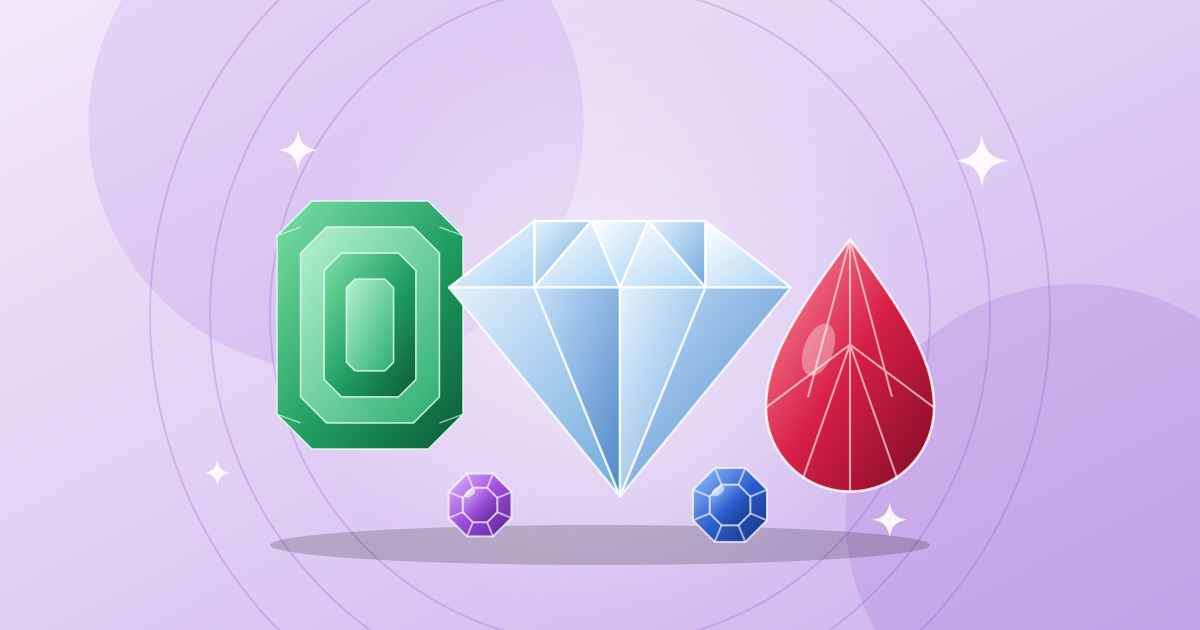
The cut is the shape in which a gem is cut. It changes its look, sparkle and price. It should not be confused with “cut quality”, one of the 4Cs of diamonds.
Round and square cuts #
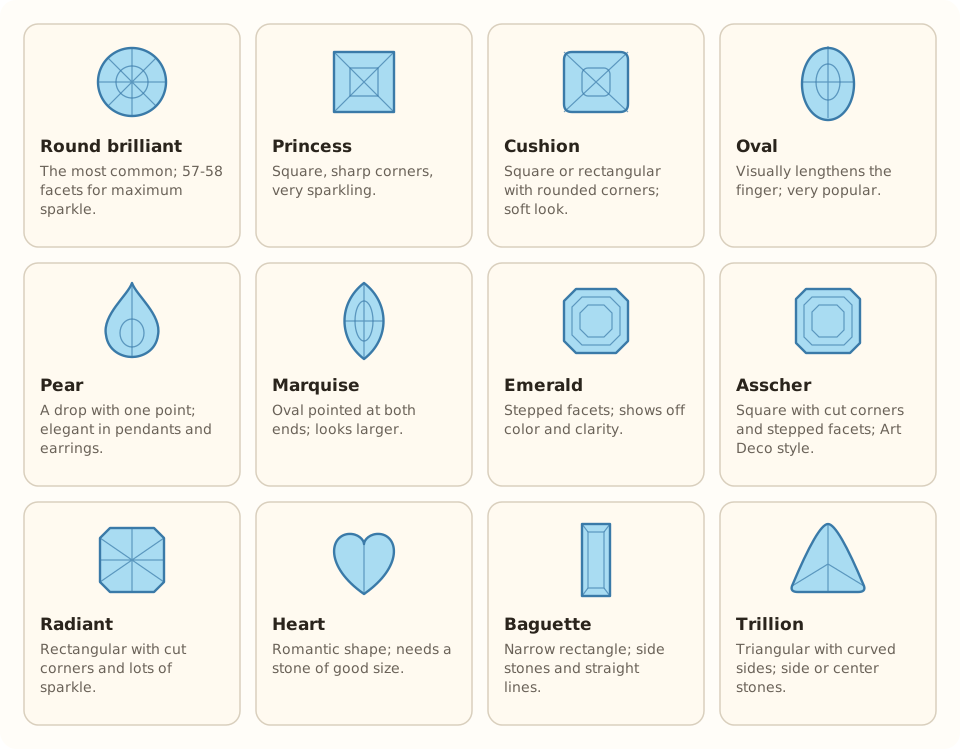
- Round brilliant: the most common, with 57 or 58 facets arranged to maximize sparkle.
- Princess: square, with sharp corners.
- Cushion: square or rectangular with rounded corners.
- Radiant: rectangular with cut corners and lots of sparkle.
- Asscher: square with cut corners and stepped facets.
Elongated and fancy cuts #
- Emerald (step): rectangular with stepped facets; shows off color and clarity.
- Oval: visually lengthens the finger.
- Pear: a drop with one point.
- Marquise: an oval pointed at both ends.
- Heart and trillion (triangle): fancy shapes.
- Baguette: a narrow rectangle, often in side stones.
Other cuts #
- Cabochon: smooth dome, no facets.
- Briolette: faceted teardrop, drilled.
- Rose cut: flat base and dome of triangular facets; antique.
- Old cuts (old mine, European): those before the modern brilliant.
Parts of a cut stone #
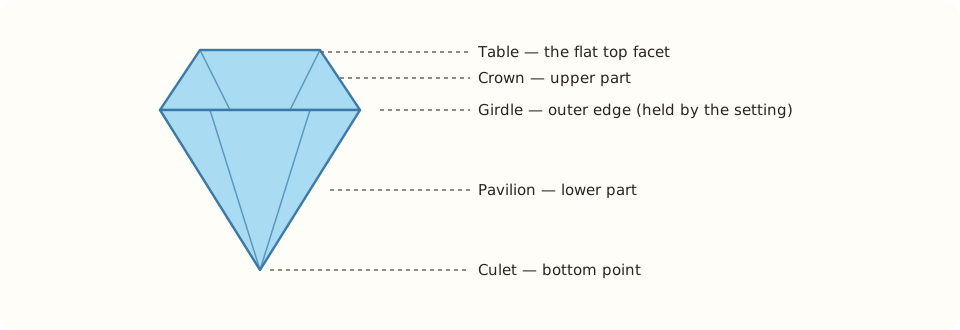
The table (the flat top facet), the crown (upper part), the girdle (the outer edge), the pavilion (lower part) and the culet (the point or bottom facet).
How to choose a cut #
- For maximum sparkle: round brilliant or princess.
- To show off the color and clarity of a transparent stone: emerald or Asscher.
- To make the finger look longer: oval, pear or marquise.
- For a vintage look: cushion, rose cut or old cut.
- For a soft, warm look: cushion or cabochon (cabochon).
Cut and price #
At equal weight, the round brilliant is usually the most expensive because more material is lost cutting it; fancy shapes (pear, marquise, heart) usually cost less per carat. Cut quality —symmetry, proportions and polish— affects sparkle more than shape does. See the 4Cs.
Which setting goes with each cut #
Sharp corners (princess, emerald, marquise, pear) need prongs or a bezel to protect them, because those are the areas that chip most. The round is held well by four or six prongs. See types of setting.
Cut of a stone and size of a ring #
Do not confuse the cut of a gem with the size of a ring (ring size).
See also #
This entry was drafted with the help of AI and is pending review by the author.
Related articles
 Jewelry
Seals in jewelry: Mesopotamian cylinders, scarabs and intaglios
Engraved stone seals are among the oldest jewels: Mesopotamian cylinders, Egyptian scarabs, Roman intaglios and Chinese seals; what they are and how they were used.
 Jewelry
Parts of a piece of jewelry: ring, earring, necklace and bracelet
Vocabulary of the parts of a jewel: head, prongs, shoulders and shank of the ring; post and back of the earring; chain, clasp and bail of the necklace.
 Jewelry
Tiaras: what they are, styles and how to choose one
A tiara is a semicircular headpiece worn at the front of the hair; history, styles (halo, kokoshnik, floral), materials and how to choose one for a wedding.