Jewelry terms from A to Z

A short glossary to understand the vocabulary of jewelry. Each definition is brief; where a more detailed page exists, there is a link.
A #
- Alexandrite: A chrysoberyl variety that changes from green to red depending on the light.
- Alloy: A mixture of two or more metals to improve hardness, color or price. See more.
- Amber: Fossilized tree resin, light and warm; sometimes with inclusions. See more.
- Amethyst: Violet quartz, the birthstone of February. See more.
- Annealing: Heating metal to soften it. See more.
- Anode: The positive electrode in electroplating, which supplies the bath's metal. See more.
- Aquamarine: Light blue beryl, the birthstone of March. See more.
- Art Deco: A 1920-1939 style of geometry and contrasting colors. See more.
- Art Nouveau: A c. 1890-1910 style of curved lines inspired by nature. See more.
B #
- Baguette: A narrow rectangular cut, often used for side stones. See more.
- Bead: A drilled piece for stringing. See more.
- Beryl: A mineral family that includes emerald, aquamarine and morganite. See more.
- Bezel: A setting that surrounds the stone with a strip of metal. See more.
- Birthstone: A stone associated with a birth month. See more.
- Brass: A golden-colored alloy of copper and zinc. See more.
- Briolette: A faceted teardrop cut, drilled for hanging. See more.
- Brooch / clasp: A jewel pinned to clothing; also a necklace fastening. See more.
- Burnishing: Smoothing metal by rubbing it with a polished tool, without removing material. See more.
C #
- Cabochon: A stone polished into a smooth dome without facets. See more.
- Cameo: A stone or shell carved in relief, with layers of color. See more.
- Carat: The weight of a gem (0.2 g); different from the karat of gold. See more.
- Casting: Pouring molten metal into a mold. See more.
- Casting grain: Metal in small grains, for melting. See more.
- Chain: A series of linked loops; there are dozens of designs. See more.
- Charm: A decorative pendant added to a bracelet or necklace. See more.
- Charm / pendant: A small piece hanging from a chain. See more.
- Choker: A necklace that fits snugly around the neck. See more.
- Clasp: A mechanism that joins the ends of a jewel or fastens an earring. See more.
- Cloisonné: Enamel inside wire partitions soldered to a base. See more.
- Copper: A reddish, malleable metal and a good conductor. See more.
- Coral: The skeleton of a marine animal, red or pink. See more.
- Costume jewelry: Jewelry made from non-precious materials. See more.
- Crown: The upper part of a cut stone, above the girdle. See more.
- Crucible: A refractory container in which metal is melted. See more.
- Cubic zirconia: A colorless synthetic crystal that imitates diamond. See more.
- Culet: The point or bottom facet of a cut stone. See more.
- Curb chain: A chain of twisted links that lie flat. See more.
- Cushion cut: A square or rectangular cut with rounded corners. See more.
- Cut / size: The way a gem is cut; also the size of a ring. See more.
D #
- Damascening: Inlay of gold or silver wire in engraved steel. See more.
- Diamond: Crystallized carbon, the hardest gem (10 on Mohs). See more.
E #
- Ear cuff: An earring that hugs the edge of the ear. See more.
- Earring: A jewel worn on the ear. See more.
- Electroforming: Making a hollow piece by depositing metal on a model. See more.
- Emerald: Green beryl; also a rectangular cut with cut corners. See more.
- Enamel: Colored glass fused onto metal. See more.
- Engraving: Marking lines or designs into metal with a graver. See more.
- Eternity ring: A ring with stones all around the band. See more.
F #
- Faceting: Cutting a gem with polished flat facets. See more.
- Filigree: Lacework of very fine soldered metal wires. See more.
- Fineness: The purity of a metal in parts per thousand (for example 750). See more.
- Finish: The final surface texture of a jewel: polished, satin, matte, brushed or hammered. See more.
- Flux: A product that prevents oxidation and helps solder flow. See more.
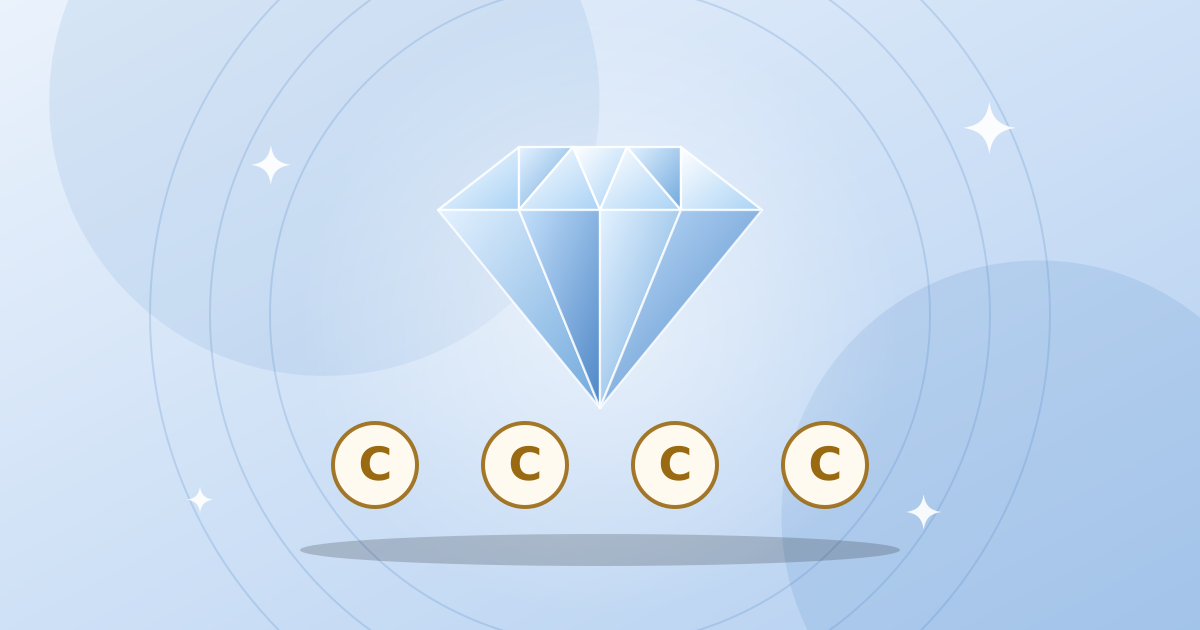
- Four Cs: Color, clarity, cut and carat: criteria for grading a diamond. See more.
G #
- Garnet: A family of deep red gems, the birthstone of January. See more.
- Girdle: The outer edge of a cut stone. See more.
- Gold: A precious metal, soft when pure, which is alloyed. See more.
- Gold plating: A very thin layer of gold deposited over another metal. See more.
- Granulation: Decoration with tiny soldered metal spheres. See more.
H #
- Hallmark: A stamped mark showing the metal's fineness or the maker. See more.
- Halo: A center stone surrounded by small stones. See more.
- Hardness (Mohs): Resistance to scratching, from 1 to 10.
- Huggie: A small hoop that hugs the earlobe. See more.
I #
- ID bracelet: A bracelet with a plate for engraving names. See more.
- Inclusion: An internal feature of a gem, a trace of its formation. See more.
- Ingot: A bar of cast metal. See more.
- Intaglio: A design carved in recess in a stone, used as a seal. See more.
J #
- Jade: The name of two minerals, jadeite and nephrite; green and very tough. See more.
- Jet: Polished lignite, black and light; typical of mourning jewelry. See more.
- Jewelry anatomy: The names of the parts of a ring, earring or necklace. See more.
K #
- Karat: Part out of 24 of gold purity (18K = 75%). See more.
- Kumihimo: Japanese braiding of threads on a disk or marudai. See more.
L #
- Lapis lazuli: A deep blue rock with pyrite flecks. See more.
- Lariat: A long chain with no clasp, knotted or draped. See more.
- Laser: A tool for precision welding, engraving and cutting. See more.
- Lost-wax casting: Casting a piece from a wax model. See more.
- Loupe: A 10x lens for examining stones and marks. See more.
M #
- Malleability: A metal's ability to deform without breaking.
- Marquise: An oval cut pointed at both ends. See more.
- Medallion: A round or other-shaped jewel worn hanging; sometimes opening. See more.
- Metal clay: A paste of metal powder and binder that is modeled and sintered. See more.
- Milgrain: A border of small beads that decorates a setting. See more.
- Moissanite: Silicon carbide, a brilliant alternative to diamond. See more.
- Mokume gane: Wood-grain metal: layers of metals fused and twisted. See more.
- Mother-of-pearl / nacre: The inner layer of mollusks, which gives pearls their luster. See more.
N #
- Nickel: A metal that causes allergies in many people. See more.
- Niello: A black alloy that fills engravings in silver. See more.
O #
- Opal: A gem with play of color; sensitive to knocks and drying. See more.
P #
- Palladium: A platinum-group metal, light and white. See more.
- Patina: An oxidation layer that darkens or colors the metal. See more.
- Pavé: A setting with many small stones close together. See more.
- Pavilion: The lower part of a cut stone, below the girdle. See more.
- Pearl: An organic gem formed by a mollusk. See more.
- Pewter: An alloy of tin with antimony and copper. See more.
- Pickle: A mild acid bath that cleans oxide after soldering or annealing. See more.
- Piercing / sawing: Cutting shapes into metal with a jeweler's saw. See more.
- Platinum: A dense, white, durable precious metal. See more.
- Pliers: Tools for holding, bending and cutting metal. See more.
- Plique-à-jour: Translucent enamel with no backing, like stained glass. See more.
- Polishing: Giving a surface a mirror shine. See more.
- Prong: A small metal claw that holds a stone. See more.
Q #
- Quartz: A very common mineral: rock crystal, amethyst, citrine, rose or smoky quartz. See more.
R #
- Refining: The process of purifying a metal and separating it from others. See more.
- Repoussé: Giving relief to metal by hammering from both sides. See more.
- Resin: A liquid plastic that hardens; also the name of natural resins. See more.
- Retipping: Repairing the tips of worn prongs. See more.
- Rhodium plating: A rhodium bath that gives white gold or silver a bright white. See more.
- Ring (jump ring): A metal ring or loop; also a wedding band in some countries.
- Rolling: Reducing the thickness of metal between rollers. See more.
- Rose gold: Gold alloyed with copper. See more.
- Ruby: Red corundum, the birthstone of July. See more.
S #
- Sapphire: Corundum of any color except red; blue is the best known. See more.
- Sautoir: A very long necklace with a tassel or pendant. See more.
- Seal / signet: An engraved piece for stamping; also a signet ring. See more.
- Setting: The way a stone is held in a jewel. See more.
- Silver: A bright white precious metal. See more.
- Soldering: Joining metal pieces with an alloy of lower melting point. See more.
- Solitaire: A ring with a single stone. See more.
- Stainless steel: An iron-chromium alloy that does not rust; durable and affordable. See more.
- Stamping: Shaping metal by pressing it into a die. See more.
- Sterling silver (925): An alloy of 92.5% silver and 7.5% copper. See more.
T #
- Table: The flat top facet of a cut stone. See more.
- Tanzanite: A blue-violet zoisite variety from Tanzania.
- Tension setting: A setting in which the pressure of the band holds the stone. See more.
- Tiger's eye: Golden quartz with a silky banded sheen.
- Tin: A soft, silvery metal, the base of pewter. See more.
- Titanium: A light, strong, hypoallergenic metal. See more.
- Topaz: A gem of many colors, the birthstone of November. See more.
- Torc: A rigid open necklace, typical of the Celts. See more.
- Torch: A tool giving the flame for soldering and annealing. See more.
- Trinket bead: A small decorative piece that is strung or sewn. See more.
- Tungsten: A very hard metal, used in wedding bands. See more.
- Turquoise: A blue-green phosphate, porous and delicate. See more.
U #
- Ultrasonic cleaning: Cleaning by vibration in a liquid. See more.
V #
W #
- Wedding band: A wedding ring, a plain band or one set with stones. See more.
- White gold: Gold alloyed with palladium or nickel, usually rhodium-plated. See more.
See also #
This entry was drafted with the help of AI and is pending review by the author.
Related articles
 Buying guides
The 4Cs of diamonds: cut, color, clarity and carat
The 4Cs of diamonds explained: cut, color (D-Z), clarity (FL to I3) and carat weight, and how to balance them for your budget.
 Buying guides
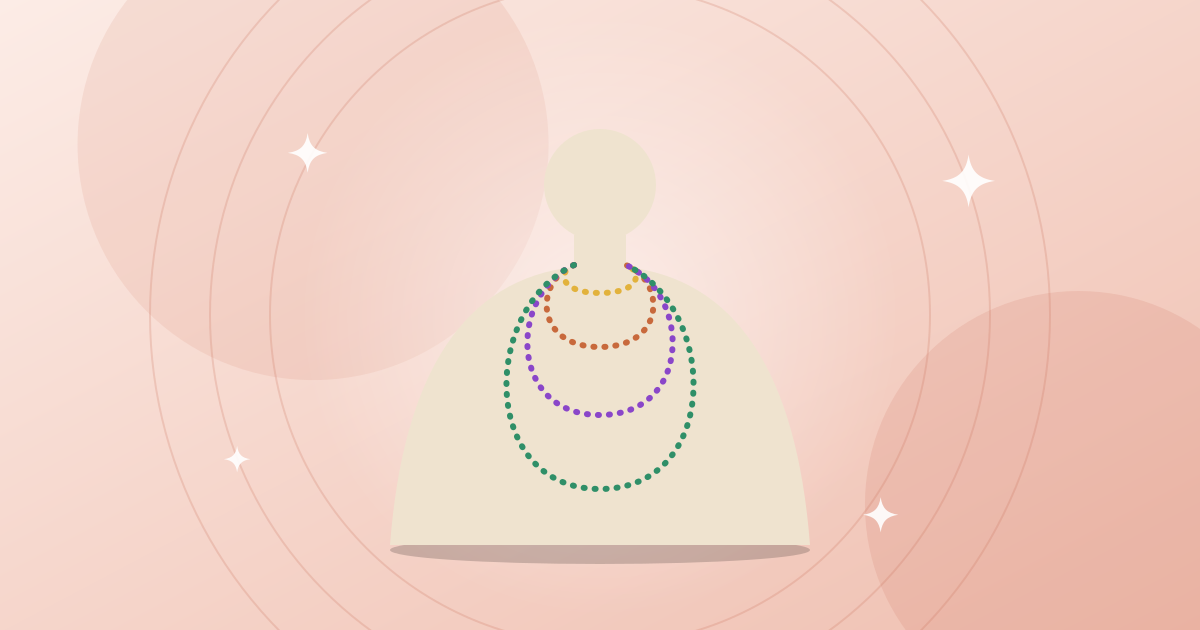
What chain length to choose for a necklace
Necklace length guide in centimeters: choker (35-41 cm), princess (43-48), matinee (50-61), opera (71-86) and rope (90 or more), with where each one falls.
 Buying guides
How to tell if gold is real
How to check whether a gold piece is genuine: stamp, magnet, color, wear and professional acid or XRF testing; which home tests are unreliable.