Lab-grown or natural diamond: differences, price and which to choose
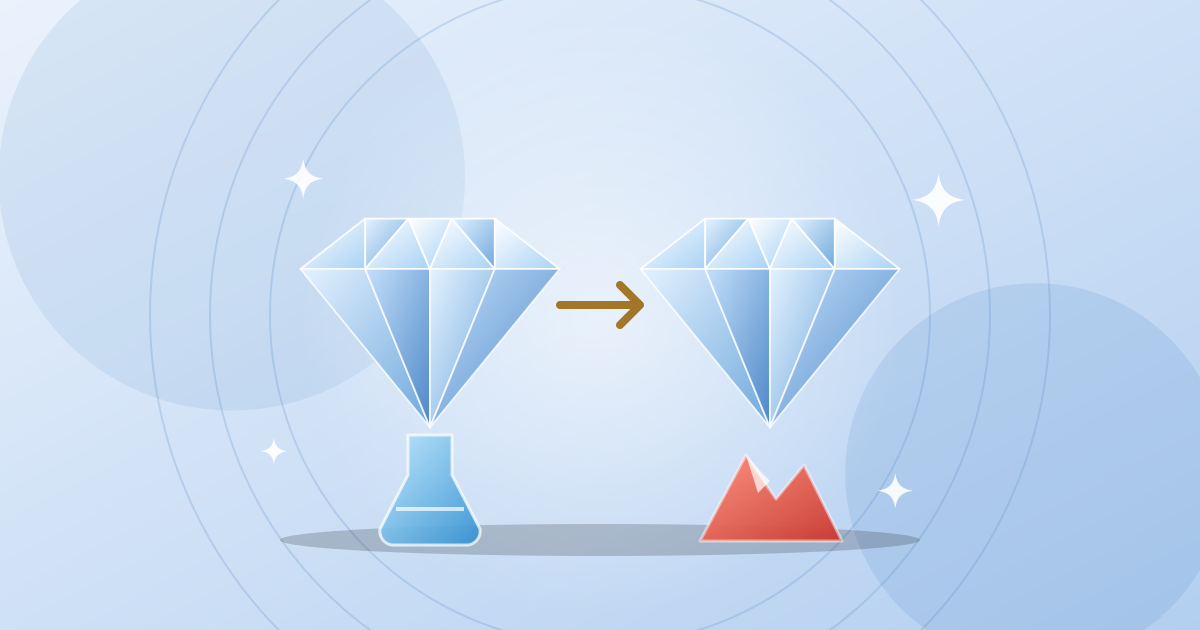
A lab-grown diamond is a real diamond: it has the same composition and properties as a natural one. The difference is its origin, price and resale value.
What they are #
Both are crystallized carbon, with the same hardness (10 on the Mohs scale). A natural one formed underground over billions of years; a lab-grown one is created in weeks with HPHT or CVD processes.
Can you tell them apart? #
Not by eye or with a loupe. Only specialized instruments detect it, and many lab-grown diamonds carry a laser inscription.
Price and value #
At the same size and quality, a lab-grown diamond is significantly cheaper. A natural one holds its resale value better, although it is not a safe investment.
Certificate #
In both cases ask for a report from an independent lab (for example GIA or IGI) stating the type and the 4Cs.
How to choose #
If you prioritize size and budget, lab-grown. If you value natural origin and rarity, natural. There are other options, such as moissanite, which is a different gemstone.
See also #
This entry was drafted with the help of AI and is pending review by the author.
Related articles
 Buying guides
The 4Cs of diamonds: cut, color, clarity and carat
The 4Cs of diamonds explained: cut, color (D-Z), clarity (FL to I3) and carat weight, and how to balance them for your budget.
 Buying guides
What chain length to choose for a necklace
Necklace length guide in centimeters: choker (35-41 cm), princess (43-48), matinee (50-61), opera (71-86) and rope (90 or more), with where each one falls.
 Buying guides
How to tell if gold is real
How to check whether a gold piece is genuine: stamp, magnet, color, wear and professional acid or XRF testing; which home tests are unreliable.