Bead weaving: peyote, brick and loom

With a needle, a thread and tiny beads, strips, ropes and figures are woven. Each stitch pattern gives a different texture.
Main stitches #
- Peyote: beads alternate in offset rows, like bricks.
- Brick stitch: similar to peyote, with rows sewn sideways.
- Square stitch: beads form a grid.
- Right-angle weave: forms flexible tubes.
- Loom: a frame keeps the threads taut to weave wide bands.
Materials #
Glass seed beads, waxed nylon or polyester thread and fine needles. See glass and Emberá chaquira.
Tradition #
A living tradition among many Indigenous peoples (wampum and North American beadwork, Maasai beadwork, Emberá).
Tips #
Pass the thread twice through key beads and use waxed thread for strength.
Step by step #
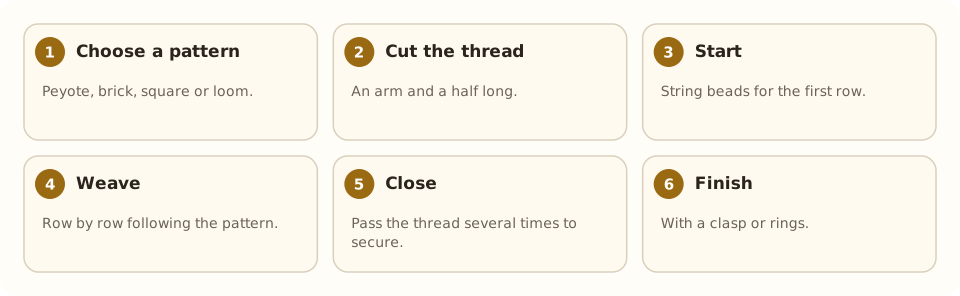
- Choose a pattern. Peyote, brick, square or loom.
- Cut the thread. An arm and a half long.
- Start. String beads for the first row.
- Weave. Row by row following the pattern.
- Close. Pass the thread several times to secure.
- Finish. With a clasp or rings.
Tools and materials #
- Seed beads
- Waxed nylon or polyester thread
- Fine beading needles
- Loom (optional)
Common mistakes #
- Thread with loose tension.
- Beads of different sizes.
- Thread too short.
- Not securing the threads at the end.
See also #
This entry was drafted with the help of AI and is pending review by the author.
Related articles
 Techniques
Pavé setting
Pavé covers a metal surface with many small stones held by tiny beads of metal, as if “paved”; it gives continuous sparkle.
 Techniques
Burnishing: smoothing without removing metal
Burnishing smooths and shines metal by rubbing it with a polished steel tool, without removing material; used on bezels, prongs and as a final finish.
 Techniques
Metal clay (PMC)
Metal clay mixes silver or gold powder with a binder; it is hand-modeled and fired into solid metal. A modern, accessible technique.