The color of metals

Choosing the color of the metal in jewelry is a matter of personal preference. Different colors can have symbolic meanings or simply reflect the wearer's individual taste.
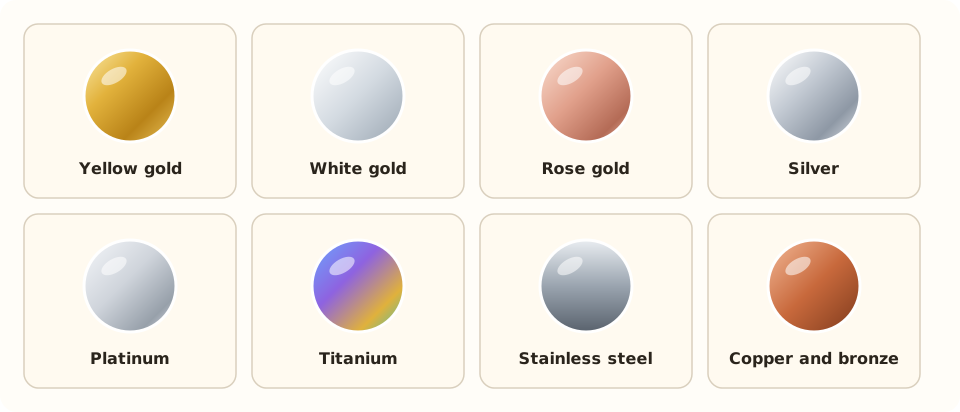
The color of the metal can vary according to the type of metal used and the finishing processes applied. Here are some common options:
Gold #
Yellow gold: #
This is the natural color of gold and one of the most popular tones in jewelry.
White gold: #
It is achieved by adding white alloys such as palladium or nickel. It is often coated with rhodium to improve its shine and durability.
Rose gold: #
It is obtained by adding a greater proportion of copper to the gold, which gives it a pinkish or reddish tone.
Silver #
Silver is known for its bright white color. However, it can oxidize and turn black over time, so it is often treated with coatings to prevent this process.
Platinum #
Platinum is naturally grayish white. It is prized for its durability and resistance to discoloration.
Titanium #
Titanium can come in various colors, since it can be anodized to produce tones such as blue, green, purple, etc.
Stainless steel #
Stainless steel has a silver color and can be polished to achieve a shiny finish.
Copper and bronze #
These metals can have distinctive colors, with copper having a reddish tone and bronze a more golden tone.
Metal alloys #
Some pieces of jewelry can be made of alloys of several metals, which can result in unique colors. For example, some gold alloys can have a greenish tone due to the presence of certain alloy metals.
Coatings and treatments #
In addition to the natural colors of metals, coatings and treatments can be applied to change the color of the jewelry. For example, rhodium is commonly used to coat white gold and give it a more silvery, shiny appearance.
Related articles
 Design
The coloring of metals
How metal is given color in jewelry: anodizing, patinas, PVD, enameling, heat treatments and electroplating, with their processes.
 Design
CAD software used in jewelry design
Computer-aided design (CAD) is a tool that lets designers create precise and detailed three-dimensional models.
 Techniques
Pavé setting
Pavé covers a metal surface with many small stones held by tiny beads of metal, as if “paved”; it gives continuous sparkle.